4 days ago
Anonymous X Post Prompts PMO Scrutiny of Anti-Caste Readings
An anonymous person on X complained about books and writings that discuss caste and discrimination.
The person called the writings “poison.”
After the Prime Minister’s Office took note of the post, an education ministry official asked universities for comments and information about how many students take courses mentioned in it.
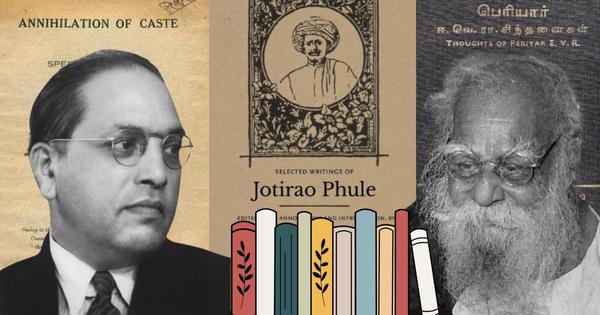
The listed works include writing by Ambedkar, Periyar and the Phules.
Several professors said universities, not politicians, should decide what students study.
They said the books help students discuss caste, fairness and women’s rights.
A student group also said disputed ideas should be debated rather than investigated because someone objected online.
Professors worry that monitoring these courses could make teachers and students feel afraid.
They also fear fewer students may choose the courses.

An anonymous X account called writings on caste, patriarchy and related subjects “poison.”
An education ministry official emailed universities, citing a communication from the Prime Minister’s Office and requesting comments and course-enrolment figures.
The works named include writings by B.R. Ambedkar, Periyar, Gail Omvedt, Sharmila Rege, Savitribai Phule and Jotirao Phule.
Several academics and a Jawaharlal Nehru University student group criticized the request as political interference in academic decisions.
Professors said these texts support study and debate about caste, equality and patriarchy, and warned scrutiny could discourage students.
- Who
- An anonymous X user, the Prime Minister’s Office, an education ministry official, universities, academics and students.
- What
- Universities were asked to provide comments and enrolment figures for courses mentioned in an X post criticizing anti-caste and related writings.
- Where
- Universities across India; academics quoted include professors at Delhi University and Jawaharlal Nehru University.
- When
- The article says Professor N Sukumar learned of the move on September 27; it does not specify the year.
- Why
- The ministry email cited a communication from the Prime Minister’s Office about the post. The article says the post described the writings as “poison”; academics criticized the resulting scrutiny.
Criticism of the readings
Defence of academic study
Whether the writings are harmful
Criticism of the readings
The anonymous X account called the writings “poison” and said they were being used to groom future political cadres.
Defence of academic study
Academics argued that the works enable students to examine caste, patriarchy, equality and the production of knowledge.
Government scrutiny of courses
Criticism of the readings
The ministry email requested comments and enrolment figures after the PMO received a communication about the post; the article does not provide an official explanation for the request.
Defence of academic study
Professors and a student group said syllabus decisions belong to academic institutions and that scrutiny prompted by an anonymous post risks political interference.
Key facts
- Initial complaint
- An anonymous X account described the listed writings as “poison.”
- Government request
- An education ministry official asked universities to furnish comments and enrolment figures for courses mentioned in the post.
- PMO connection
- The email cited a communication received from the Prime Minister’s Office.
- Authors named
- The list included B.R. Ambedkar, Periyar, Gail Omvedt, Sharmila Rege, Savitribai Phule and Jotirao Phule.
- Academic response
- Professors interviewed by Scroll characterized the request as political interference or scrutiny of academic work.
- Student response
- The Birsa Ambedkar Phule Students Association at Jawaharlal Nehru University said contested texts should be engaged with intellectually.
- Course demand
- Sukumar said he had more than 100 students in his class and that demand for such courses had increased.
Quotes
Birsa Ambedkar Phule Students Association
Student group at Jawaharlal Nehru University
“If a particular text is academically contested, the appropriate response is to engage with it intellectually, not to initiate administrative scrutiny merely because an anonymous social-media account objects to it.”
 scroll.in
“Certainly the PMO must have better things to do than to be issuing such directives. The account has no name, no number, no authenticity and yet it got the attention of the PMO.”
scroll.in
Sources
Related news
Rahul Gandhi Accuses Modi of Discouraging Education and Debate
IIT Bombay Student’s Death Fuels Caste and Campus Politics Debate

IIT Bombay Suicide Case Sparks SC/ST Act and Caste-Bias Debate

Annamalai Rejects Periyar’s Atheism and Anti-Brahmin Ideology, Praises Reforms

IIIT-Hyderabad Warns Eight Students Over Campus Platform