

Archive · 3 Sep 2026
Nepal Floods Renew Debate Over Trump-Era Disaster Program Cuts
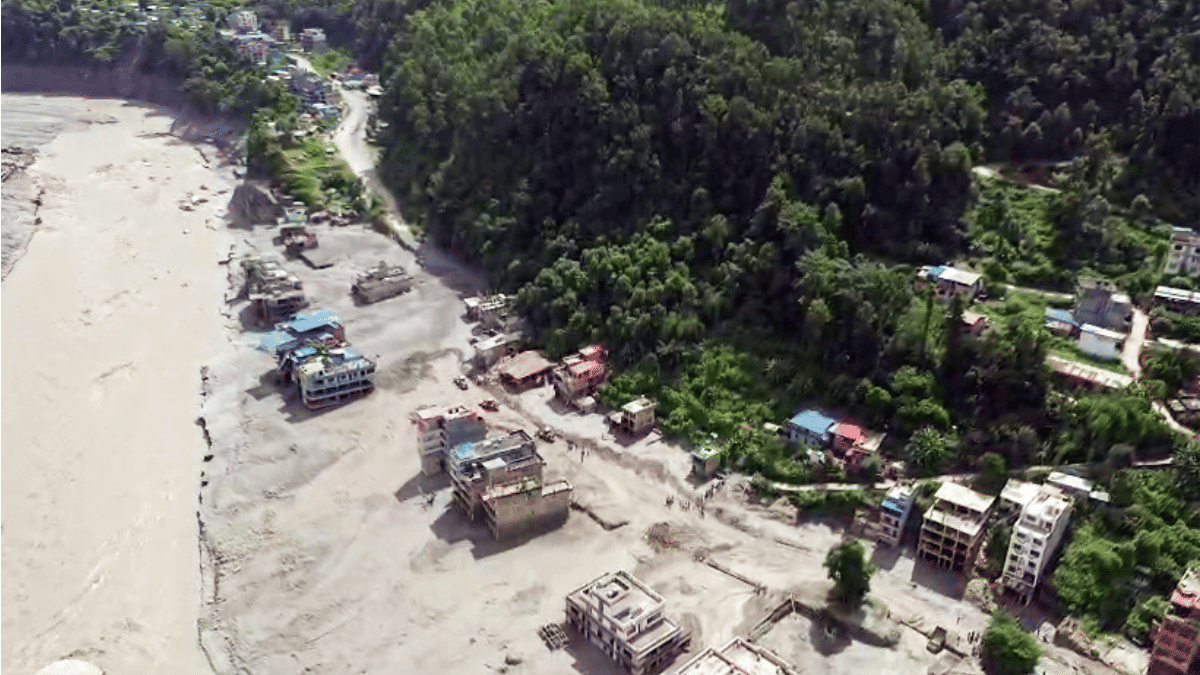
A large flood struck Nepal after ice and rocks suddenly moved downhill.
More than 1,000 people were reported dead, and thousands were still missing.
Before the flood, the United States had ended a program that studied floods and dangerous glacial lakes.
The program was run by USAID, NASA, and ICIMOD.
It used pictures from satellites and mapping tools to help countries understand environmental dangers.
A humanitarian aid expert criticized the decision to end the program.
A State Department spokesperson said the program was not designed to give real-time flood warnings.
The spokesperson also said scientists could not have predicted this particular event.
The United States says other flood-warning support for Nepal is still continuing.

A massive Nepal flood, triggered by an ice-rock avalanche, reportedly killed over 1,000 people and left thousands missing.
The SERVIR Hindu-Kush-Himalaya program was jointly run by USAID, NASA, and ICIMOD.
The program used satellite imagery and geospatial technology to monitor floods, glacial lakes, and glaciers.
It formally ended after Donald Trump froze foreign aid in January 2025, according to the report.
A State Department spokesperson said SERVIR-HKH could not have forecast this event and that other U.S.-supported warning initiatives remain active.
- Who
- Nepal’s affected communities, the SERVIR Hindu-Kush-Himalaya partners, U.S. officials, and humanitarian aid experts.
- What
- A deadly Nepal flood has prompted debate over the ending of a U.S.-funded disaster-monitoring program.
- When
- The program formally ended after foreign aid was frozen in January 2025; the article describes the flood as occurring nearly a year and a half later, while its headline says the program ended a year before the floods.
- Where
- Nepal and the wider Hindu-Kush-Himalaya region.
- Why
- Critics link the program’s cancellation to reduced disaster-risk support, while the U.S. State Department says the program could not have forecast the event and that other warning initiatives remain active.
Critics of the Program Cancellation
U.S. State Department Response
Effect of ending the program
Critics of the Program Cancellation
Jeremy Konyndyk said DOGE canceled disaster-risk-reduction projects in Nepal, including the program, and criticized the loss of U.S.-funded support in a disaster-prone country.
U.S. State Department Response
Tommy Pigott said SERVIR-HKH was not an end-to-end flood early-warning system and that its core tools and services remain active through ICIMOD.
Could the flood have been predicted?
Critics of the Program Cancellation
Critics presented the program’s closure as significant because it monitored environmental and disaster risks, including dangerous glacial lakes.
U.S. State Department Response
The State Department said the event was not forecastable with current science and that no existing program could have predicted it.
Current U.S. support
Critics of the Program Cancellation
The program’s cancellation and the reported termination of other disaster-risk-reduction projects raised concerns about diminished U.S. assistance to Nepal.
U.S. State Department Response
The State Department said the United States still supports Nepal’s flood-warning capacity through a World Meteorological Organization grant and an interagency agreement with the National Oceanic and Atmospheric Administration.
- Reported death toll
- Over 1,000 people
- People missing
- Thousands
- Flood trigger
- An ice-rock avalanche
- Program
- SERVIR Hindu-Kush-Himalaya
- Program partners
- USAID, NASA, and ICIMOD
- Program end
- After the U.S. foreign-aid freeze in January 2025
- Regional coverage
- Afghanistan, Bangladesh, Myanmar, Nepal, and Pakistan