

Archive · 14 Aug 2025
Scientists Discover New Ocean Virus With Extremely Long Tail
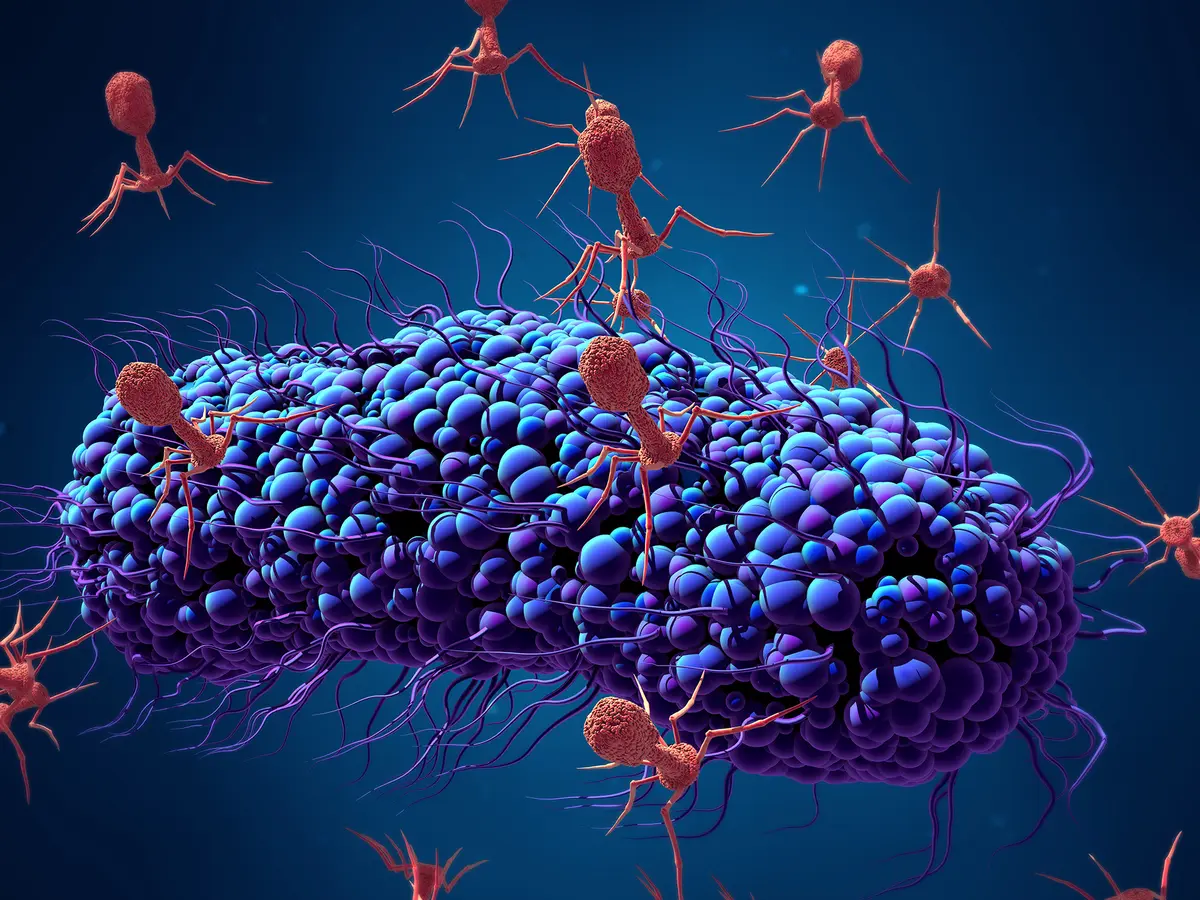
Scientists found a unique virus called PelV-1 in the ocean near Hawaii.
This virus has a super long tail, much longer than the COVID-19 virus.
It infects tiny plants called plankton.
The tail helps the virus stick to the plankton, but it's only built after the virus leaves its host.
This discovery is exciting because it can help scientists learn more about how viruses work, how they affect the ocean's balance, and how they evolve.
Scientists also found another virus, co-PelV, which doesn't have a tail but has genes that may impact its host.
They plan to study these viruses to understand their role in the ocean.

Scientists discovered PelV-1, a virus with an exceptionally long tail in the Pacific Ocean.
PelV-1 infects Pelagodinium, a type of plankton.
The virus's tail is 2.3 micrometers long, about 19 times longer than the COVID-19 virus.
The tail appears to help the virus attach to its host and is built after exiting the host cell.
Researchers also found co-PelV, a virus without a tail but with metabolic genes.
- Who
- Scientists discovered the virus.
- What
- Scientists discovered PelV-1, a virus with an exceptionally long tail.
- When
- The discovery was recently made.
- Where
- The virus was found in the North Pacific Subtropical Gyre, near Hawaii.
- Why
- Understanding PelV-1 can help scientists learn about energy and nutrient cycles in the ocean, the role viruses play in algal blooms, and how viruses evolve unusual traits.
- Virus Name
- PelV-1
- Host
- Pelagodinium (plankton)
- Tail Length
- 2.3 micrometers
- Location
- North Pacific Subtropical Gyre, near Hawaii
- Co-discovered Virus
- co-PelV
- PelV-1 Genome Size
- 459,000 base pairs