Archive · 13 Dec 2025
Humans Made Fire 400,000 Years Ago
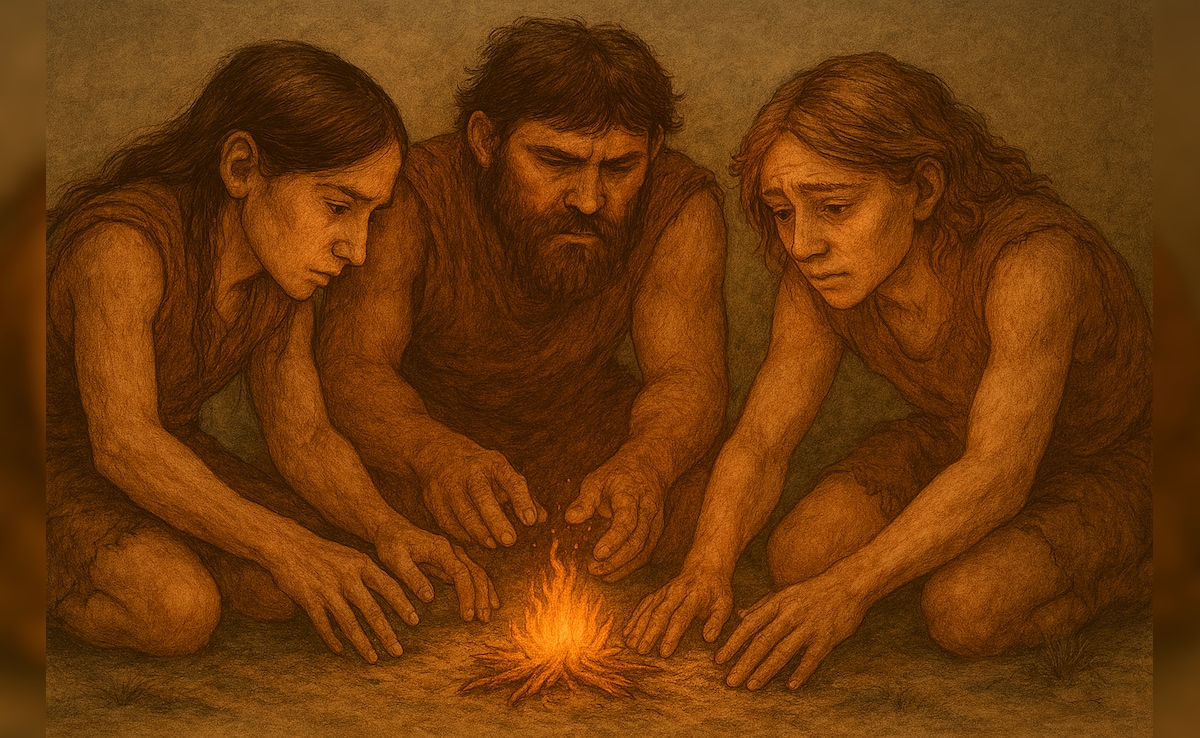
Scientists in Britain found that ancient humans made fire much earlier than we thought.
They discovered evidence at a site in eastern England showing that people made fire around 400,000 years ago.
This is much earlier than the previous oldest evidence, which was from about 50,000 years ago.
The scientists found baked clay, broken flint tools, and special rocks that can make sparks.
They think these people knew how to make fire on purpose.
Making fire helped them stay warm, cook food, and live together in groups.
This discovery is very important because it shows that early humans were smarter and more skilled than we thought.

Ancient humans made fire 400,000 years ago in eastern England, much earlier than previously believed.
Evidence includes baked clay, heat-fractured flint, and iron pyrite fragments.
Researchers ruled out natural wildfires, showing temperatures exceeded 700°C with repeated burning in the same spot.
Iron pyrite, not naturally found at the site, suggests deliberate collection for fire-making.
Controlled fire-making helped early humans survive, cook food, and develop social behaviors.
- Who
- Ancient humans, possibly early Neanderthals
- What
- Controlled fire-making
- When
- Around 400,000 years ago
- Where
- Barnham, eastern England
- Why
- To survive, cook food, and enhance social life
- Location
- Barnham, eastern England
- Evidence
- Baked clay, heat-fractured flint, iron pyrite fragments
- Temperature
- Exceeded 700°C (1,292°F)
- Significance
- Earliest known controlled fire-making
- Researchers
- British Museum team
- Journal
- Nature
- Implications
- Survival, cooking, social development