Archive · 1 Jan 2026
Pathankot Attack: Facts vs. Myths
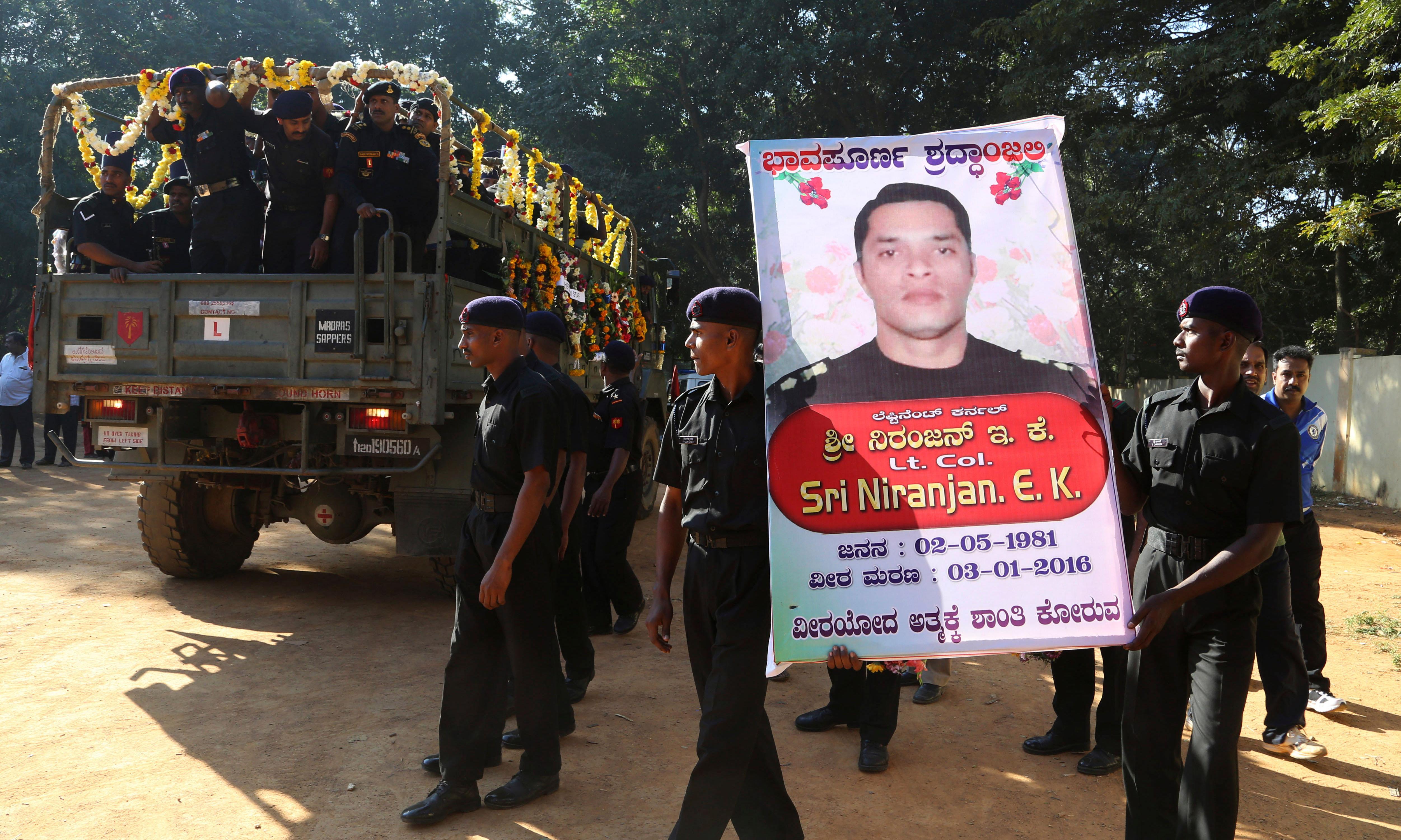
On January 2, 2016, terrorists attacked the Pathankot Air Force Station in Punjab.
Many brave soldiers fought back, but some of them, like Lieutenant Colonel Niranjan Kumar, Subedar Fateh Singh, and Corporal Gursewak Singh, were hurt very badly and died.
These soldiers were very brave and did their best to protect their country.
The fight lasted for several days, and even after the main battle, there were still dangers, like bombs left by the terrorists.
The soldiers who died are remembered as heroes who gave their lives to keep everyone safe.
The attack was carefully planned, but the terrorists were stopped before they could cause serious damage.
After the attack, India made changes to better protect its air bases.

The terrorists were intercepted in the outer areas of the base and did not reach or damage any aircraft.
The attack was directed solely at a military installation, with no civilian areas targeted or casualties.
Security forces were alerted early due to intelligence inputs, and the operation's length was due to the base's vast area and safety protocols.
The attackers were guided by handlers based in Pakistan, with evidence linking them to Jaish-e-Mohammed.
The attack led to significant changes in the security of Indian air bases, including upgraded perimeter surveillance and improved inter-agency coordination.
- Who
- Indian Air Force personnel and security forces
- What
- A coordinated terrorist attack on the Pathankot Air Force Station
- When
- January 2-6, 2016
- Where
- Pathankot Air Force Station, Punjab
- Why
- The attack was carried out by the Jaish-e-Mohammed terror outfit
- Date of Attack
- January 2-6, 2016
- Location
- Pathankot Air Force Station, Punjab
- Perpetrators
- Jaish-e-Mohammed
- Attackers' Reach
- Intercepted in outer areas, no aircraft damaged
- Civilian Impact
- No civilian areas targeted, no civilian casualties
- External Support
- Handlers in Pakistan provided guidance
- Security Changes
- Upgraded perimeter surveillance, improved inter-agency coordination