

Archive · 3 Sep 2026
Nepal Families Hold Symbolic Rites Amid Flood Devastation
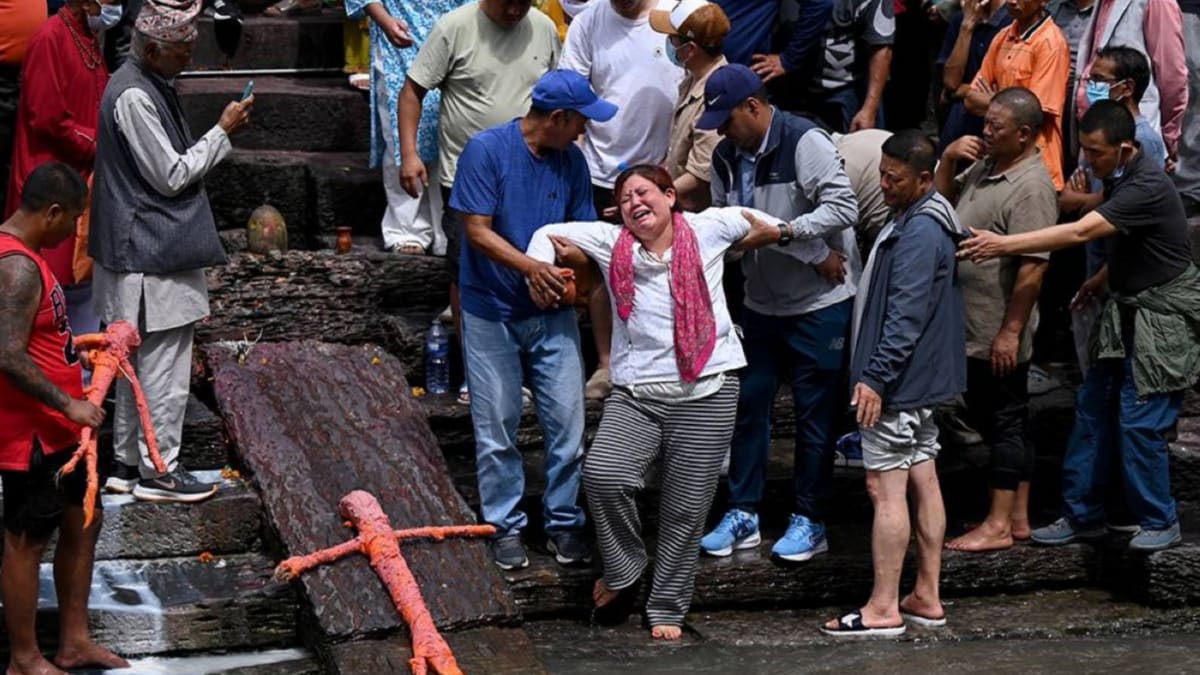
Large floods swept through parts of Nepal on August 26.
They destroyed homes, roads and bridges and caused many deaths.
Thousands of people are still missing.
Some families cannot find the bodies of their loved ones.
They are therefore using small figures made from kusha grass during funeral ceremonies.
These ceremonies are meant to help families complete important Hindu mourning traditions.
Many survivors have no homes or nearby places to hold the usual 13-day mourning period.
Officials are trying to identify bodies, and relatives are giving DNA samples.
The disaster has also led to rescue and relief help from India.

Families in Nepal performed symbolic funeral rites for relatives still missing after floods struck on August 26, 2026.
The disaster destroyed more than 7,000 houses, roads and bridges, while more than 1,200 bodies were recovered and thousands remained missing.
In Nuwakot and Rasuwa, families used kusha grass effigies because recovering or identifying all bodies appeared increasingly unlikely.
Traditional 13-day Hindu mourning has been difficult because many families lost their homes, priests, cooking gas and access to mourning facilities.
Authorities temporarily buried some unidentified bodies, while relatives provided DNA samples; reports differed over whether some bodies were placed in mass graves.
- Who
- Families of missing flood victims, Nepalese authorities, rescue teams and foreign nationals affected by the disaster.
- What
- Families held symbolic funeral rites for missing relatives while authorities continued recovery, identification and relief efforts.
- When
- The floods occurred on August 26, 2026; symbolic rites were reported on September 2, about eight days later, and the articles were published September 3.
- Where
- Flood-hit settlements along the Trishuli River and the Nepal-Tibet border, including Nuwakot and Rasuwa; some families traveled to Kathmandu.
- Why
- Families had little hope of recovering or identifying all missing relatives and needed to observe Hindu final rites despite the destruction.
Families’ Need for Ritual Closure
Authorities’ Identification Efforts
Use of symbolic funerals
Families’ Need for Ritual Closure
Families said symbolic rites were necessary because hopes of finding missing relatives were fading and traditional mourning had to proceed.
Authorities’ Identification Efforts
Authorities continued recovering and identifying bodies, temporarily burying some unidentified remains because morgues and hospitals lacked space.
Treatment of unidentified bodies
Families’ Need for Ritual Closure
Some victims alleged that bodies were rapidly buried in mass graves, leaving families no alternative but symbolic ceremonies.
Authorities’ Identification Efforts
Reports also described temporary burial as a measure taken while bodies decomposed and relatives supplied DNA samples for identification.
Ability to observe mourning
Families’ Need for Ritual Closure
Families faced destroyed homes, limited shelter, unavailable priests, shortages of cooking gas and full mourning facilities.
Authorities’ Identification Efforts
Facilities in Kathmandu expanded capacity with tents and additional rooms, while authorities and relief teams continued supporting affected communities.
- Reported deaths
- One report gave a toll of 1,252; another said more than 1,200 bodies had been recovered.
- People missing
- More than 4,200 people were reported missing in one account.
- Foreign nationals
- Nepal’s Foreign Ministry said 324 foreign nationals were rescued and 590 people from 39 countries remained missing.
- Houses destroyed
- More than 7,000 houses were swept away, while many surviving homes became uninhabitable.
- Funeral location
- A priest placed effigies on a pyre along the Trishuli River in Nuwakot.
- Mourning period
- Hindu families traditionally observe 13 days of post-death mourning, known as kriya.
- Reconstruction estimate
- Nepal may need between $4 billion and $5 billion for reconstruction.
- International assistance
- India sent aircraft, rescue specialists, medical supplies, forensic experts and equipment after the flooding.
