

Archive · 24 Jun 2025
New Study Questions Gender Role in Attacks on Egyptian Pharaoh
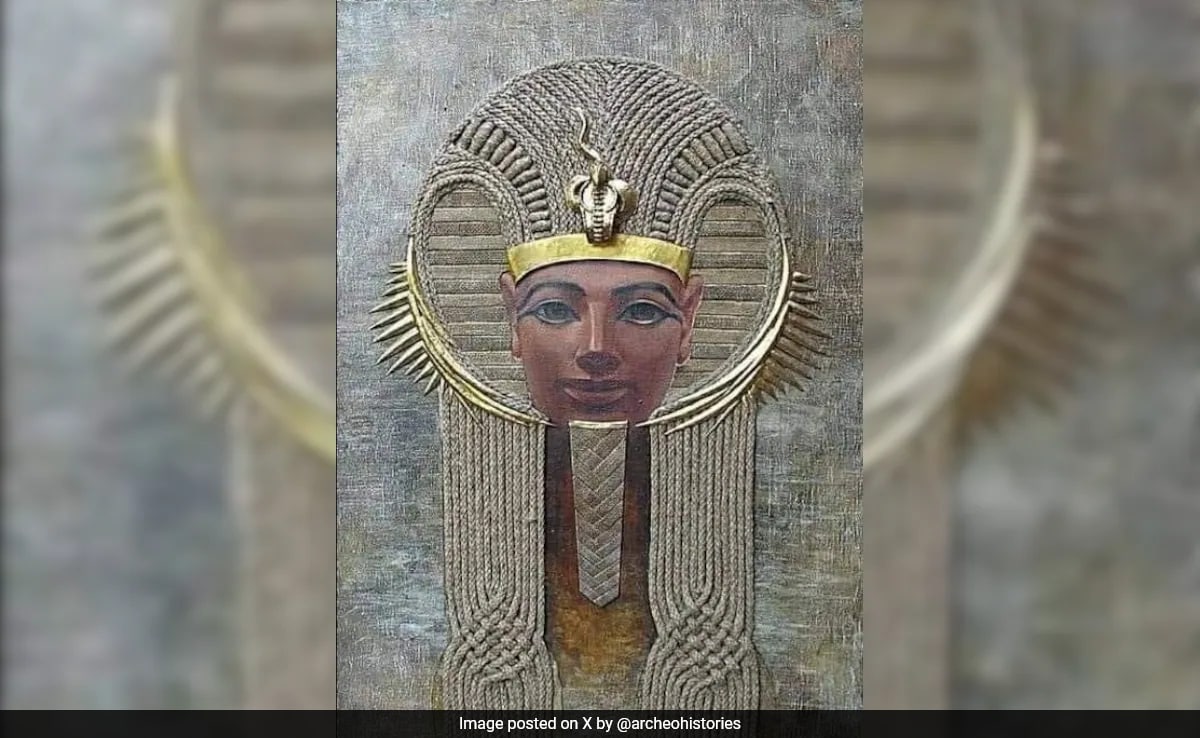
Imagine a very important queen named Hatshepsut who ruled Egypt a long, long time ago.
She was good at her job and made Egypt prosperous.
After she died, her stepson, Thutmose III, became king.
People thought he erased her name and accomplishments because she was a woman.
But new research says he might have had other reasons, maybe even using her statues for building.
It's like the new king wanted to remove her power, but not necessarily because she was a queen.
The reasons are complicated and about more than just her gender.

Queen Hatshepsut was a successful female pharaoh of ancient Egypt.
Her legacy was later erased by her stepson, Thutmose III, after her death.
Previous theories suggested Thutmose III acted out of hatred and a desire to remove the idea of a female ruler.
New research suggests Thutmose III's motivations were more complex and less gender-driven.
The damage to Hatshepsut's statues may have been for practical purposes, like reuse of materials.
- Who
- University of Toronto scholar Jun Wong studied Queen Hatshepsut and her stepson Thutmose III.
- What
- New research reassesses the motivations behind the erasure of Queen Hatshepsut's legacy.
- When
- Hatshepsut ruled Egypt roughly 3,500 years ago.
- Where
- Ancient Egypt
- Why
- New research suggests Thutmose III's actions were not solely motivated by gender bias.
Older Theory
New Research
Why her legacy was erased
Older Theory
Hatshepsut's gender was a key factor
New Research
Gender was not the main factor
- Ruler
- Queen Hatshepsut
- Successor
- Thutmose III
- Time Period
- 3,500 years ago
- Key Achievement
- Expanded trade routes and commissioned structures
- Research Focus
- Motivations behind erasing Hatshepsut's legacy