

3 weeks ago
Delhi's targeted technology, smart poles to boost air pollution fight
Delhi's air is very dirty, and the city wants to make it cleaner.
The government has a plan to test machines that can clean the air.
Companies that make these machines have to prove they really work before the machines are used all over the city.
Right now, 22 different machines are being tested.
Some clean the smoke from vehicles, and some clean the dirty air near the roads.
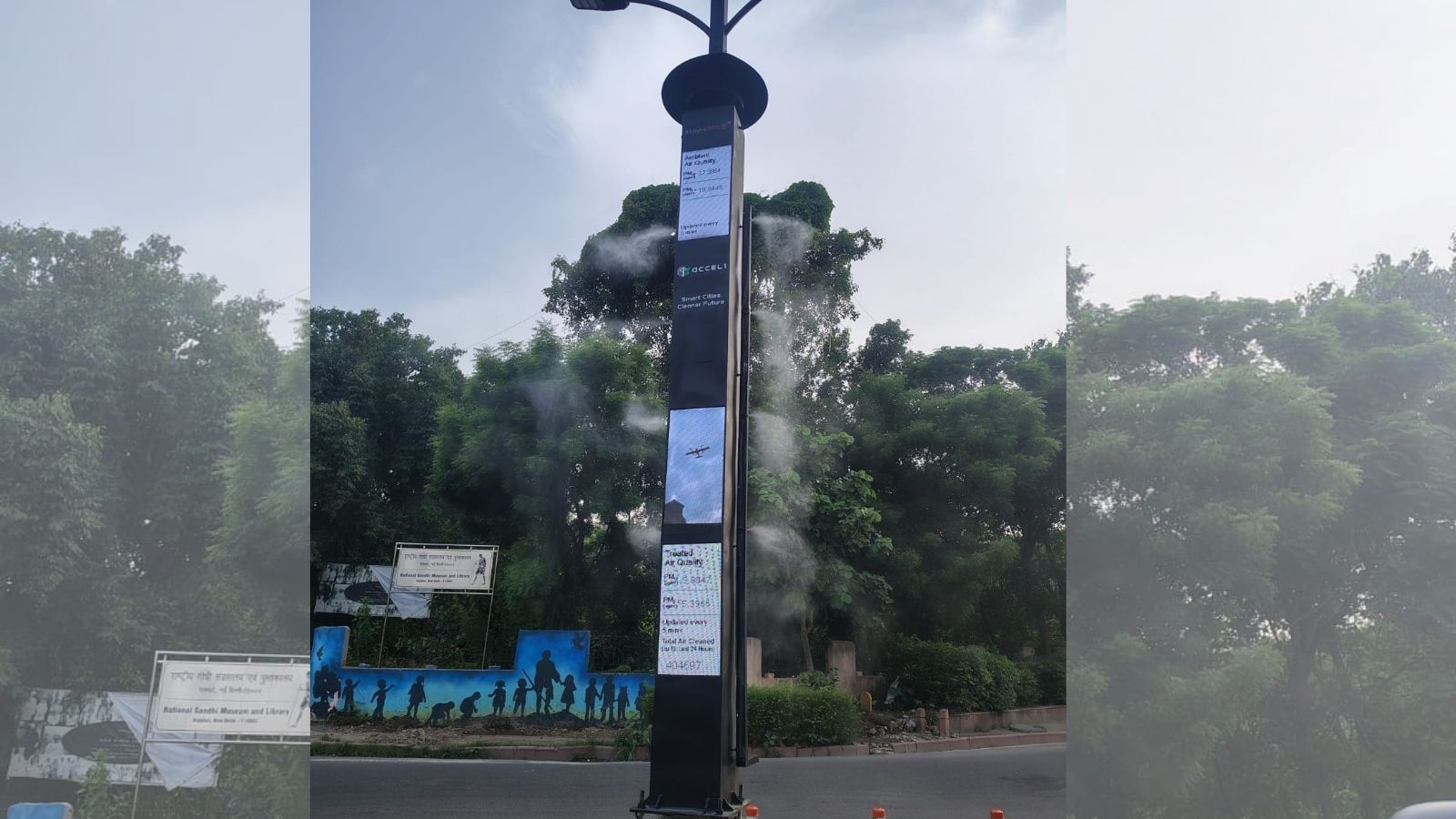
The city also put up special "smart poles" with screens that show how dirty the air is, like a weather report for pollution.
The screens also tell people how much dirty air the machines have cleaned.
Independent scientists are checking the machines to make sure they actually help.
If a machine works well, the city may put more of them up all over Delhi to help everyone breathe easier.

Delhi Environment Minister Manjinder Singh Sirsa said the government will introduce a target-based model to select pollution-control technologies, with firms evaluated on demonstrated pollution-reduction performance.
Under the Delhi government's Innovation Challenge, launched last October, 22 technologies are being tested — 13 targeting vehicular emissions and nine aiming to reduce ambient pollution.
Smart poles installed at seven spots in Central Delhi display PM2.5 and PM10 levels updated every five minutes, along with the volume of air they claim to have cleaned.
The deadline for IIT Delhi, the National Physical Laboratory (NPL) and the International Centre for Automotive Technology (ICAT) to complete evaluations has been extended, with final recommendations now expected by September 10.
Pilot technologies already deployed include an EV-mounted anti-smog gun along the Kirti Nagar-Mayapuri stretch, the PAWAN III roadside system, the ShuddhVayu vehicle-mounted air filter and 21 STR-101 filter-free air-purification units at Satguru Ram Singh Marg.
- Who
- Delhi Environment Minister Manjinder Singh Sirsa and the Delhi government, with independent evaluations by IIT Delhi, the National Physical Laboratory (NPL) and the International Centre for Automotive Technology (ICAT).
- What
- The Delhi government is planning a target-based model to select pollution-control technologies and has installed smart poles displaying live air-quality data as part of its Innovation Challenge.
- Where
- Delhi, India, including smart poles in Central Delhi near Rajghat Memorial and trials at ISBT Kashmere Gate, the Red Fort area, Punjabi Bagh, Kirti Nagar and Rohini.
- When
- Trials are currently ongoing; final recommendations from the evaluation agencies are now expected by September 10.
- Why
- To reduce Delhi's severe air pollution, with vehicular emissions identified as one of the biggest contributors.
Key facts
- Technologies under trial
- 22 (13 for vehicular emissions, 9 for ambient pollution)
- Smart poles installed
- 7 spots in Central Delhi
- Pollutants displayed
- PM2.5 and PM10, updated every 5 minutes
- Air cleaned (one pole, 24 hours)
- 4,04,697 cu ft
- Final recommendations expected
- September 10
- Independent evaluation agencies
- IIT Delhi, National Physical Laboratory (NPL), ICAT
- Innovation Challenge launched
- Last October
- STR-101 units at Satguru Ram Singh Marg
- 21 units, treating nearly 3 lakh litres of air per hour
Sources
Related news

DPCC floats tender for 13 air quality monitoring stations

Delhi Enforces Winter Construction Ban to Curb Air Pollution
Delhi Master Plan 2047 Pushes AI, 5G and Smart Infrastructure

NGT Orders Action Against Delhi Vehicles Without Valid PUCs
Delhi to Bar Petrol, Diesel, CNG Light Goods Vehicles

India Approves 6,562 EV Chargers, None Installed Yet
Ola Electric's Roadster X+ Gets Government Approval
