

Archive · 3 Jun 2025
Experts Study 14th-Century Inscription Detailing Land Grant
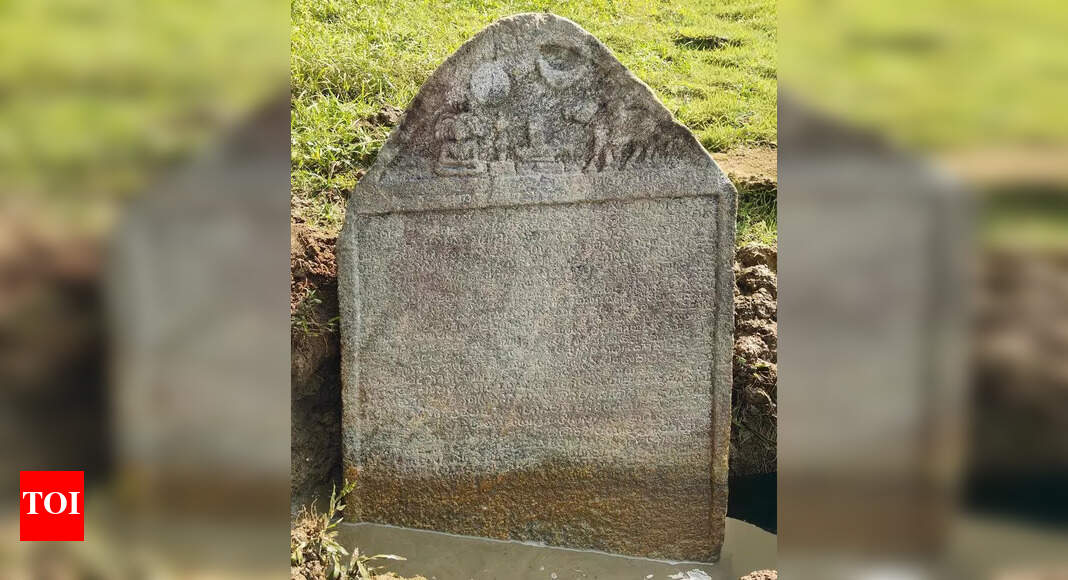
A team of experts is studying a 14th-century inscription found in a village in India.
The inscription, written in old Kannada, mentions a king named Harihara II and a land grant made in 1390.
It describes details about the land given, the people involved, and offerings made to gods.
The inscription also includes a warning against tampering with the grant.
Local researchers and history enthusiasts are working together to understand and preserve this historical document.

An unpublished 14th-century inscription in Kundapur, India, has been re-examined.
The inscription, found on a farm, mentions King Harihara II of the Vijayanagara empire.
The inscription is written in the Kannada language and details a land grant from 1390 CE.
The grant was made to Chaudappa by Varadeshwara and Kotiswara Edahali.
The inscription includes details about offerings to deities and a curse to protect the grant.
- Who
- Historians and local enthusiasts studying an inscription from the reign of Harihara II.
- What
- The re-examination of a 14th-century inscription detailing a land grant and associated details.
- When
- 1390 CE
- Where
- Hardalli-Mandalli village, Kundapur taluk, India.
- Why
- To record a land grant made during the rule of Harihara II, and detail offerings.
- Location
- Hardalli-Mandalli village, Kundapur, India
- Era
- 14th century
- Language
- Kannada
- Ruler Mentioned
- Harihara II
- Grant Date
- 1390 CE
- Grant Type
- Land grant