

Archive · 29 Jan 2026
Egypt's Pyramids May Be 40,000 Years Old, Study Suggests
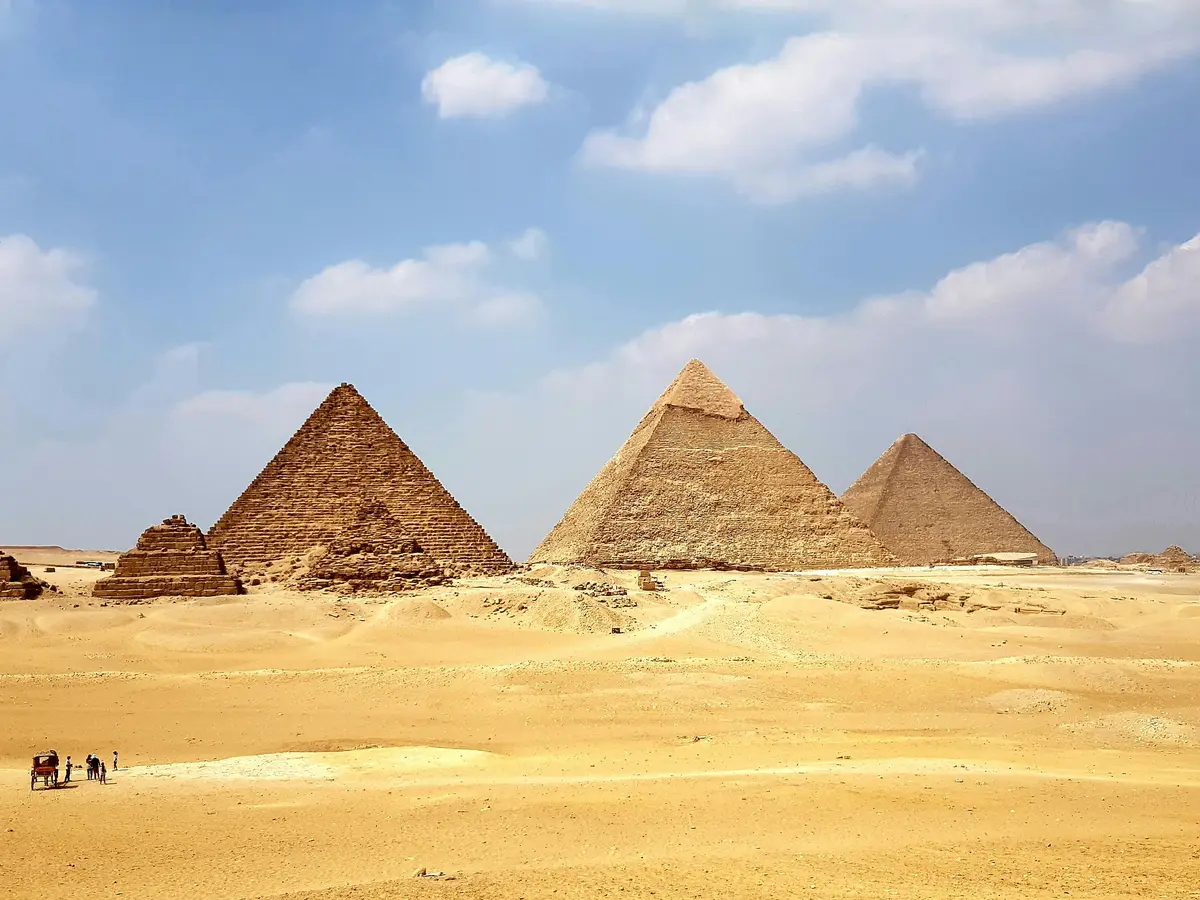
A scientist named Alberto Donini thinks the pyramids in Egypt might be much older than we thought.
He looked at how much the stones have worn down over time and compared them to other stones.
He found that some stones might be as old as 40,000 years, which is way older than the usual 4,600 years.
He even thinks that the pharaoh Khufu might not have built the Great Pyramid but just fixed it up.
Not everyone agrees with him, but his study is interesting because it makes us think about how old these big, old buildings really are.

Italian engineer Alberto Donini suggests the pyramids could be 20,000 to 40,000 years old, much older than the traditionally accepted 4,600 years.
Donini's study is based on erosion patterns at the base of the pyramids, comparing the wear and tear of the stones.
He estimated that some stones have undergone roughly 25,000 years of erosion, far exceeding the traditional age.
Donini believes Pharaoh Khufu may not have built the Great Pyramid but instead renovated it.
The study suggests a 68% likelihood that the pyramid was built between 11,000 and 39,000 years ago, with an average estimate of about 24,900 years.
- Who
- Alberto Donini, an Italian engineer from the University of Bologna
- What
- A study suggesting the Egyptian pyramids could be much older than traditionally believed
- When
- The study is recent, but the pyramids' age is estimated to be between 20,000 and 40,000 years old
- Where
- The Great Pyramid of Giza, Egypt
- Why
- To challenge the traditional age of the pyramids based on erosion patterns
- Pyramids Age
- 20,000 to 40,000 years (controversial study)
- Traditional Age
- 4,600 years
- Researcher
- Alberto Donini, University of Bologna
- Method
- Erosion pattern analysis
- Key Finding
- Estimated 24,900 years of erosion
- Probability Range
- 68% likelihood between 11,000 and 39,000 years
- Pyramid in Question
- Great Pyramid of Giza
- Traditional Builder
- Pharaoh Khufu