Archive · 11 Nov 2025
Interstellar Object 3I/ATLAS May Have Exploded Near Sun, Suggests Avi Loeb
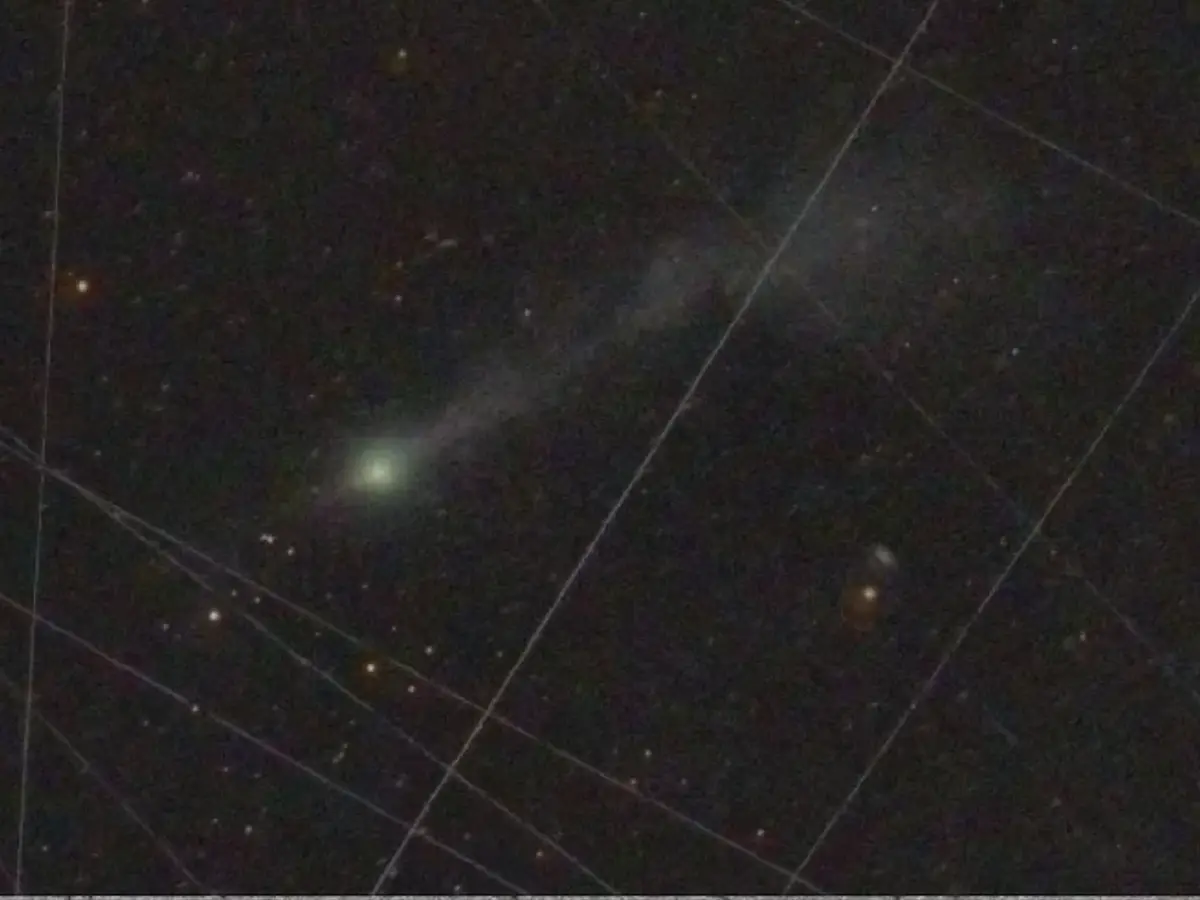
Imagine a visitor from another star system called 3I/ATLAS.
Scientists saw it get very bright and lose a lot of material as it got close to our Sun.
One scientist, Avi Loeb, thinks it might have exploded like fireworks.
This would explain why it brightened so much and lost so much stuff, over two million kilograms every second!
If it exploded, it could have broken into many pieces.
If it didn't explode and is still in one piece, it's very strange.
Its mass is also incredibly huge, much bigger than another odd space visitor called 'Oumuamua.
Loeb says if it's a natural comet, there's a problem with our understanding.
It's acting so weirdly that scientists are wondering if it could be something not made by nature.

Interstellar object 3I/ATLAS experienced significant brightening and mass loss near the Sun, several magnitudes greater than expected.
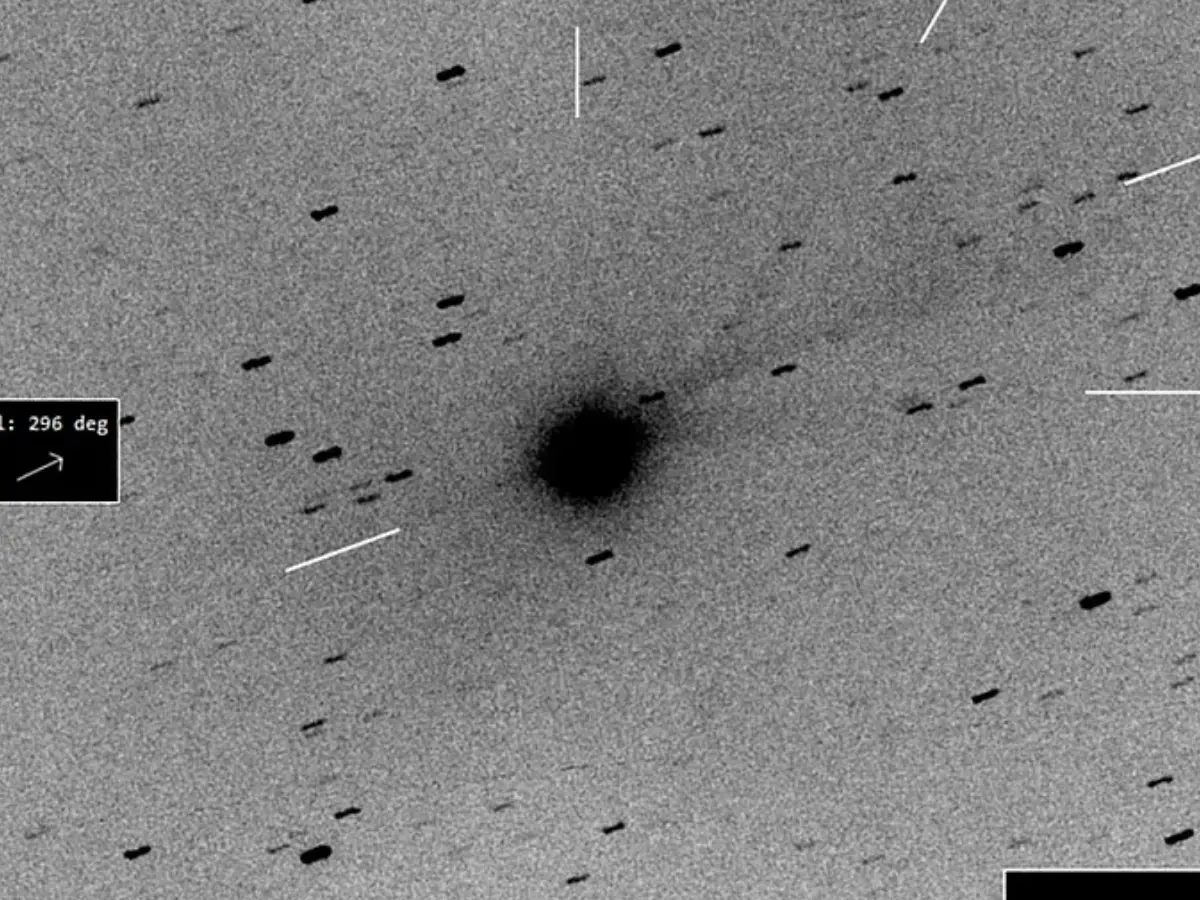
New images show strange jet structures emanating from 3I/ATLAS in at least seven directions.
Harvard scientist Avi Loeb hypothesizes that 3I/ATLAS may have exploded near the Sun, which could explain the observed brightening and mass loss.
The mass loss at perihelion was observed to be 2 million kilograms per second, a stark increase from the 150 kilograms per second noted earlier by the Webb telescope.
Loeb suggests that if 3I/ATLAS has not broken apart and remains intact, it might be an unnatural object, given its immense mass and anomalous behavior.
- Who
- Harvard scientist Avi Loeb, Webb telescope, Hubble telescope, astronomers
- What
- Interstellar object 3I/ATLAS may have exploded near the Sun, exhibiting significant mass loss, brightening, and strange jet structures. This challenges natural comet explanations.
- When
- August 6, 2025 (Webb observation); Perihelion (latest observations); July 21, 2025 (Hubble observation)
- Where
- Near the Sun, in interstellar space
- Why
- To explain the observed anomalies in 3I/ATLAS's behavior, including extreme mass loss and brightening.
Natural Comet Hypothesis
Potential Artificial Origin/Unnatural Object
Mass Loss and Brightening
Natural Comet Hypothesis
The significant mass loss and brightening observed are 'fireworks' from the explosion of a natural comet under the Sun's intense influence.
Potential Artificial Origin/Unnatural Object
The dramatic increase in mass loss (4 orders of magnitude) and unusual brightening suggest an explosion or activity from an unnatural object, not typical cometary behavior.
Jet Structures and Fragmentation
Natural Comet Hypothesis
The strange jet structures seen in multiple directions could be a result of a natural cometary explosion.
Potential Artificial Origin/Unnatural Object
The hypothesis that 3I/ATLAS broke into at least 16 equal pieces or more, creating a vast surface area, could indicate an artificial construct rather than a natural comet.
Object's Overall Nature
Natural Comet Hypothesis
If the object remained intact and exhibits these phenomena, it challenges normal comet science, but could still be a natural, albeit unusual, comet.
Potential Artificial Origin/Unnatural Object
If 3I/ATLAS has remained intact and displays such anomalies, it might be a hint that it is an unnatural object. Its mass, over a million times that of 'Oumuamua, also raises questions if it's a natural comet.
- Object Name
- 3I/ATLAS
- Object Type
- Interstellar Comet
- Key Event
- Underwent explosion-like phenomena near the Sun
- Observed Mass Loss (Webb Telescope)
- 150 kilograms per second (August 6, 2025)
- Observed Mass Loss (Perihelion)
- 2 million kilograms per second (4 orders of magnitude larger)
- Hypothesized Fragmentation
- Broke into at least 16 equal pieces, possibly many more
- Estimated Mass
- Over 33 billion tons
- Suggested Comparison
- Comet Shoemaker-Levi 9
Sources
New 3I/ATLAS image shows strange 'sunward jet' raising further questions
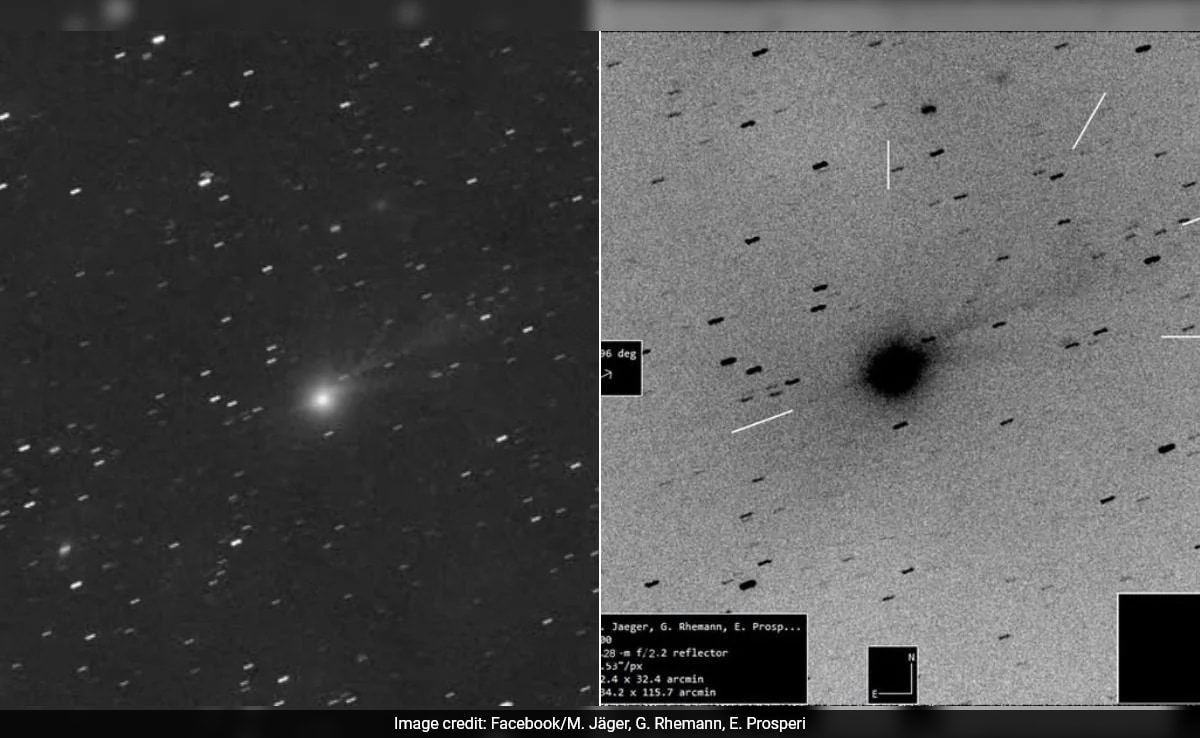
Harvard Physicist Weighs In On Complex Jet Structure On Interstellar Object 3I/ATLAS
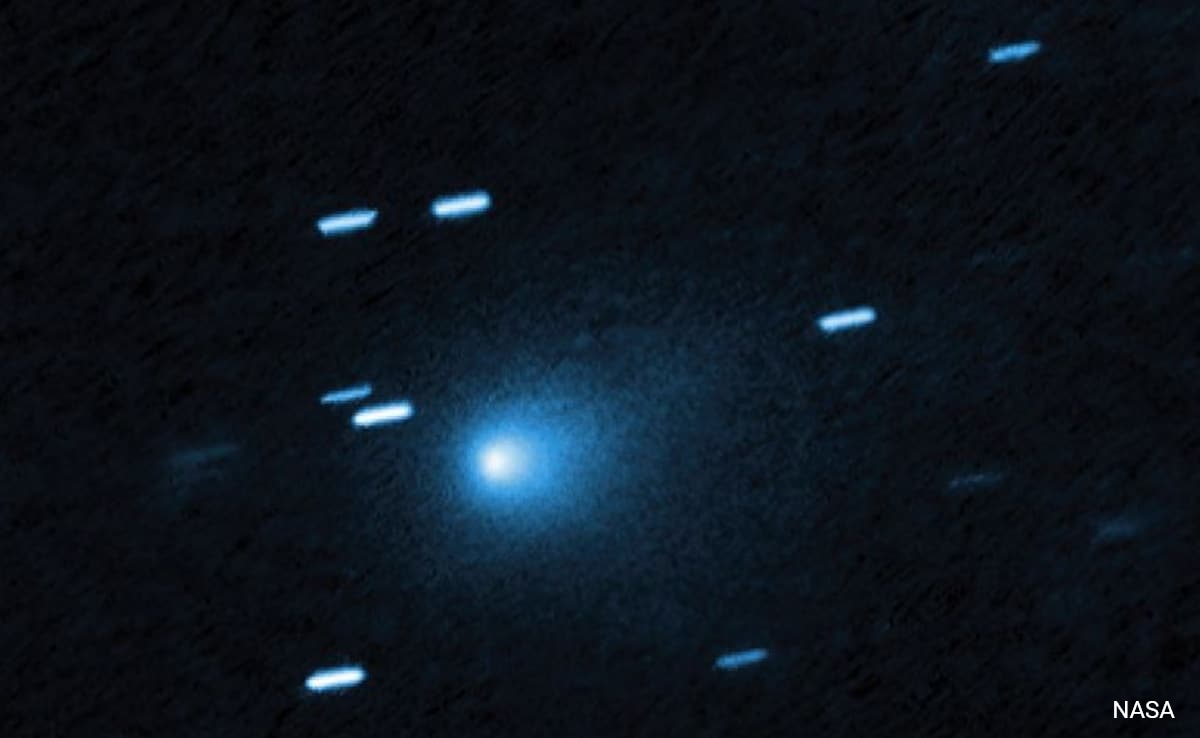
Interstellar Comet 3I/ATLAS Speeds Up, Turns Blue, Loses Tail, Leaves Experts Stumped