

2 hrs ago
Indian Stocks Plunge as FII Selling, Yields and Crude Rise

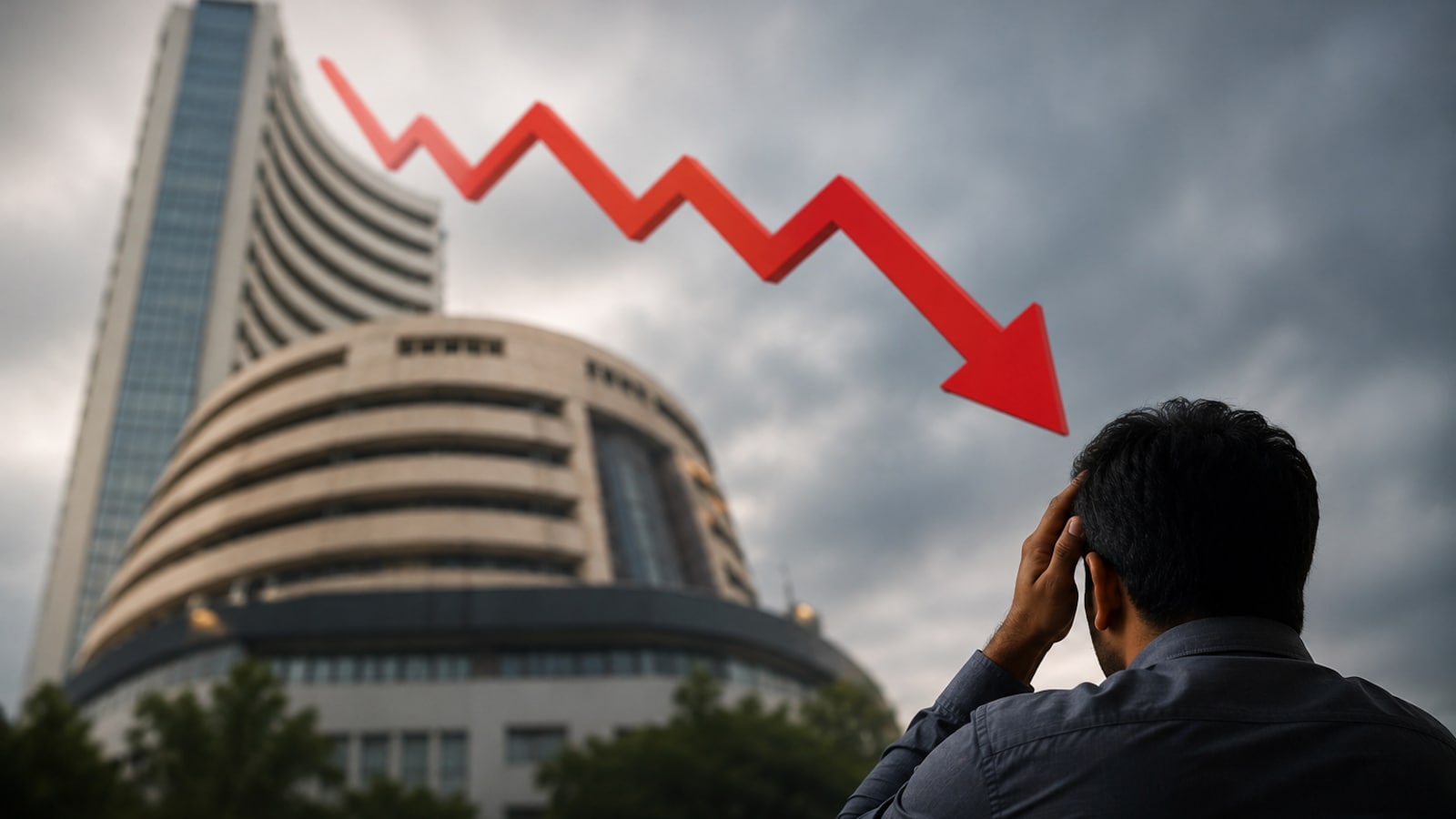
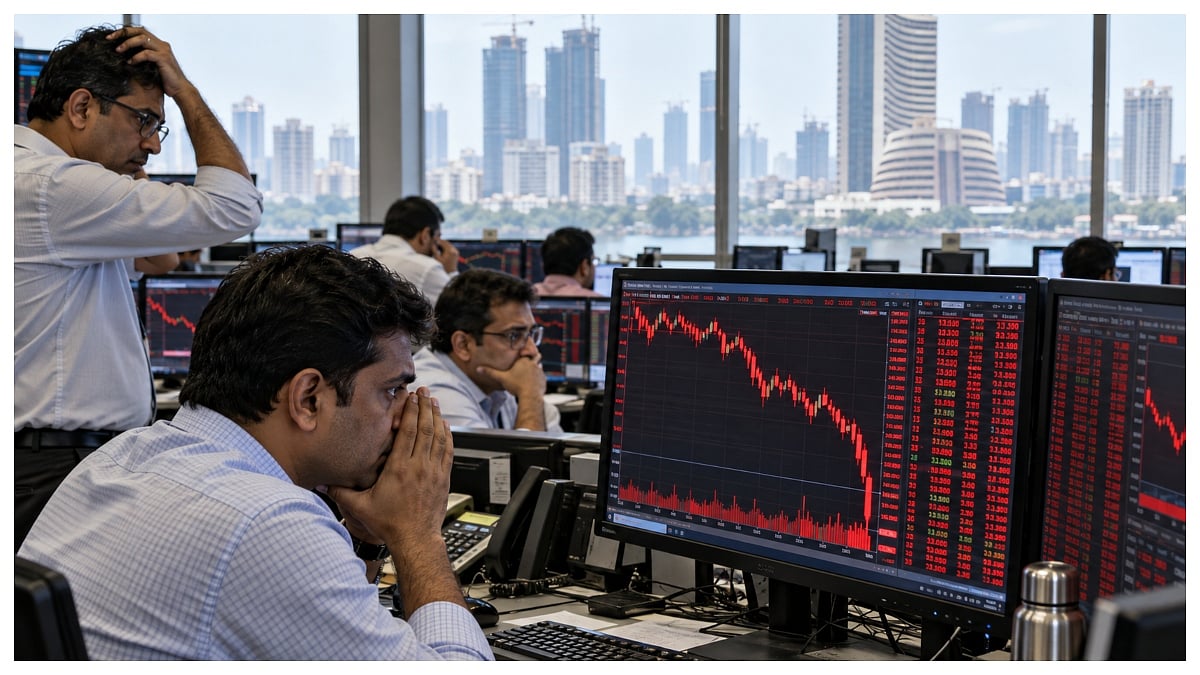
Indian share prices fell sharply for the fourth day in a row.
The Sensex dropped about 952 points, while the Nifty 50 also declined.
Foreign investors have been selling large amounts of Indian stocks.
Rising bond yields in the United States made emerging-market investments look less attractive.
The Indian rupee weakened as the dollar became stronger.
Oil prices stayed high, which can increase costs for India.
Investors are also worried that the Reserve Bank of India may raise interest rates.
The stock market could record its eighth losing week in a row, which would be the first such streak since 2001.

The Nifty 50 and Sensex fell for a fourth straight session, with the Sensex dropping 952 points, or 1.3%.
Foreign institutional investors sold more than ₹20,000 crore of Indian equities over two trading sessions.
Higher United States Treasury yields, a weaker rupee and elevated crude prices pressured risk assets.
Markets are pricing in roughly 100 basis points of Reserve Bank of India tightening over the next year.
The Nifty and Sensex are approaching an eighth consecutive weekly decline, potentially their first such streak since 2001.
- Who
- Indian equity investors, foreign institutional investors and the Reserve Bank of India are central to the development.
- What
- The Nifty 50, Sensex and other Indian market indices fell sharply amid broad-based selling.
- Where
- Indian stock markets, including the Nifty 50 and BSE Sensex, were affected by global market pressures.
- When
- The decline occurred on Thursday, during the fourth consecutive losing session; an RBI policy decision is due next week.
- Why
- Selling was linked to higher bond yields, a weaker rupee, elevated crude oil prices, expectations of RBI rate hikes and sustained FII outflows.
Case for an RBI rate hike
Case for holding rates
Monetary policy outlook
Case for an RBI rate hike
Rajeev Sharan said rising retail inflation, crude prices above $100, a rupee weaker than 96 per dollar and a narrower rate gap after a Federal Reserve hike strengthen the case for a 25-basis-point RBI hike.
Case for holding rates
Sharan said inflation remains within the target band and price pressures are not yet broad-based, which could lead the RBI to hold rates while taking a hawkish stance.
Market positioning
Case for an RBI rate hike
Markets are pricing in approximately 100 basis points of tightening over the next 12 months, reflecting expectations that the rate cycle may be turning.
Case for holding rates
A rate cut is considered off the table for now, but the RBI could avoid an immediate increase if it judges current inflation conditions manageable.
Key facts
- Sensex intraday low
- 71,527.98
- Sensex decline
- 952 points, or 1.3%
- Nifty 50 intraday low
- 22,301.3
- FII selling
- More than ₹20,000 crore over the past two trading sessions; one cited estimate was ₹20,128 crore
- Rupee exchange rate
- The rupee weakened 0.16% to 95.9850 per dollar
- Brent crude
- Rose 0.6% to $98.67 a barrel
- Potential RBI rate hike
- Markets widely expect a 25-basis-point hike, which would take the rate to 5.50% according to one analyst
Quotes
Rajeev Sharan
Head of Research at Brickwork Ratings
“The rate cycle looks to be turning. After holding through 2026, the RBI faces growing pressure to raise rates at its October review, and a 25 basis point hike to 5.50% is now a real possibility.”
 livemint.com
Sources
Related news

Indian Stocks Fall as Foreign Selling and Oil Pressure Mount

Indian Markets Extend Sell-Off as Oil and Yields Rise

US Yield Shock and Oil Surge Send Indian Equities Lower
Indian Markets Lose Nearly Rs 5 Lakh Crore After Sell-Off
Indian Markets Slide as US Yields, Oil and Rupee Weaken

Sensex, Nifty Fall for Third Day Amid Crude Concerns

October Market Outlook: Will Diwali Lift Indian Stocks?

Sensex, Nifty Fall as Foreign Fund Outflows Weigh

Indian Markets Open Lower as Foreign Selling Continues
