

Archive · 23 Dec 2025
Rare Migratory Birds Arrive at Latur Lakes
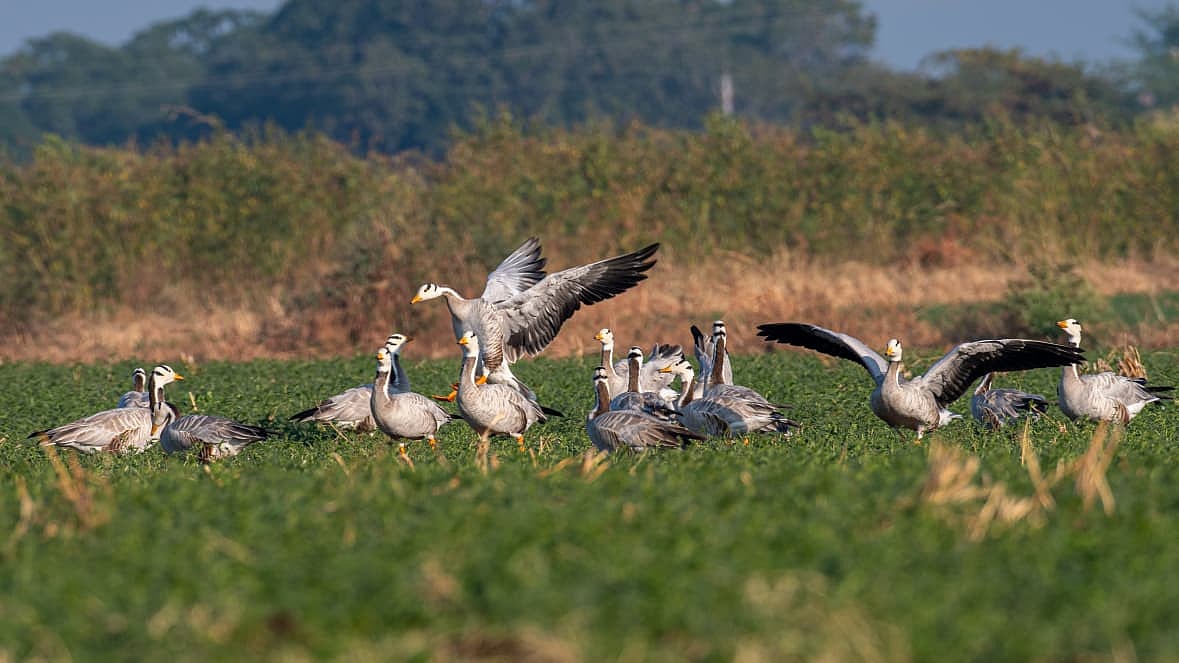
Some very special birds that travel long distances to find warm places to stay in the winter have been seen in Latur, India.
These birds, like the Bar-headed Goose and the Common Crane, come from places like Central Asia and Europe.
More than sixty Bar-headed Geese and six Common Cranes were spotted at two lakes in Latur.
Experts are happy because this shows that the lakes are healthy and have enough food and water for the birds.
It's a good sign for nature and might help people learn more about these birds and protect their homes.

Rare migratory birds, including Bar-headed Geese and Common Cranes, spotted at Pangaon and Kamkheda lakes in Latur district.
More than sixty Bar-headed Geese and six Common Cranes were sighted, indicating a healthy ecosystem.
Experts believe improved water availability, food resources, and reduced human disturbance contributed to the birds' arrival.
The sighting adds Pangaon and Kamkheda lakes to the emerging migratory bird map of Marathwada.
Other species like Ruddy Shelduck, Northern Shoveller, Northern Pintail, and Tufted Duck were also spotted, indicating a healthy seasonal arrival of migratory birds.
- Who
- Birdwatchers, researchers, and residents of Latur district
- What
- Rare migratory birds, including Bar-headed Geese and Common Cranes, spotted at Pangaon and Kamkheda lakes
- When
- Not specified, but recent
- Where
- Pangaon and Kamkheda lakes, Renapur tehsil, Latur district
- Why
- Improved water availability, food resources, and reduced human disturbance
- Bird Species
- Bar-headed Goose, Common Crane, Ruddy Shelduck, Northern Shoveller, Northern Pintail, Tufted Duck
- Location
- Pangaon and Kamkheda lakes, Renapur tehsil, Latur district
- Number of Bar-headed Geese
- More than sixty
- Number of Common Cranes
- Six
- Migration Origin
- Central Asia, Siberia, Afghanistan, Europe, Russian border
- Significance
- Indicates healthy ecosystem and undisturbed area
- Expert Opinion
- Improved water availability, food resources, and reduced human disturbance