

Archive · 22 Aug 2026
Raqs Media Collective’s Disobedient Shamiana Travels Through Time
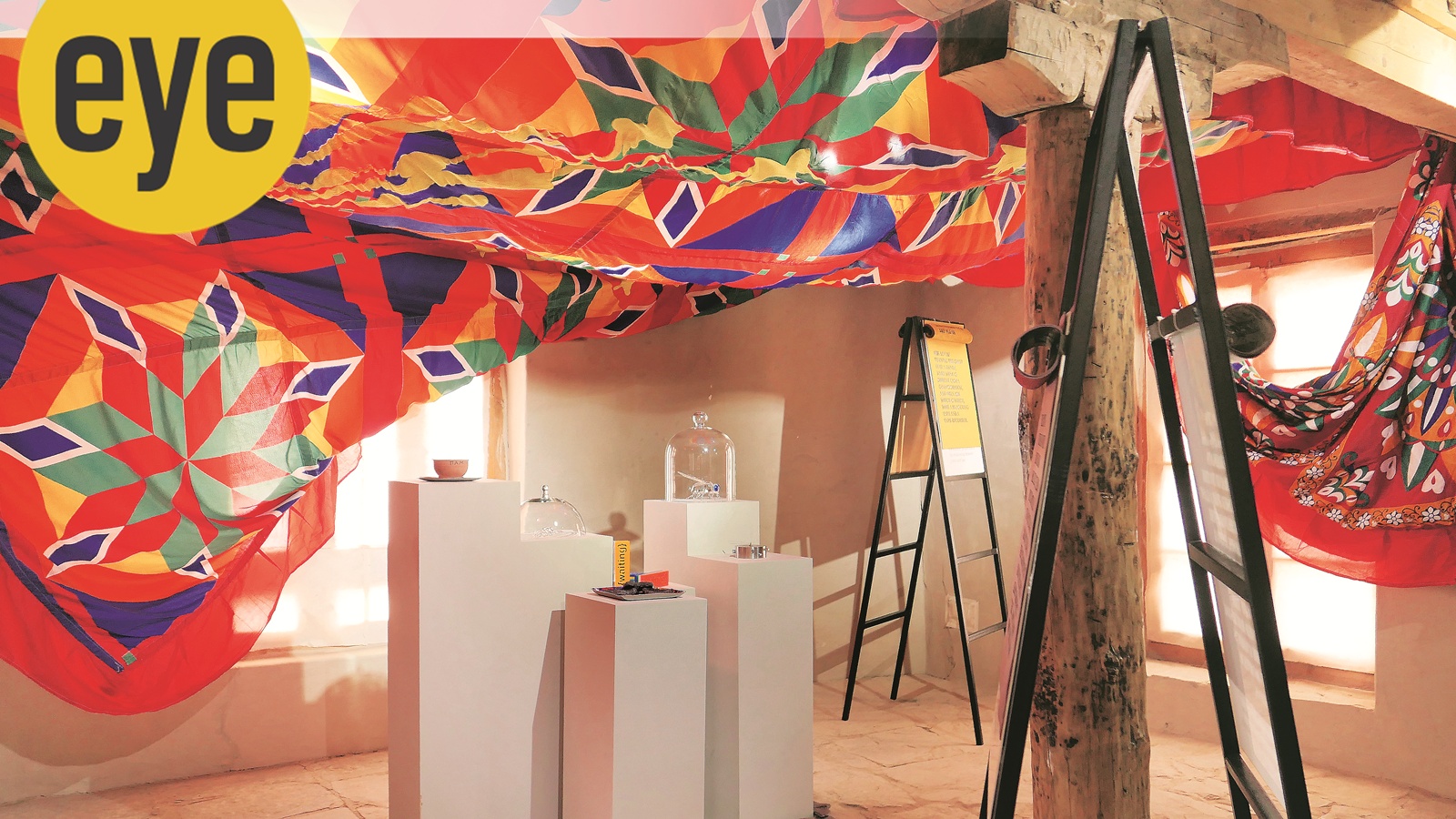
Raqs Media Collective is a group of three artists who make films, photographs and installations.
They use a colorful tent called a shamiana in some of their exhibitions.
In India, shamianas can be used for ceremonies, but they can also represent people gathering and resisting unfairness.
The shamiana traveled from an art museum in Zurich to Leh in Ladakh.
Its journey also reminded the artists of a student protest in Delhi.
Their Ladakh exhibition is called “The Time is Never Ripe.”
It includes 25 artworks about time, history, nature, humor and disagreement.
The artists believe art and politics are connected to ordinary life.

Raqs Media Collective’s navratna-patterned shamiana moved from Zurich’s Migros Museum to an exhibition in Leh.
The canopy connects art, protest and collective reflection, including the student protest at Delhi’s Jantar Mantar.
The collective’s Ladakh exhibition, “The Time is Never Ripe,” presents 25 works at the 17th-century LAMO building.
Works including “The Blood of Stars,” “Communard Biscuits” and “Comic Contempt” examine environmental conflict, history and dissent.
Raqs members describe disobedience as creative knowledge-making and say politics is inseparable from everyday life and artistic practice.
- Who
- Raqs Media Collective—Jeebesh Bagchi, Shuddhabrata Sengupta and Monica Narula—and the artists whose works are included in their exhibitions.
- What
- The collective presented its first solo exhibition in India in a decade in Ladakh, using a shamiana to explore art, dissent, time and political life.
- When
- The shamiana was displayed in Zurich for four months until May and arrived in Ladakh earlier this month; Shuddhabrata Sengupta supported Srishti Gupta, who has been incarcerated since April 2026.
- Where
- The exhibition is at the LAMO building in Leh, Ladakh; the earlier canopy presentation was at Migros Museum für Gegenwartskunst in Zurich, with a related protest at Jantar Mantar in Delhi.
- Why
- Raqs uses the shamiana and its artworks to examine disobedience, collective gathering, environmental and political fault lines, history and changing social realities.
- Artists
- Jeebesh Bagchi, Shuddhabrata Sengupta and Monica Narula
- Collective formed
- 1992, while the members were working on the film “Half the Night Left, and the Universe to Comprehend”
- Ladakh exhibition
- “The Time is Never Ripe”
- Venue
- LAMO, the Ladakh Arts and Media Organisation building in Leh
- Number of works
- 25 works are included in the Ladakh exhibition
- Zurich presentation
- “Disobedience Archive (Canopy for Broken Time)” was shown at Migros Museum für Gegenwartskunst for four months until May
- Featured work
- “The Blood of Stars” explores human-nature conflict through the story of iron