

Archive · 6 Dec 2025
Scientist Proposes Interstellar Objects Could Seed Earth Life
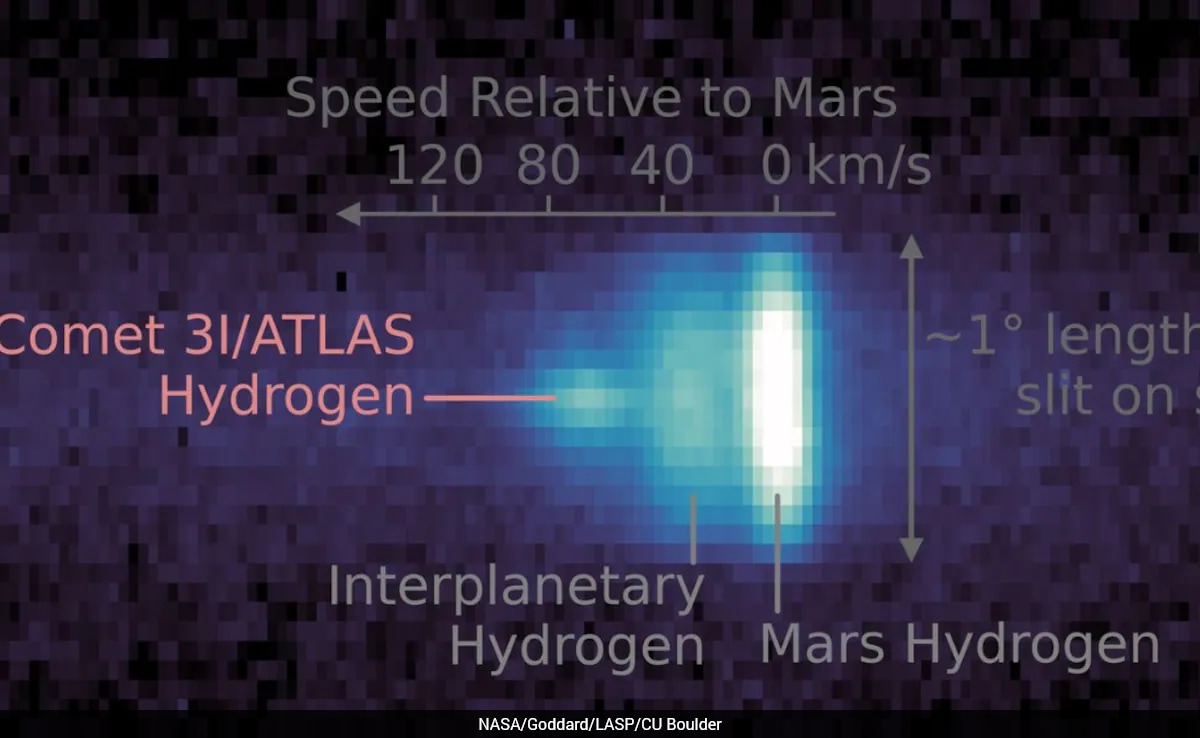
A scientist named Avi Loeb thinks that objects from space, like 3I/ATLAS, might be sent by advanced civilizations to bring life to Earth.
He says this object is moving in a strange way and has unusual features, which makes him think it might not be a natural comet.
Loeb believes that these objects could carry life and that extraterrestrials might have visited Earth before.
He thinks that life on Earth might have come from space through these objects.
NASA, however, calls 3I/ATLAS a comet.
Loeb's idea is based on a theory called directed panspermia, which suggests that life is spread throughout the universe by space objects.

Harvard scientist Avi Loeb proposes that interstellar objects like 3I/ATLAS could be sent by advanced civilizations to seed life on Earth.
3I/ATLAS, currently passing through our solar system, has unusual traits that make Loeb question its natural origin.
NASA classifies 3I/ATLAS as a comet, but Loeb suggests it might be a technological artifact.
Loeb's theory is based on directed panspermia, which posits that life is distributed throughout the universe by space objects.
3I/ATLAS is moving at a speed of 244,800 km/h and will be closest to Earth on December 19.
- Who
- Avi Loeb, a Harvard scientist
- What
- Proposed theory that interstellar objects could seed life on Earth
- When
- December 19 (closest approach of 3I/ATLAS to Earth)
- Where
- Earth and interstellar space
- Why
- To explore the possibility of extraterrestrial life seeding Earth
- Scientist
- Avi Loeb
- Interstellar Object
- 3I/ATLAS
- Closest Approach to Earth
- December 19
- Speed of 3I/ATLAS
- 244,800 km/h
- Theory
- Directed panspermia
- NASA's Classification
- Comet
