

Archive · 11 Jan 2026
Vaccination Key to Fighting Antimicrobial Resistance
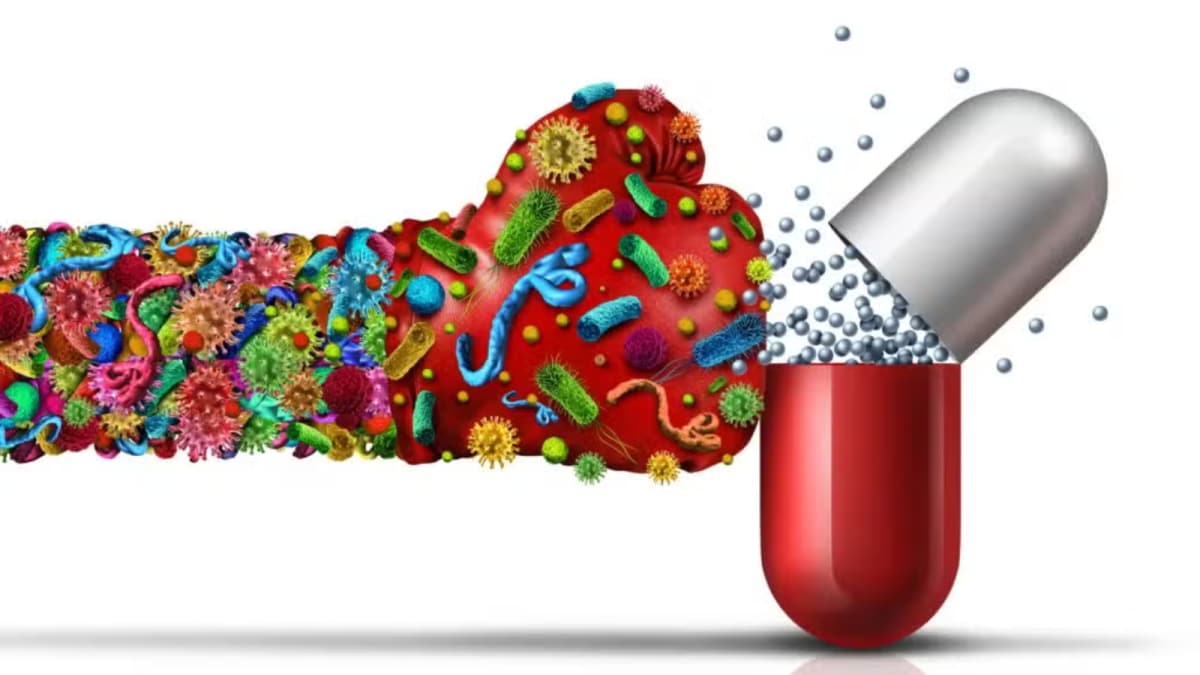
Antimicrobial resistance (AMR) is a big problem where germs stop responding to medicines.
This makes infections harder to treat and can lead to more deaths.
In 2019, almost 5 million deaths were linked to AMR.
Vaccines can help by preventing infections, which means we use fewer antibiotics.
This reduces the chance for germs to become resistant.
India has a big problem with AMR, especially because antibiotics are often misused.
Vaccines can reduce antibiotic use by 22%, which is a lot.
India's vaccination program has already helped reduce AMR-related deaths in children, but more needs to be done, especially for older adults.

Antimicrobial resistance (AMR) is a major global health threat, ranked 5th by WHO, causing nearly 5 million deaths in 2019.
India faces a significant burden of drug-resistant infections, driven by antibiotic misuse and easy over-the-counter access.
Vaccines can reduce antibiotic use by 22%, preventing infections and limiting the development of drug-resistant germs.
India's Universal Immunisation Programme has reduced AMR-related deaths in children by over 50%, but adult vaccination rates remain low.
Expanding vaccination coverage and promoting responsible antibiotic use are crucial to combat AMR and protect public health.
- Who
- Global population, particularly India, facing antimicrobial resistance (AMR)
- What
- Vaccination as a tool to reduce antibiotic misuse and slow AMR
- When
- AMR is an ongoing and growing crisis, with significant impacts already observed
- Where
- Global issue with a focus on India's significant burden of drug-resistant infections
- Why
- To prevent infections, reduce antibiotic use, and limit the development of drug-resistant infections
- AMR Global Rank
- 5th among top ten threats to global health (WHO)
- AMR Deaths in 2019
- Nearly 5 million worldwide
- Antibiotic Use Reduction by Vaccines
- 22% (WHO report)
- India's Geriatric Population (2050 Projection)
- Nearly 320 million
- AMR-Related Child Deaths Reduction (1990-2021)
- More than 50%
- AMR-Related Adult Deaths Increase (1990-2021)
- 80% (aged 70 and above)