

Archive · 23 Jul 2025
Upcoming Solar Eclipses: Dates, Times, and Locations
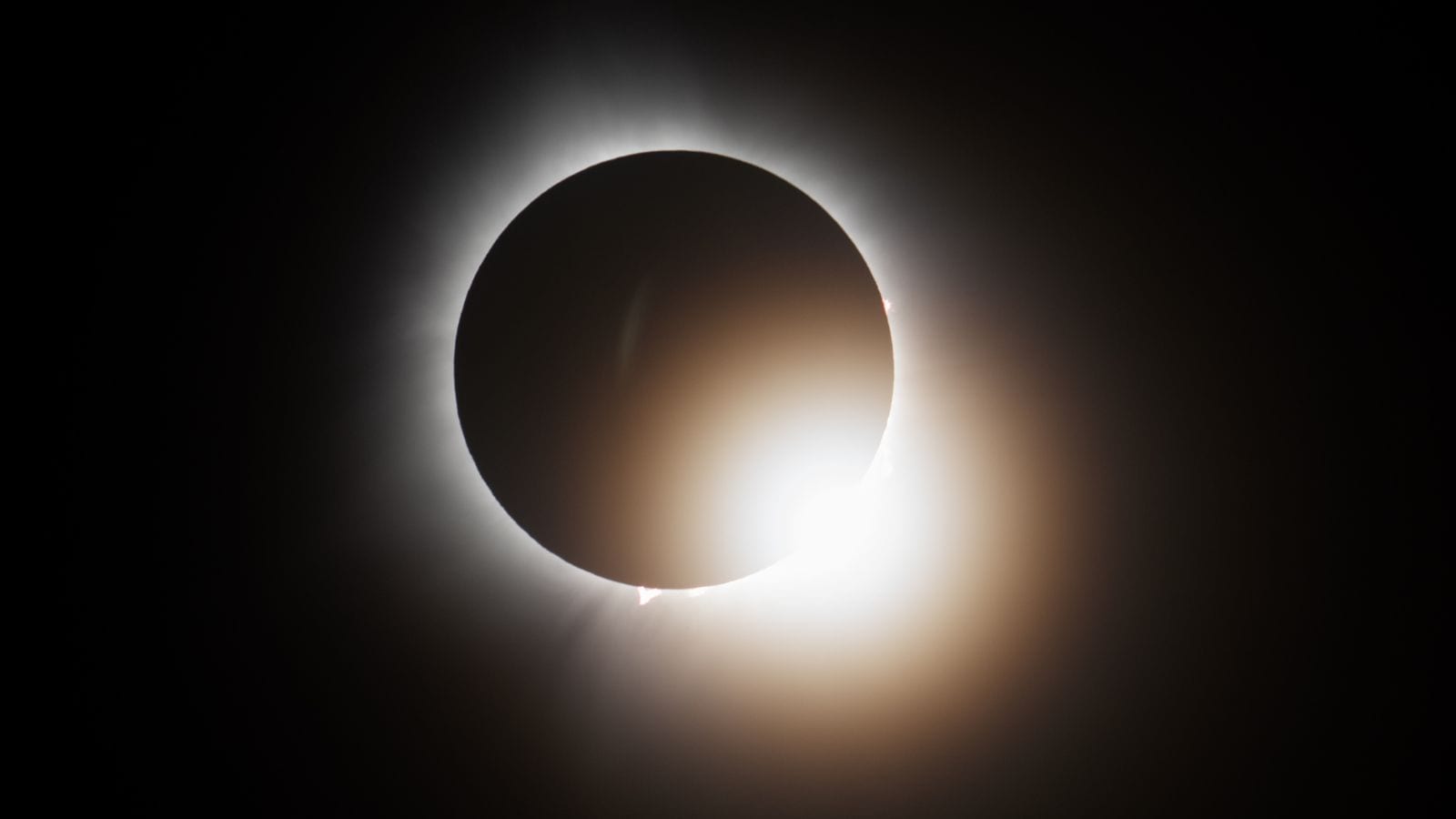
Imagine the Sun is a bright lightbulb, and the Moon is a ball that sometimes moves in front of it.
When the Moon blocks the Sun's light, we get a solar eclipse.
There are different types: sometimes the Moon blocks the whole Sun (total eclipse), and sometimes only part (partial or annular eclipse).
You need special glasses to look at them safely!
Several eclipses are coming up, and they'll be seen in different parts of the world, with the next partial eclipse on September 21st and a total solar eclipse viewable in India on August 2, 2027.

A solar eclipse occurs when the Moon aligns between the Sun and Earth, blocking the Sun's light.
The next partial solar eclipse is on September 21, visible from New Zealand, eastern Australia, and Antarctica.
An annular solar eclipse will occur on February 17, 2026, visible from parts of Africa and South America.
A total solar eclipse on August 12, 2026, will be the first visible from mainland Europe since 1999.
Another total solar eclipse is on August 2, 2027, and will be visible in India.
- Who
- Observers of celestial events.
- What
- Upcoming solar eclipses, including partial, annular, and total eclipses.
- When
- Partial solar eclipse on September 21, 2025, and others in 2026 and 2027.
- Where
- Various locations including New Zealand, Australia, Africa, Europe, and India.
- Why
- To understand and witness the rare phenomenon of solar eclipses and study the Sun.
Cultural Significance
Scientific Significance
Differing perspectives on eclipses.
Cultural Significance
Various cultures see it as a symbol of change and a powerful omen.
Scientific Significance
The scientific community focuses on studying the Sun's corona and testing relativity theories.
- Next Partial Eclipse
- September 21, 2025
- Eclipse Duration (Sept 21)
- About 4 hours 24 minutes
- Next Annular Eclipse
- February 17, 2026
- Next Total Eclipse Visible in Europe
- August 12, 2026
- Total Eclipse Visible in India
- August 2, 2027