

Archive · 22 Jul 2026
Protests in India: Legal Rights and Consequences
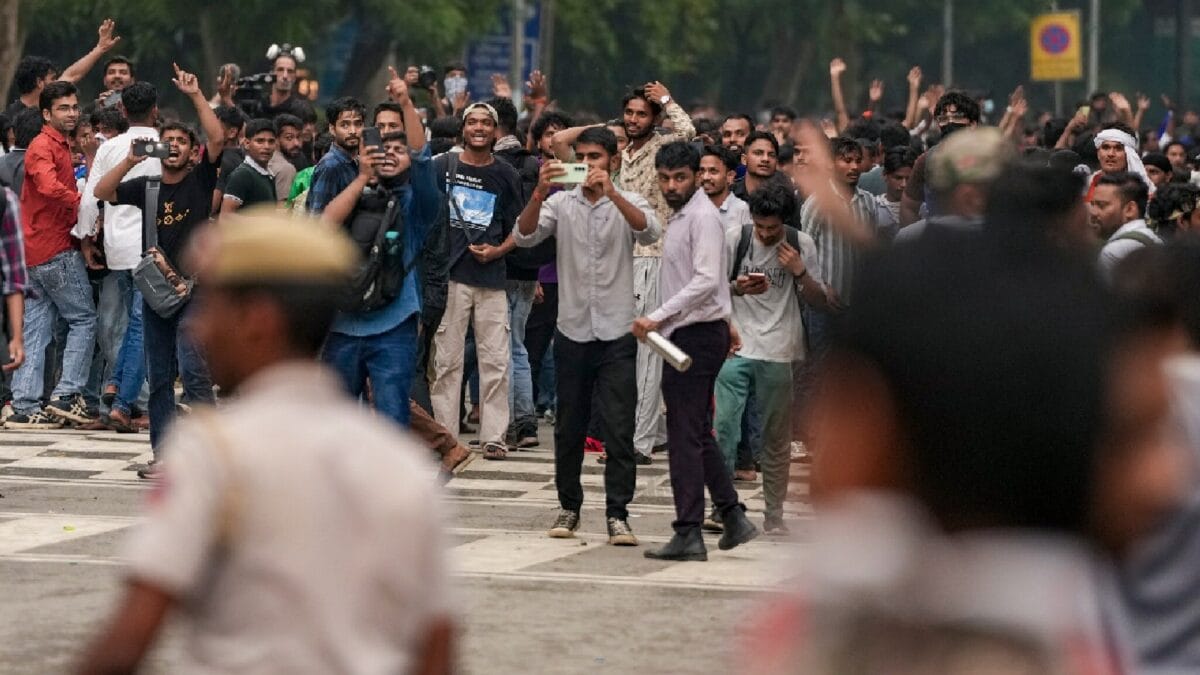
In India, people have the right to protest peacefully under Article 19(1)(b) of the Constitution.
However, this right is not absolute and can be restricted for public order.
Protests that turn violent or disobey lawful orders can lead to legal trouble.
The Bharatiya Nyaya Sanhita (BNS) now governs protest-related offenses, replacing the older Indian Penal Code (IPC).
Police can register cases, issue notices, and detain participants if the protest becomes unlawful.
It's important for protesters to remain peaceful and follow the rules to avoid legal consequences.

Article 19(1)(b) of the Indian Constitution guarantees the right to assemble peacefully and protest.
Protests must be lawful and non-violent to remain protected under the Constitution.
The Bharatiya Nyaya Sanhita (BNS) now covers protest-related offenses, replacing the older IPC sections.
Police can register cases, issue notices, and detain participants if a protest turns violent or disobeys lawful orders.
Protesters should follow route and timing conditions and not resist lawful police directions to avoid legal trouble.
- Who
- Indian citizens, including students and political leaders
- What
- Protests and their legal implications in India
- When
- Recent protests in July 2026
- Where
- Delhi and Mumbai
- Why
- To understand the legal boundaries of protesting in India
Protesters' Rights
Law Enforcement's Role
Right to Protest
Protesters' Rights
Protesters argue that Article 19(1)(b) of the Constitution guarantees their right to assemble peacefully and protest, which is a fundamental democratic right.
Law Enforcement's Role
Law enforcement emphasizes that while the right to protest is recognized, it must be exercised within the bounds of the law and public order.
Permission and Regulations
Protesters' Rights
Protesters believe that peaceful protests should not require prior permission and that restrictions should be minimal to avoid infringing on their rights.
Law Enforcement's Role
Law enforcement argues that obtaining permission and adhering to regulations are necessary to prevent unrest and ensure public safety.
Use of Force
Protesters' Rights
Protesters claim that the use of force by police during protests is often excessive and violates their rights.
Law Enforcement's Role
Law enforcement maintains that the use of force is justified when protesters become violent or disobey lawful orders.
- Article 19(1)(b)
- Right to assemble peacefully and without arms
- Bharatiya Nyaya Sanhita (BNS)
- New criminal code replacing IPC for protest-related offenses
- Maharashtra Police Act
- Used to detain participants in unauthorized protests
- Section 189
- Unlawful assembly under BNS
- Section 191
- Rioting under BNS
- Section 223
- Disobedience of a lawful order by a public servant under BNS
- Section 35(3) BNSS
- Use of summons and notices for investigations