10 months ago
BRO DG Discusses Border Infrastructure Development and Challenges
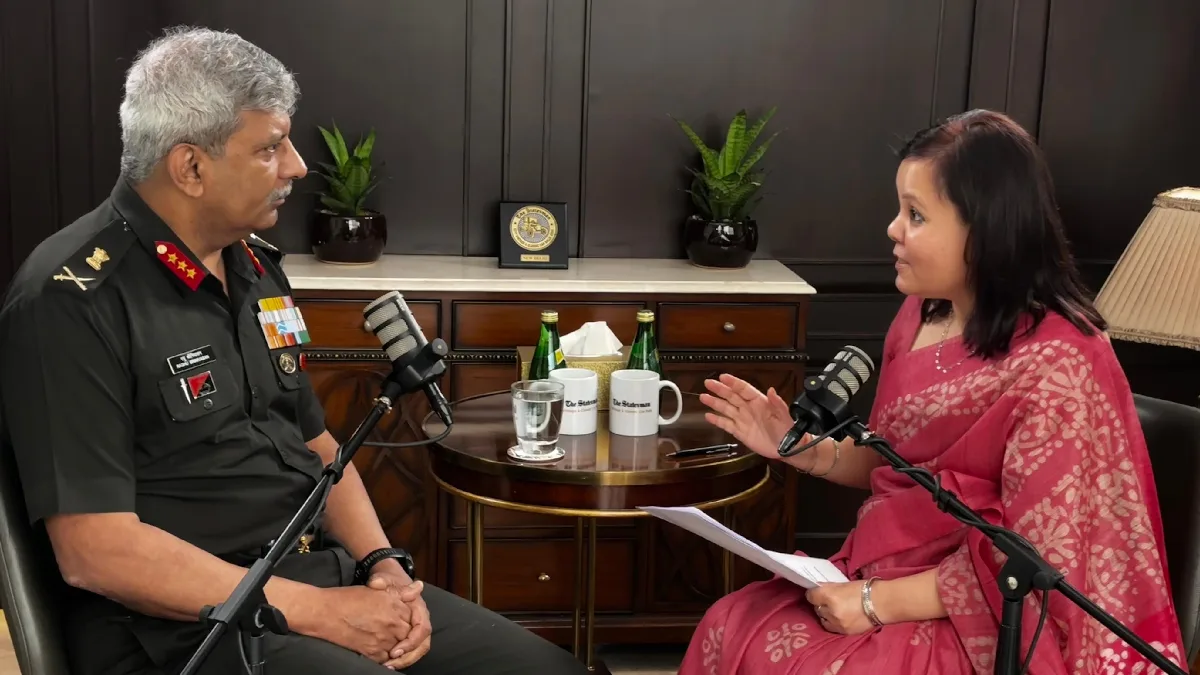
Imagine India has a special team called the Border Roads Organisation (BRO) that builds super important roads, bridges, and tunnels, especially in the tough, tall mountains near its borders.
The boss of this team, Lt Gen Raghu Srinivasan, talked about how they're working super fast, even higher than Mount Everest's base camp!
They've built a new road to Leh that's much shorter and will be usable all year round, which is great for soldiers and people living there.
Building in these places is really hard because it's freezing cold, windy, and there are many dangers like landslides and avalanches.
But the BRO uses cool new technology like drones to plan, and special materials that are good for the environment.
They also hire lots of local people, which helps them too.
This work helps make the country safer and brings jobs and opportunities to people living in remote areas.
They even have funny signs on the roads to keep everyone's spirits up!

The Border Roads Organisation (BRO) is significantly increasing its pace of building infrastructure in border areas, with unprecedented support from the Indian government.
Notable achievements include constructing high-altitude roads and bridges, such as connecting Mig La at 19,400 feet, higher than Everest Base Camp, and building the Sasarbranksa bridge in under 347 days at 15,000 feet.
The Nimu-Padam-Darcha road is a strategic game-changer, providing a shorter, all-weather, double-lane route to Leh, with a tunnel planned at Shinkunla Pass.
BRO faces extreme challenges in its work due to harsh weather (temperatures as low as -40°C), difficult terrain, and the need for advanced technology and innovative construction methods.
Infrastructure development by BRO is crucial for national security, economic prosperity in border regions, and provides employment to a large number of local people.
- Who
- Border Roads Organisation (BRO) led by DG Lt Gen Raghu Srinivasan
- What
- Discussing the progress, challenges, and achievements in building border infrastructure, including roads, bridges, and tunnels, with a focus on strategic connectivity, economic development, and national security.
- Where
- Across India's border regions (Ladakh, Arunachal Pradesh, J&K, etc.), Bhutan, and the Indo-Myanmar border.
- When
- Ongoing, with specific mention of milestones achieved recently and future targets for 2026.
- Why
- To enhance national security by improving connectivity for military deployment, to boost economic prosperity in border areas through improved infrastructure, and to respond to natural calamities.
Key facts
- Director General
- Lt Gen Raghu Srinivasan, PVSM, VSM
- Organization
- Border Roads Organisation (BRO)
- Key Regions of Operation
- Ladakh, Himachal Pradesh, Uttarakhand, Sikkim, Arunachal Pradesh, Mizoram, Nagaland, Manipur, Rajasthan, Jammu & Kashmir, Bhutan, Indo-Myanmar border, Chhattisgarh
- Road Construction Pace
- Approximately 1,100–1,300 kilometers annually at high altitudes.
- Notable Projects
- Nimu-Padam-Darcha road, Shinkunla Pass tunnel, Arunachal Frontier Highway, Sasarbranksa bridge, Umling La, Mig La, Taklingla tunnel
- Technological Innovations
- Drones for surveys, geo-sensing, Rejupe mix for low-temperature bitumen work, use of steel slag, modular precast work, interlocking blocks, avalanche protection tunnels
- Employment
- Employs 70,000–80,000 local people annually.
Quotes
Lt Gen Raghu Srinivasan
Director General of the Border Roads Organisation (BRO)
“There has been a surge in the amount of work that we do on the borders. And this has come top-down. The Government of India over the last 10 years has given tremendous impetus—unparalleled impetus—to the development of border infrastructure, which was hitherto. While we were building roads earlier and had done a remarkable amount of effort, the pace has remarkably improved. We started by playing catch-up, and now we’ve caught up. Many passes have been connected and many heights we’ve surmounted. Some of you are bikers, and you would have gone over the Khardungla Pass, which is at 18,400 feet—something at the level of Everest Base Camp. Three years ago, we reached Umling La, which is at 19,000 feet. And I think last month, we managed to connect Mig La at 19,400 feet—now this is higher than the Everest Base Camp. These are the kinds of milestones that make you happy and make you feel proud. We have so many achievements that have entered the international records of high-altitude infrastructure development. Somewhere, in eastern Ladakh, we built the Sasarbranksa bridge—over 300 metres in length—in less than 347 days at 15,000 feet over a frozen shore. To say there is one feat is very difficult because there are many. Every sector that we go to, whether it is Ladakh, Himachal Pradesh, Uttarakhand, Sikkim, Arunachal Pradesh, down to Mizoram, Nagaland, Manipur—all the border states, we have significant targets that we have achieved. We know we need to do more and we are geared up to do it.”
 thestatesman.com
“For one, it’s going to be the shortest avenue to reach Leh — just 298 kilometres. There is only one major pass that we have to cross, which remains snowbound throughout the year. And as of last year, we had begun work on the Shinkunla Pass; the first blast was done by the Prime Minister himself. We have started work on both portals, so you’ll have a tunnel on the Zanskar Range. Once that happens, you have a clean route all the way to Nimu—30 kilometres from Leh—through the Zanskar Valley, famous for the Chadar Trek in harsh winters, which many adventure enthusiasts go to when they walk across the ice in harsh winters. Connectivity was again established last year. We are on track to complete it by the end of next year. Then, you will have a double-lane road of 298 kilometres. From Manali, instead of the normal route through Upshi, you turn towards Darcha, cross the Shinkunla Tunnel (which will come up in about four years), and then you reach Leh. We started with the Srinagar-Zojila route, then the second route which is the Manali-Upshi route—but that isn’t all-weather; it’s snowbound for six months with six passes on that – that is even more difficult. You need to have all-weather connectivity. Leh is strategically vital and in so many ways important for the country, so we need all-weather, shorter connectivity. The third route is a game-changer.”
thestatesman.com