Archive · 29 Sep 2026
SpaceX Starship Reaches Orbit, Ends Historic Flight Early

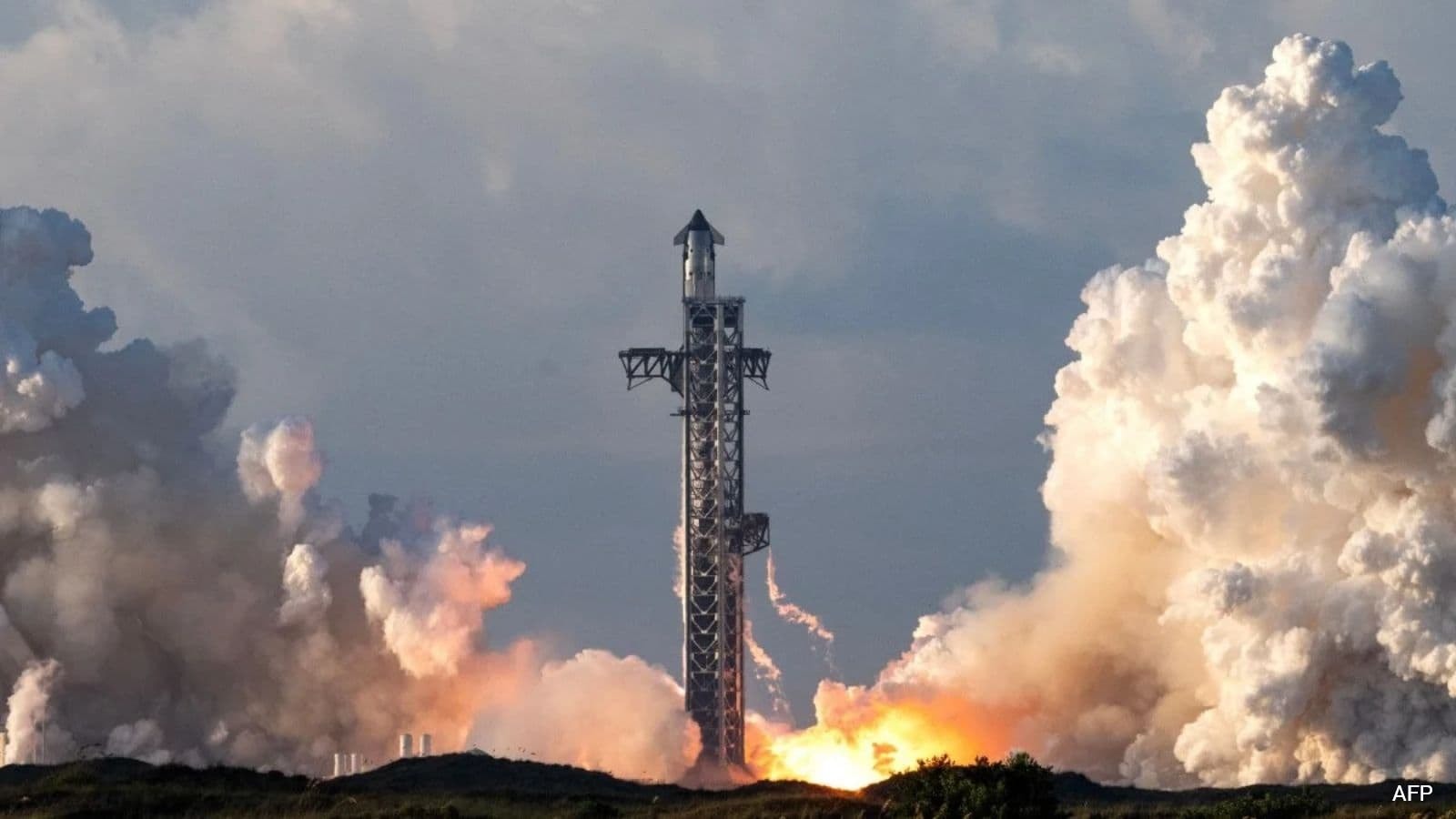
SpaceX launched its very large Starship rocket from Texas.
For the first time, Starship reached orbit around Earth.
It carried and released 26 new Starlink satellites.
One engine stopped earlier than planned, but the other systems kept working.
SpaceX had hoped the spacecraft would fly for 10 hours and make six trips around Earth.
Controllers ended the flight after about three hours to be cautious.
Starship came down in the Pacific Ocean north of Hawaii.
It tipped over and caught fire after splashing down.
SpaceX is testing Starship for future Moon and Mars missions and for launching many satellites.

SpaceX’s Starship reached orbit for the first time during Monday’s launch from Texas.
The spacecraft deployed 26 advanced Starlink satellites while traveling at about 17,500 mph.
One engine shut down prematurely, but flight controllers continued after determining the mission remained safe.
The planned 10-hour, six-lap flight ended after roughly two laps and three hours.
Starship reentered over the Pacific, splashed down north of Hawaii, tipped over, and caught fire.
- Who
- SpaceX, founded by Elon Musk, conducted the launch; NASA is monitoring Starship’s potential role in Artemis missions.
- What
- Starship reached orbit for the first time, deployed 26 Starlink satellites, and completed an early reentry and splashdown.
- When
- Monday; the spacecraft splashed down about three hours after liftoff.
- Where
- The rocket launched from Starbase in southern Texas and splashed down in the Pacific Ocean north of Hawaii.
- Why
- SpaceX is testing Starship for reusable orbital launches, satellite deployment, and future lunar and Mars missions.
- Rocket height
- 407 feet (124 meters)
- Launch site
- Starbase, southern Texas
- Payload
- 26 advanced Starlink satellites
- Planned flight
- About 10 hours and six laps around Earth
- Actual flight
- About three hours and roughly two laps
- Orbit altitude
- 170 miles (275 kilometers)
- Splashdown location
- Pacific Ocean north of Hawaii
- Reported early-return explanation
- One source attributed it to engine trouble and caution; another said no reason was provided