

Archive · 5 Jan 2026
Kharsawan Massacre: Adivasi Memory and State Recognition
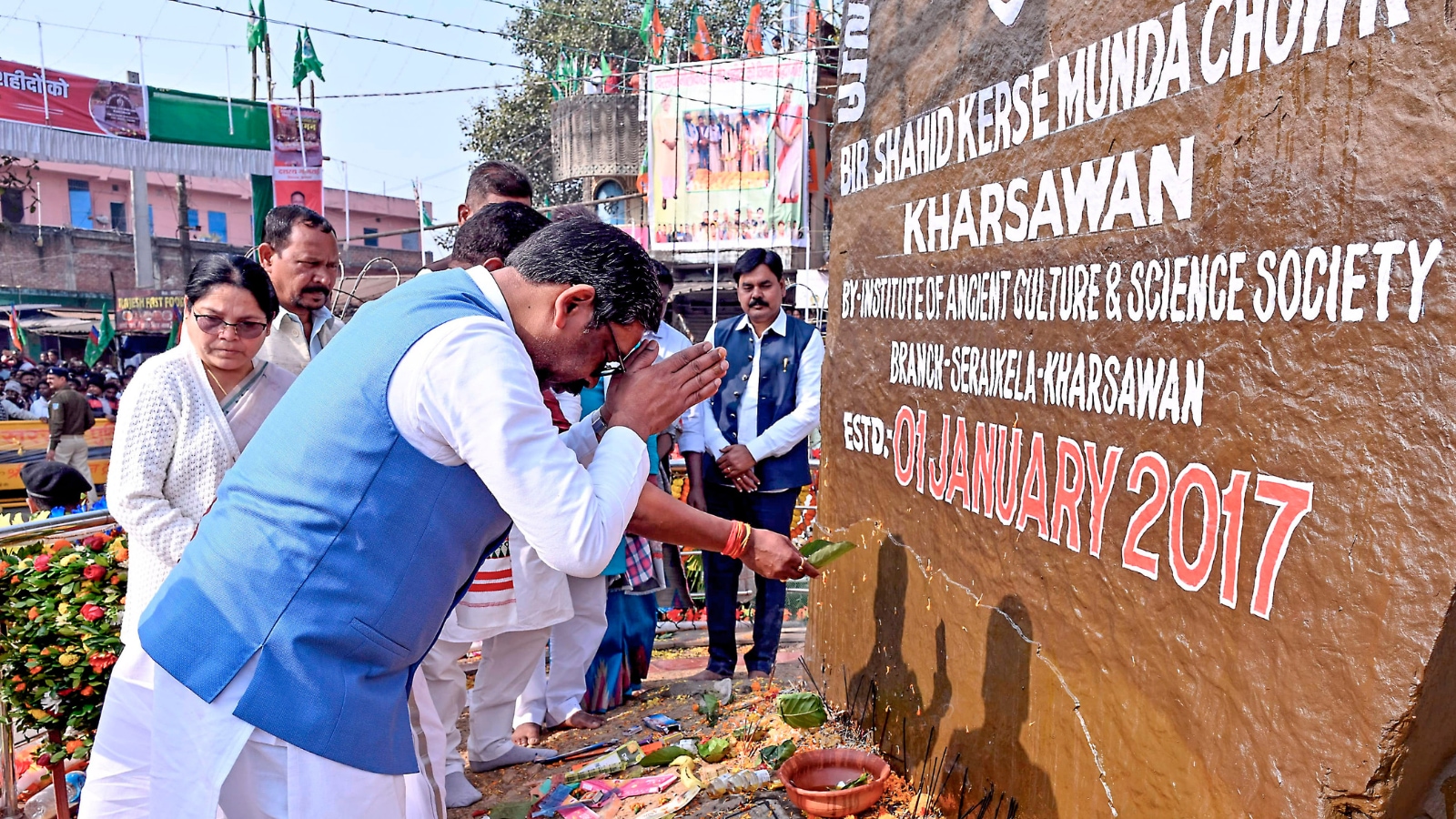
A long time ago, in 1948, many Adivasi people gathered in Kharsawan, Jharkhand, to protest against the merger of their area with another state.
The police opened fire on the crowd, and many people died.
The exact number of deaths is still not known, and the government has not officially recognized all the victims.
Recently, the Chief Minister of Jharkhand promised to form a committee to identify the martyrs and give them honors.
However, many Adivasis are not sure if the government will keep its promise, as similar promises have been made before but not fulfilled.
The memory of this event is very important to the Adivasi community and has shaped their struggles for rights and recognition.

The Kharsawan massacre occurred on January 1, 1948, during a protest against the merger of Saraikela-Kharsawan with Odisha.
Police fired on the crowd, with disputed death tolls ranging from 35 to 50,000.
Chief Minister Hemant Soren announced a committee to identify martyrs and provide state honors and financial assistance to their families.
Adivasis in the region are cautious about the announcement, citing past failures by the government to acknowledge the massacre.
Only two victims have been officially recognized and compensated so far, deepening distrust among the community.
- Who
- Adivasis protesting the merger of Saraikela-Kharsawan with Odisha
- What
- Police firing on protesters leading to a massacre
- When
- January 1, 1948
- Where
- Kharsawan, Jharkhand
- Why
- Protest against the merger and demand for a separate Jharkhand state
- Date of Massacre
- January 1, 1948
- Location
- Kharsawan, Jharkhand
- Cause
- Protest against merger of Saraikela-Kharsawan with Odisha
- Key Figure
- Jaipal Singh Munda
- Current CM
- Hemant Soren
- Proposed Committee
- Retired judge, senior officials, local representatives, social workers
- Disputed Death Toll
- 35 to 50,000
- Compensation Given
- Rs 1 lakh to two families in 2016