

Archive · 19 Jun 2025
India's Post-Truth Era: Propaganda and War
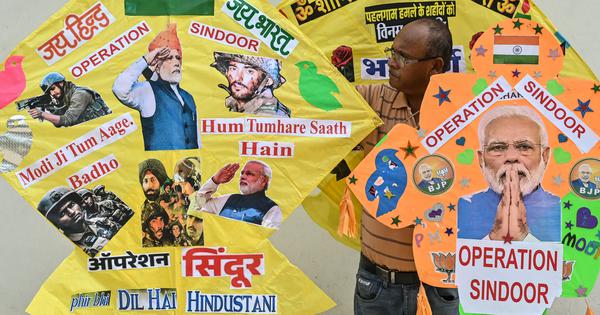
After a recent conflict, India and Pakistan are struggling to agree on facts, like what really happened.
The news often exaggerates victories and spreads false information.
In India, some media outlets are not questioning their government, they are instead embracing extreme nationalism.
This makes it hard to discuss peace because everyone is so focused on fighting, and anti-war ideas aren't being heard.

Recent India-Pakistan conflict reveals a breakdown in truth and fact on both sides.
Indian media displayed propaganda, fabricating claims of military victories and territorial gains.
The post-truth era in India is marked by hyper-nationalism, religious majoritarianism, and suppressed dissent.
Mainstream media's shift from critical reporting to jingoism after the Pahalgam attack is noted.
The article critiques the prevalence of military solutions and the diminishing space for anti-war sentiments.
- Who
- Nissim Mannathukkaren, professor at Dalhousie University.
- What
- Analysis of the post-truth environment in India and its impact on India-Pakistan relations.
- When
- Following a recent India-Pakistan conflict.
- Where
- India and Pakistan.
- Why
- To examine the erosion of truth, rising nationalism, and the impact on conflict resolution.
Pro-War Stance
Anti-War Stance
Approaches to Conflict
Pro-War Stance
Prioritizes military solutions.
Anti-War Stance
Focuses on other strategies
- Conflict Context
- India-Pakistan conflict following the Pahalgam attack.
- Key Issue
- Breakdown in truth and factual reporting
- India's Democracy
- Larger than Pakistan in size, population, military spending and GDP
- Media Response
- Propaganda, fabricating victory claims.
