Archive · 14 Sep 2026
BRICS Declaration Uses Ambiguity to Signal Positions on Global Crises
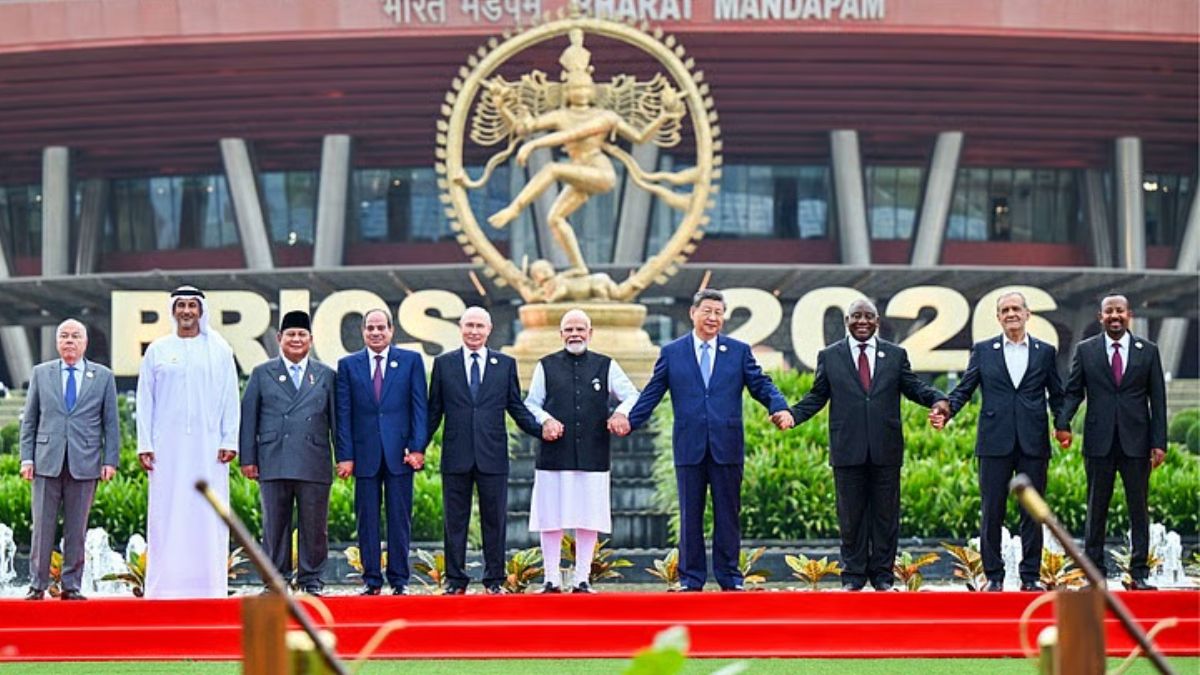
BRICS countries agreed on a statement about wars and other world problems.
The statement often avoided naming the countries believed to be responsible.
This helped countries with different interests agree on one document.
It did not directly name Russia or Ukraine when discussing their war.
It criticised sanctions that are not approved by the United Nations Security Council.
It called for a ceasefire and humanitarian aid in Gaza.
It supported the creation of a Palestinian state and full United Nations membership for Palestine.
It also criticised attacks on protected peaceful nuclear facilities.
India won strong language condemning a terrorist attack in Jammu and Kashmir that killed 26 people.

The New Delhi Declaration adopted at the 18th BRICS Summit addresses sanctions, terrorism, Gaza, nuclear risks and regional conflicts.
It avoids naming Russia or Ukraine over their war, instead urging sovereignty, dialogue, consultation and diplomacy.
BRICS condemns unilateral economic and secondary sanctions not authorised by the United Nations Security Council.
The declaration supports a Gaza ceasefire, humanitarian access, Palestinian statehood and full United Nations membership for Palestine.
India secured strong condemnation of the April 22, 2025, Jammu and Kashmir terrorist attack, including calls to confront cross-border terrorism and safe havens.
- Who
- BRICS member countries adopted the declaration, with India hosting the summit.
- What
- The declaration sets positions on sanctions, terrorism, Gaza, nuclear risks and several regional conflicts while avoiding names in many cases.
- When
- It was adopted at the 18th BRICS Summit on September 12; it also refers to the April 22, 2025, Jammu and Kashmir attack.
- Where
- The declaration was adopted in New Delhi and addresses crises in several regions.
- Why
- General wording helped preserve consensus among an expanded grouping whose members have different strategic interests and alliances.
Consensus and Diplomacy
Accountability and Clear Attribution
Use of Ambiguous Language
Consensus and Diplomacy
General wording allows countries with different alliances and strategic interests to adopt a joint declaration.
Accountability and Clear Attribution
Avoiding the identification of aggressors may limit BRICS’ ability to shape outcomes and hold responsible parties accountable.
Treatment of Global Conflicts
Consensus and Diplomacy
The declaration focuses on broad principles such as sovereignty, civilian protection, ceasefires and peaceful resolution.
Accountability and Clear Attribution
The document is more direct where members broadly agree, but becomes less specific on conflicts such as Russia-Ukraine, Iran-related tensions and the role of foreign forces.
- Document
- New Delhi Declaration
- Summit
- 18th BRICS Summit
- Adoption
- New Delhi, September 12
- Russia-Ukraine war
- Neither Russia nor Ukraine is named; the declaration calls for dialogue, consultation and diplomacy.
- Sanctions
- BRICS condemns unilateral economic and secondary sanctions not authorised by the United Nations Security Council.
- Gaza
- The declaration calls for maintaining a ceasefire, ending violence, ensuring humanitarian access and supporting full United Nations membership for Palestine.
- Jammu and Kashmir attack
- The declaration condemns the April 22, 2025, terrorist attack, in which 26 people were killed.