12 hrs ago
Central Banks Expanded Guidance, But How Much Should They Talk?

After the financial crisis, interest rates were already very low.
Central banks wanted people to expect that rates would stay low for a while.
The Federal Reserve said in 2011 that it expected to keep rates near zero until at least mid-2013.
In 2012, it began showing officials’ predictions for future rates as dots.
These messages could lead markets to expect low rates for longer.
The idea was that this expectation might help the economy.
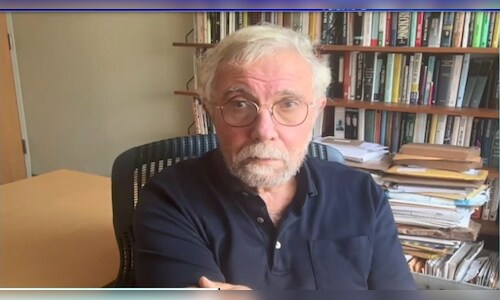
Paul Krugman described the theory as making a believable promise to act irresponsibly.
But it was uncertain whether central banks would really bind themselves to that promise.

After the 2007–09 global financial crisis, central banks expanded their communication about future policy.
With interest rates near zero, central banks signaled they expected rates to remain low as economies recovered.
In 2011, the Federal Reserve said it expected to keep rates near zero until at least mid-2013.
The Fed began publishing officials’ interest-rate projections, shown as dots, the following year.
The approach aimed to make markets expect lower rates for longer, though whether central banks would truly commit was uncertain.
- Who
- Central banks, including the Federal Reserve; the passage also cites Paul Krugman.
- What
- Central banks expanded guidance about how long they expected interest rates to remain low.
- Where
- When
- After the 2007–09 global financial crisis; the Federal Reserve gave guidance in 2011 and began publishing rate projections in 2012.
- Why
- The approach was intended to make markets expect lower interest rates for longer, even as the economy began to recover.
Key facts
- Financial crisis
- 2007–09
- Fed guidance
- In 2011, the Fed said it expected rates to stay near zero until at least mid-2013.
- Rate projections
- The Fed began publishing officials’ rate projections as dots in 2012.
- Policy context
- Policy rates were already near zero.
- Described theory
- “Credibly promise to be irresponsible,” a phrase attributed to Paul Krugman.
Sources
Related news

Fed Revisits 1997 Debate Over Rising Neutral Interest Rates

Tiny Inflation Shift Could Decide the Fed’s Next Move

Inflation Returns, Reviving the Global Fight Against Rising Prices

Markets Expect Fed Rate Hike Despite Surprise Risks
Fed Raises Rates as Inflation Persists, Trump Demands Cuts
Fed Officials Signal October Rate Hike Is Unlikely

Diesel Prices Surge as Refinery Disruptions Tighten Global Fuel Markets

Fund manager warns India sleepwalking into trillion-dollar Big Tech loss

How Much Should Central Banks Talk? Fed Promised Low Rates

Trump Slams Krugman as 'Deranged Bum' Following Economic Criticism