

17 hrs ago
RBI’s $136 Billion Inflow Pushes Rupee Management Into Focus

The Reserve Bank of India helped bring $136 billion into the country’s financial system.
This gave the central bank more dollars to manage the rupee.
The rupee has strengthened somewhat, but not as much as it did during a similar 2013 programme.
One reason is that the RBI is absorbing many of the incoming dollars instead of releasing them into the market.
Higher oil prices, global interest rates and geopolitical problems are also putting pressure on the rupee.
The RBI now has record foreign-exchange reserves of $740.80 billion.
However, it also has a large forward position that could limit its flexibility.
Experts expect the RBI to manage the rupee in both directions and keep it within a fairly narrow range.

RBI measures announced on June 5 mobilised $136 billion through FCNR(B) deposits, ECBs and OFCBs.
The rupee rose 1.36% from 95.79 to 94.49 per dollar after reaching a record low of 96.83 in May.
FCNR(B) deposits accounted for $127 billion of inflows by August 31, according to RBI data.
Foreign-exchange reserves reached a record $740.80 billion on August 28, strengthening the RBI’s intervention capacity.
Analysts expect two-way RBI intervention and a largely range-bound rupee amid global yields, oil prices and geopolitical risks.
- Who
- The Reserve Bank of India, banks, foreign-exchange market participants and financial analysts.
- What
- RBI measures attracted $136 billion in foreign-currency inflows, increasing its ability to manage the rupee.
- Where
- India’s foreign-exchange and financial markets.
- When
- The measures were announced on June 5; the cited inflow and reserve data run through August 28 and August 31.
- Why
- The measures were intended to support the rupee and help bridge the balance-of-payments gap while strengthening currency stability.
Greater Depreciation Pressure
Managed Rupee Stability
Currency outlook
Greater Depreciation Pressure
Higher oil prices, a stronger dollar and fragile geopolitical conditions could create a modest depreciation bias, with one forecast calling for about a 2% orderly decline over the year.
Managed Rupee Stability
The new inflows give the RBI greater capacity to intervene on both sides and keep the rupee broadly range-bound.
Impact of inflows
Greater Depreciation Pressure
The rupee’s limited appreciation suggests that global yields, oil prices and uncertainty continue to offset the benefits of the inflows.
Managed Rupee Stability
The main objective was stabilisation rather than a sharp appreciation, and analysts say that objective has largely been achieved.
RBI flexibility
Greater Depreciation Pressure
A large short forward position—estimated by analysts at roughly $137 billion to $160 billion—could constrain the RBI and weigh on the rupee.
Managed Rupee Stability
The RBI can use dollar supply, spot and forward-market operations, and reserve rebuilding to manage its forward-book exposure.
Key facts
- Total inflows
- $136 billion through FCNR(B) deposits, ECBs and OFCBs
- FCNR(B) inflows
- $127 billion mobilised by banks by August 31
- Rupee movement
- Up 1.36%, from 95.79 to 94.49 per dollar
- Recent low
- 96.83 per dollar in May
- Foreign-exchange reserves
- Record $740.80 billion as of August 28
- Forward position
- Analysts cited estimates ranging from about $137 billion to $160 billion in short forwards
- Expected trading range
- Forecasts include 93.50–95.80, roughly a Re 1 near-term range, and 94.75–95 by December
Quotes
Ritesh Bhansali
Deputy CEO of Mecklai Financial Services
“The limited impact on the rupee reflects the fact that dollars from FCNR(B) deposits are being absorbed by the RBI rather than released into the system, while higher global yields, oil prices and lingering geopolitical uncertainty continue to weigh on the currency”
 financialexpress.com
“The 2013 episode was very different, whereas today the RBI has built up reserves and appears focused on rupee stability rather than a one-off sharp appreciation. Moreover, geopolitical risks and the potential for near-term global shocks remain unpredictable”
financialexpress.com
Sources
Related news

Rupee Hits Ten-Week High as RBI Inflows Boost Liquidity

Rupee Jumps 67 Paise as Dollar Inflows Boost Sentiment

Rupee Climbs to Two-Month High on RBI Intervention
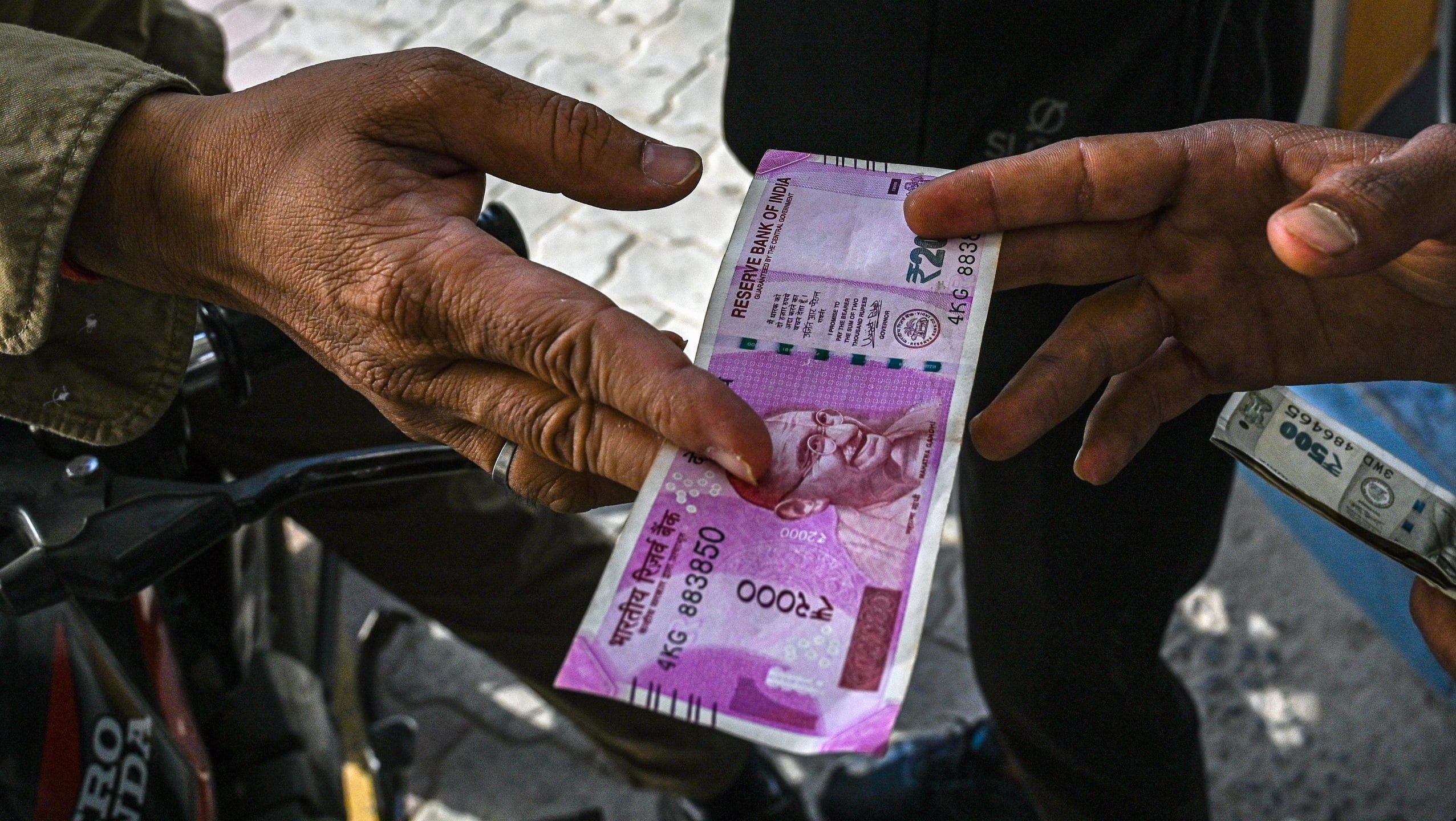
India’s Rupee Rises After RBI Secures $136 Billion Inflows

Rupee Extends Winning Streak as Inflows Lift Reserves

Rupee Reaches Two-Month High as FCNR-B Inflows Surge

Manika Plastech Sets IPO Price Band, Dates and Size

Private Banks Capture Nearly Half of India’s FCNR(B) Inflows

Major Fire Breaks Out at HDFC Bank Branch in Godavarikhani

FCNR(B) Inflows Could Give Smaller Lenders a Stock-Market Boost
