

1 year ago
Land Creatures: The Unexpected Swimming Abilities of Five Species
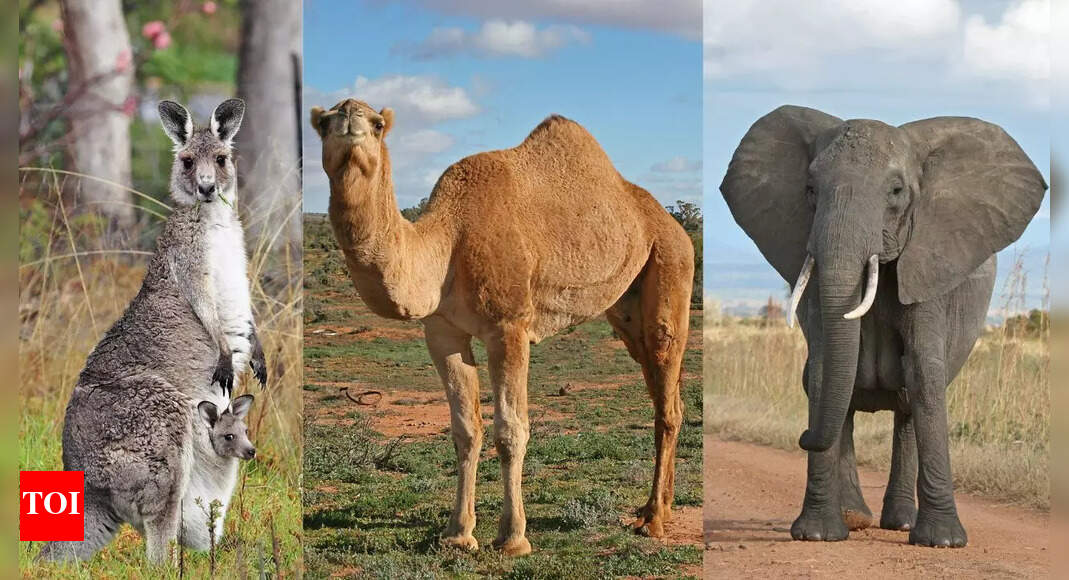
Many land animals can swim!
Elephants use their trunks like snorkels.
Tigers enjoy the water.
Moose are strong swimmers in wetlands, sometimes even diving.
Camels can swim if they need to, using their legs like a dog.
Kangaroos paddle with their arms and legs, sometimes using water to trick predators.
These animals show how nature makes creatures adaptable to different environments, even if they live mostly on land.

Elephants are graceful swimmers using their trunks as snorkels and strong legs for paddling, capable of crossing wide bodies of water.
Tigers, unlike most big cats, enjoy swimming to cool off, cross rivers, or hunt, with some navigating tidal channels.
Moose are adept swimmers in northern wetlands, using powerful muscles and long legs, even diving for aquatic plants.
Camels can swim when needed, using a dog-like stroke, showcasing surprising adaptability to aquatic challenges.
Kangaroos utilize a dog-paddle motion, kicking with strong hind legs, and can even use water to evade predators.
- Who
- Elephants, tigers, moose, camels, and kangaroos.
- What
- Remarkable swimming abilities in land animals.
- Where
- Various habitats.
- When
- Not specified.
- Why
- For travel, cooling, hunting, and predator evasion.
Key facts
- Elephants
- Use trunks as snorkels and can swim long distances.
- Tigers
- Often swim to cool off or hunt aquatic prey.
- Moose
- Swim through marshes and can dive underwater.
- Camels
- Use a dog-like stroke.
- Kangaroos
- Use a dog-paddle motion.
Sources
Related news

Root‑Canal Saves Tiger’s Tooth at Bannerghatta Park

Tiger Corridor Plans and Power Line Threats
Iraq and Turkey Formalize Water Project Deal

Techurate Wins Digital Banking Innovation Award, Expands Globally

Phillies Acquire Brewer Hicklen in Trade with Tigers
