

Archive · 21 Jan 2026
Mars' Gravitational Influence on Earth's Climate
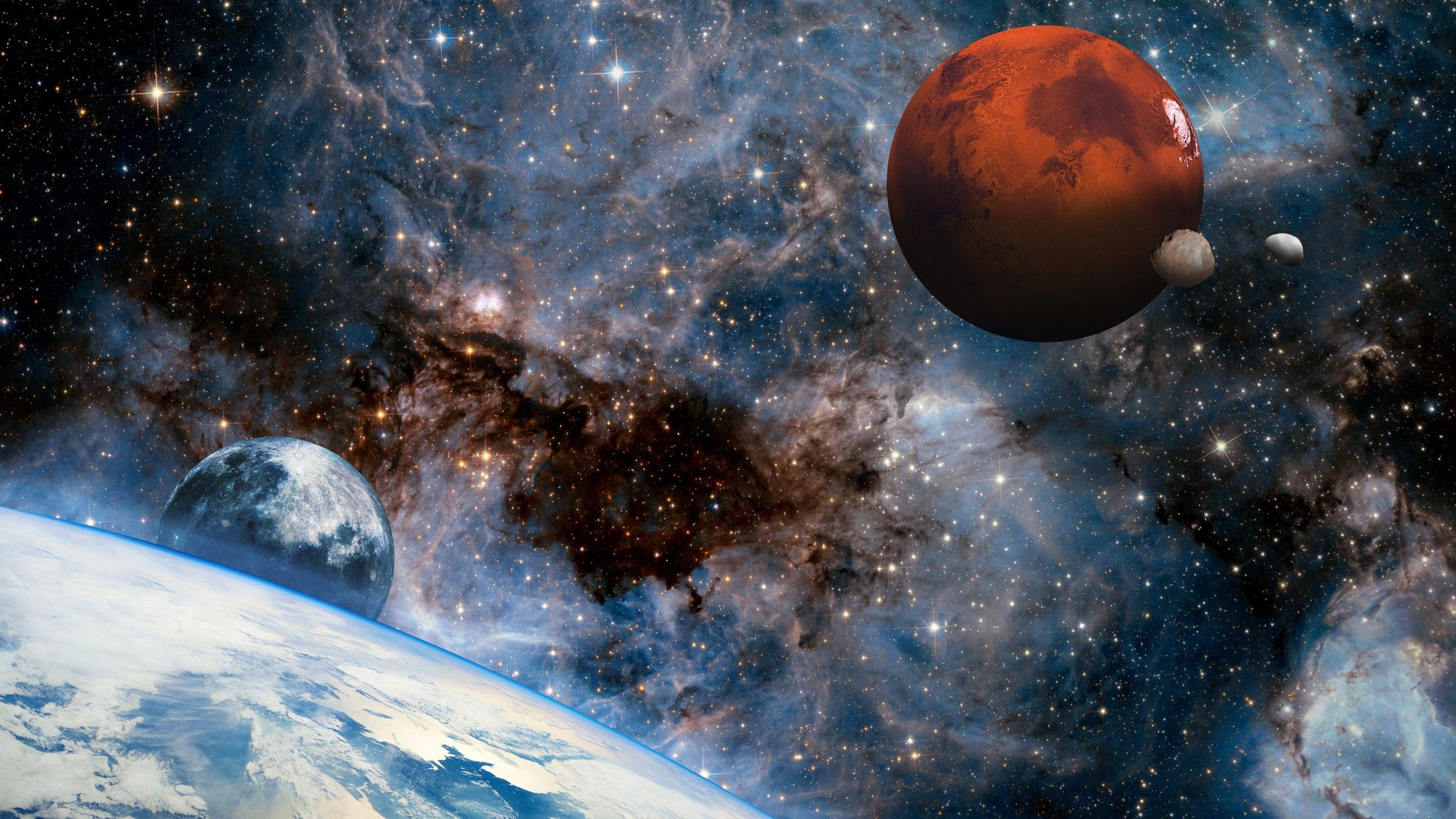
Mars, our smaller neighbor, has a big impact on Earth's climate.
Its gravity helps keep Earth's orbit and tilt stable, which affects how much sunlight different parts of Earth get.
This, in turn, influences long-term climate patterns like ice ages.
Without Mars, these patterns might not exist, and life on Earth could be very different.
Scientists found that Mars has a stronger pull on Earth than expected, especially because it's further from the sun.
This discovery could also help us understand climates on other planets.

Mars' gravitational pull stabilizes Earth's orbit, tilt, and position from the sun.
Mars significantly affects two of Earth's climate cycles: one 10,000 years long and another 2.3 million years long.
Removing Mars from the equation in simulations caused these climate cycles to vanish.
Mars' position further from the sun gives it a larger gravitational effect on Earth.
Mars' gravity also stabilizes Earth's tilt, potentially removing the necessity for a large moon to keep Earth stable.
- Who
- Researchers led by Stephen Kane from UC Riverside
- What
- Mars' gravitational influence on Earth's climate cycles
- When
- Study published in the journal Publications of the Astronomical Society of the Pacific
- Where
- Earth and Mars
- Why
- To understand the long-term climate patterns and their drivers
- Planet
- Mars
- Effect on Earth
- Stabilizes Earth's orbit, tilt, and position from the sun
- Climate Cycles Affected
- 10,000 years and 2.3 million years
- Study Source
- Publications of the Astronomical Society of the Pacific
- Lead Researcher
- Stephen Kane, UC Riverside
- Earth's Obliquity Range
- 21.5 to 24.5 degrees every 41,000 years
- Implications
- Potential impact on ice ages and human evolution