

Archive · 18 Jun 2025
Calcutta Ghats: Gendered Division and Unequal Access
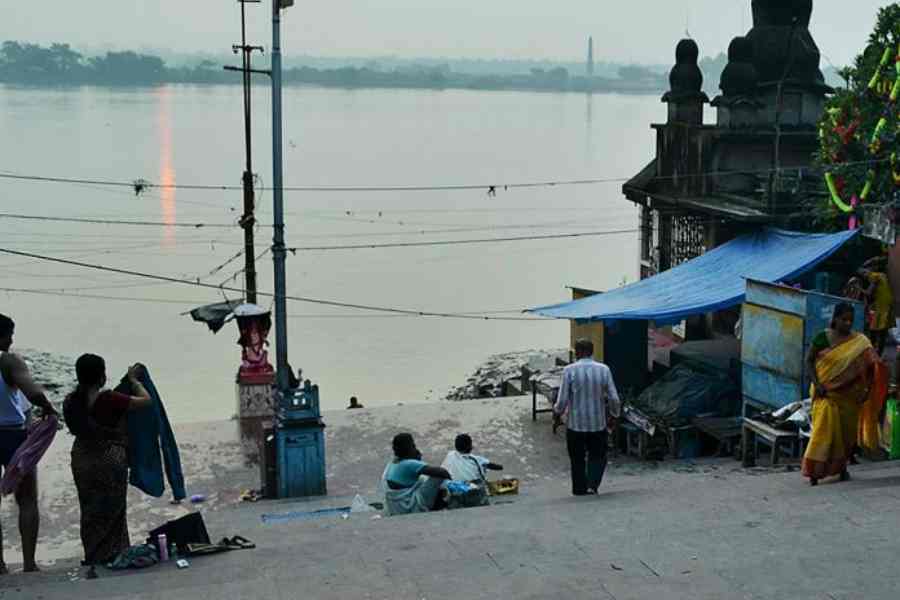
Imagine the ghats, the steps down to the river in Calcutta, as a place mostly for men.
They hang out, play games, and are always there.
Women go there too, but often just to wash clothes, pray, or work.
Their jobs and presence are seen as less important.
During festivals, women have more freedom.
The article wants us to think about who gets to use these spaces and how to make them fairer for everyone, not just men.

Ghats in Calcutta are predominantly male-dominated spaces.
Women's presence at the ghats is often tied to domestic duties, faith, or labor.
Women's labor, though essential, is often rendered invisible in the ghat's informal economies.
Religious festivals offer women greater visibility, but hierarchies persist.
The article questions who has the right to the city's waters and public spaces.
- Who
- The article focuses on the experiences of men and women.
- What
- An article discussing gendered division and inequality in Calcutta's ghats.
- When
- The article discusses the present-day dynamics of ghat usage.
- Where
- The ghats of Calcutta, India.
- Why
- The article highlights gender inequalities and the challenges women face in public spaces, questioning the right to these spaces and advocating for spatial justice.
Current Status
Future Goals
Ghat Access and Presence
Current Status
Men dominate ghat spaces, and their presence is unquestioned.
Future Goals
Women's presence is often tied to specific, functional roles, not leisure or equal access.
- Location
- Ghats of Calcutta, India
- Main Focus
- Gendered division of public spaces
- Dominant Presence
- Men
- Women's Roles
- Domesticity, faith, riverfront labor
- Key Issue
- Invisibility of women's labor