

Archive · 14 Sep 2025
Green Tea vs Matcha: Benefits, Flavors, and Differences
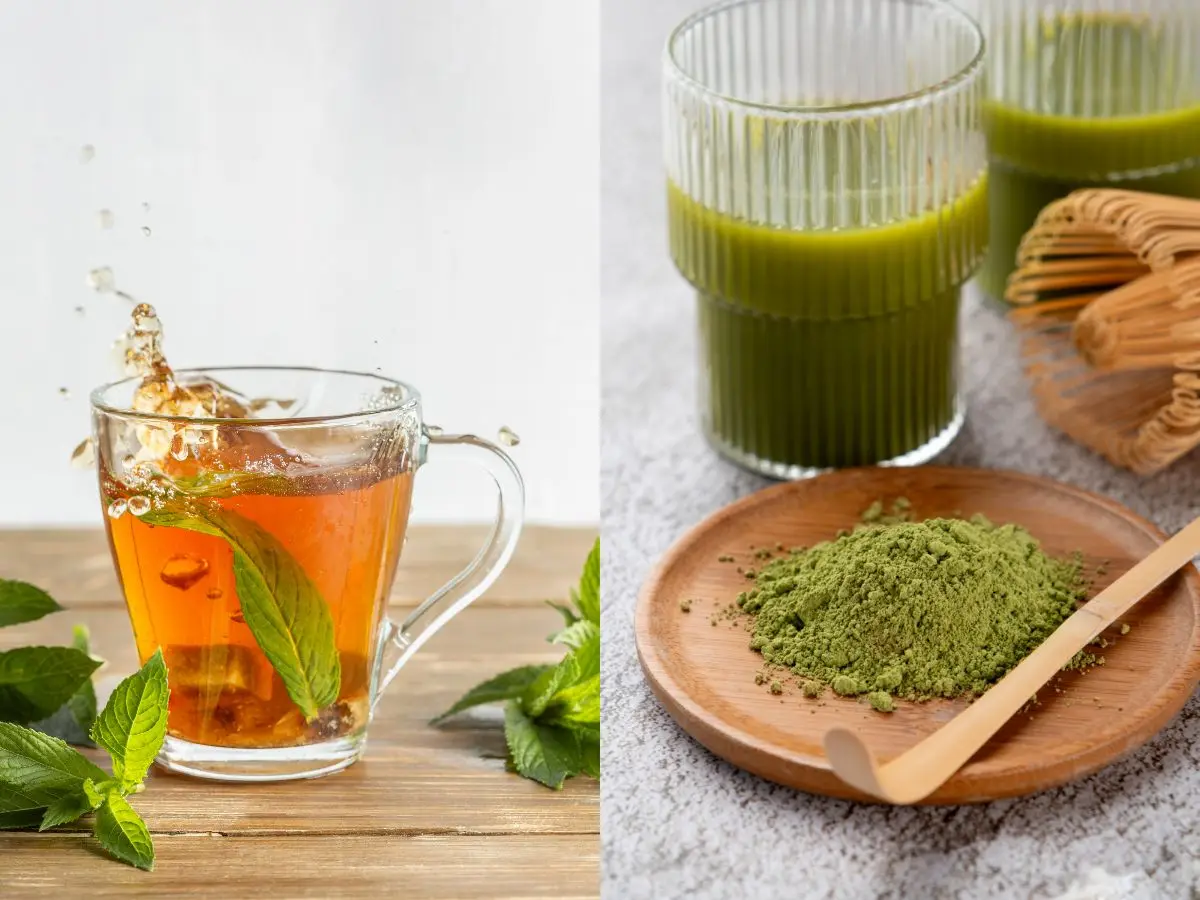
Green tea and matcha are both made from the same plant, but they're prepared differently.
Green tea is made by steeping the leaves in hot water, while matcha is a powder whisked into hot water, so you drink the whole leaf.
Matcha comes from Japan, where the plants are grown in the shade.
Because of this, matcha has more nutrients and caffeine than green tea.
Green tea gives a gentle boost and is great for relaxing, while matcha has more caffeine for stronger energy and bold flavour.
Both offer health benefits and unique experiences for tea lovers.

Both green tea and matcha come from the Camellia sinensis plant.
Green tea originated in China, while matcha originated in Japan.
Green tea leaves are infused in hot water, matcha powder is whisked into hot water.
Matcha contains more caffeine than green tea.
Both teas offer health benefits.
- Who
- Green tea and matcha enthusiasts
- What
- A comparison of green tea and matcha, including origins, preparation, and benefits.
- When
- Ongoing, with origins dating back thousands of years (green tea) and earlier (matcha).
- Where
- Asia (China, Japan, and other parts of Asia)
- Why
- To understand the differences between green tea and matcha and which might be preferable for individual preferences.
- Origin of Green Tea
- China
- Origin of Matcha
- Japan
- Caffeine (Green Tea)
- 30-40 milligrams per cup
- Caffeine (Matcha)
- 60-70 milligrams per serving
- Preparation (Green Tea)
- Infused in hot water
- Preparation (Matcha)
- Whisked directly into hot water