

10 months ago
Phanishwar Nath Renu's 'Maila Aanchal' as a Mirror of Bihar's Democracy
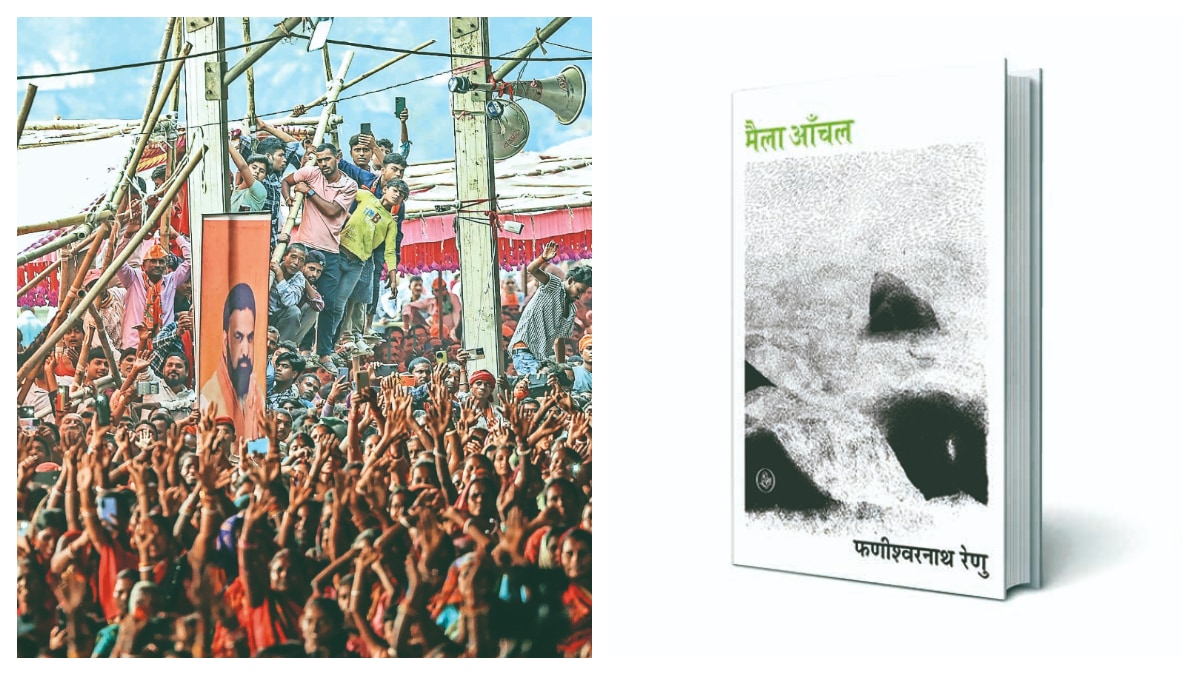
Imagine a book written long ago about a village in India called Maryganj.
This book is like a magic mirror showing how elections worked in a place called Bihar after India became independent.
It shows how people got excited about voting for the first time, thinking they had real power.
But it also shows how easy it was for others to trick them with promises or by using caste differences.
The story is told using many different local languages, making it feel very real.
It shows that even though things like schools and health centers were meant to help, old ways of thinking and powerful people often got in the way.
The book captures how this mix of hope and trickery is part of how democracy works, not just in that village, but in all of India.
It even predicted how later on, people from different castes would fight for their rights.
The book is still important today because it shows how much Bihar's politics today is still about a mix of different groups, strong leaders, and clever choices, just like in the story.

Phanishwar Nath Renu's novel 'Maila Aanchal' is a seminal work reflecting the complexities of democracy in rural Bihar.
The novel depicts democracy not as an abstract concept but as a vibrant, chaotic 'mela' (fair) of aspirations, rumors, and political engagement.
Renu's linguistic style uniquely blends standard Hindi with regional dialects, capturing the authentic pulse of rural life and democratizing the language.
The narrative exposes the dual nature of democracy, showcasing both the empowerment of subaltern classes and their susceptibility to manipulation through caste and false promises.
'Maila Aanchal' foresaw the impact of caste dynamics on political mobilization, mirroring Bihar's political evolution from the Nehruvian era to the Mandal revolution and beyond.
- Who
- Phanishwar Nath Renu, author of the novel 'Maila Aanchal'
- What
- The novel 'Maila Aanchal' serves as a comprehensive depiction and critique of democracy in rural Bihar, mirroring its aspirations, manipulations, and the evolving political landscape.
- Where
- The novel is set in the fictional village of Maryganj in the Purnea district of north Bihar.
- When
- Written in the aftermath of India's first general elections and first published in 1954.
- Why
- The novel captures the encounter between the state and the countryside, exploring the complex rhythms of democracy, the influence of caste, and the shift from idealism to transactional politics.
Initial Promise of Democracy
Reality of Manipulation and Disillusionment
Empowerment of the People
Initial Promise of Democracy
The novel depicts a moment when villagers realize the vote is in their hands, not the landlord's, symbolizing a subtle inversion of power relations promised by democracy.
Reality of Manipulation and Disillusionment
This realization quickly collapses as villagers are seduced by liquor, caste appeals, and false promises, highlighting the farcical side of democracy and its susceptibility to manipulation.
Social Change and Progress
Initial Promise of Democracy
The text suggests an irreversible awareness of agency among subaltern classes, foreshadowing the Mandal revolution and the crumbling of caste hierarchies as backward and Dalit castes claimed space in public life.
Reality of Manipulation and Disillusionment
Despite the hope of socialist reconstruction, figures like Doctor Prashant end in despair, with the observation that 'even after freedom, nothing has changed,' reflecting waning faith in Nehruvian planning and development and the collision of ideals with entrenched hierarchies.
Political Mobilization
Initial Promise of Democracy
Democracy is presented as a cultural performance and a ritual through which it is renewed, transforming the political landscape and ushering in new political idioms like caste pride.
Reality of Manipulation and Disillusionment
Politics in Maryganj is portrayed as transactional, driven by caste alliances and personal ambition, with party affiliations becoming indistinguishable from caste identities, indicating an erosion of democratic ideals.
Key facts
- Author
- Phanishwar Nath Renu
- Novel Title
- Maila Aanchal (The Soiled Border)
- Publication Year
- 1954
- Setting
- Maryganj village, Purnea district, north Bihar
- Literary Genre
- Regional novel (Anchlik Upanyas)
- Awards
- President’s Award for the best Hindi novel of 1955
- Adaptation
- Dagdar Babu (1977 film)
Quotes
A villager
A villager in Renu's novel 'Maila Aanchal'
“ab logon ko chahiye ki apni-apni topi par likhwa le—bhumihar, rajput, kayasth, yadav, harijan!… kaun karyakarta kis party ka hai, samajh mein nahin aata”
 financialexpress.com
“ab vote hamra haath mein ba — malik ke na!”
financialexpress.com
Doctor Prashant
A character in Renu's novel 'Maila Aanchal'
“Azaadi ke baad bhi kuch nahin badla”
financialexpress.com
