

Archive · 6 Oct 2026
Mann Puts Punjab Record at Center of AAP’s 2027 Campaign
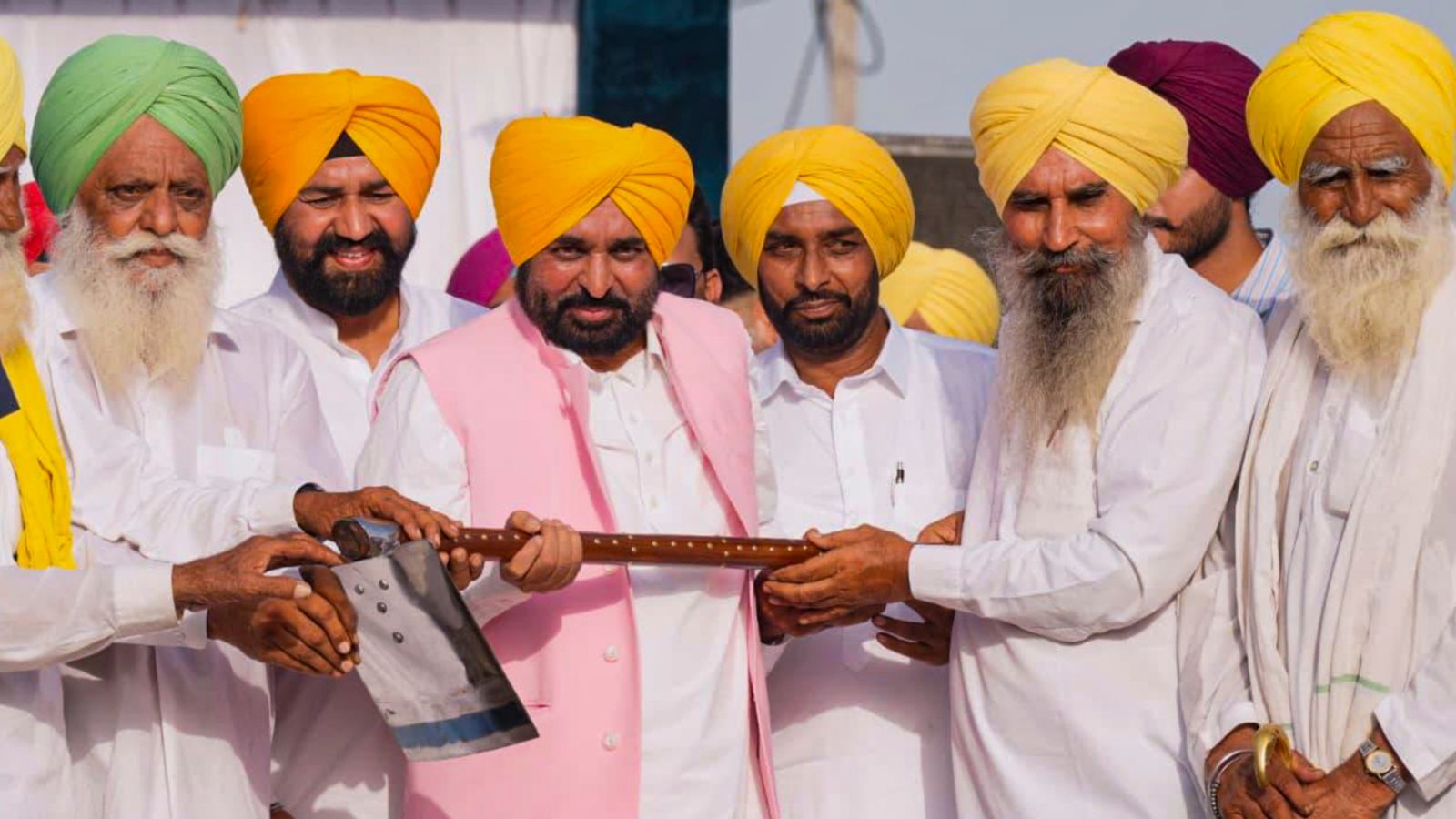
The Aam Aadmi Party is showing Punjab Chief Minister Bhagwant Mann prominently as it looks ahead to the 2027 election.
Mann talks about free electricity, payments for eligible women, canal water and health insurance.
He also criticizes rival parties and says their policies could put these benefits at risk.
The article says some people in villages are still deciding what they think of his government.
A court has ordered an investigation by the Central Bureau of Investigation into allegations involving an aide in Mann’s office and others.
Punjab’s government has challenged that order in the Supreme Court.
Opposition politicians say Mann should be held responsible, but some residents say allegations need proof.
The article describes Mann continuing to meet people across the state.

AAP is promoting Punjab Chief Minister Bhagwant Mann as its likely face for the 2027 Assembly election after winning 92 of 117 seats in 2022.
Mann highlights 300 units of free monthly electricity, cash payments to eligible women, expanded canal-water access and Rs 10 lakh health insurance.
The Maawan-Dheeyan Satkar Yojana provides eligible Dalit women Rs 1,500 a month and other eligible women Rs 1,000; payments began on July 1.
The Punjab and Haryana High Court ordered a CBI probe on October 5 into allegations involving Mann’s Officer on Special Duty and others; the state government challenged the order in the Supreme Court.
Congress and BJP leaders have criticized Mann over the allegations, while some residents interviewed said they wanted verifiable proof before reaching conclusions.
- Who
- Punjab Chief Minister Bhagwant Mann, the Aam Aadmi Party, and opposition parties.
- What
- AAP is centering its public outreach on Mann and his government’s record ahead of the 2027 Punjab Assembly election, amid criticism over allegations involving his aide.
- When
- The article refers to recent public outreach and events dated June 15, July 1, October 1 and October 5; it does not state the year for these dates.
- Where
- Punjab, India.
- Why
- AAP is seeking to emphasize Mann’s connection with voters and the government’s claimed achievements while countering criticism and positioning him for 2027.
Mann and AAP’s Position
Opposition and Critics’ Position
Government record and public benefits
Mann and AAP’s Position
Mann points to free electricity, payments to eligible women, increased canal-water access and health insurance as evidence that his government has delivered.
Opposition and Critics’ Position
The article reports that opposition parties criticize the government and challenge its record, including over the continuing drug problem; it does not provide a detailed opposition response to each benefit.
Allegations involving Mann’s office
Mann and AAP’s Position
The Punjab government has challenged the High Court’s order for a CBI probe in the Supreme Court. The article also quotes residents who say allegations require verifiable proof.
Opposition and Critics’ Position
Congress leader Partap Singh Bajwa said Mann should not be able to avoid responsibility, while Punjab BJP president Kewal Singh Dhillon called for Mann to resign.
Responsibility for drug trafficking
Mann and AAP’s Position
Mann says the drug problem intensified under the earlier Akali Dal-BJP government and points to the Centre’s responsibility for guarding the border with Pakistan.
Opposition and Critics’ Position
The BJP-led Opposition is attacking the government over the continuing flow of drugs.
- AAP’s 2022 Assembly result
- 92 of 117 seats
- Next Assembly election discussed
- 2027
- Free electricity claim
- 300 units per month, described as 600 units because bills are typically issued every two months
- Women’s monthly payments
- Rs 1,500 for eligible Dalit women and Rs 1,000 for other eligible women
- Health insurance highlighted by Mann
- Rs 10 lakh
- Canal-water access figure cited
- Mann said access rose from 26% in 2022 to 86%
- Court order
- The Punjab and Haryana High Court ordered a CBI probe on October 5; the Punjab government challenged the order in the Supreme Court