

Archive · 20 Jul 2026
Why Your Switchboard's Red Light Stays On
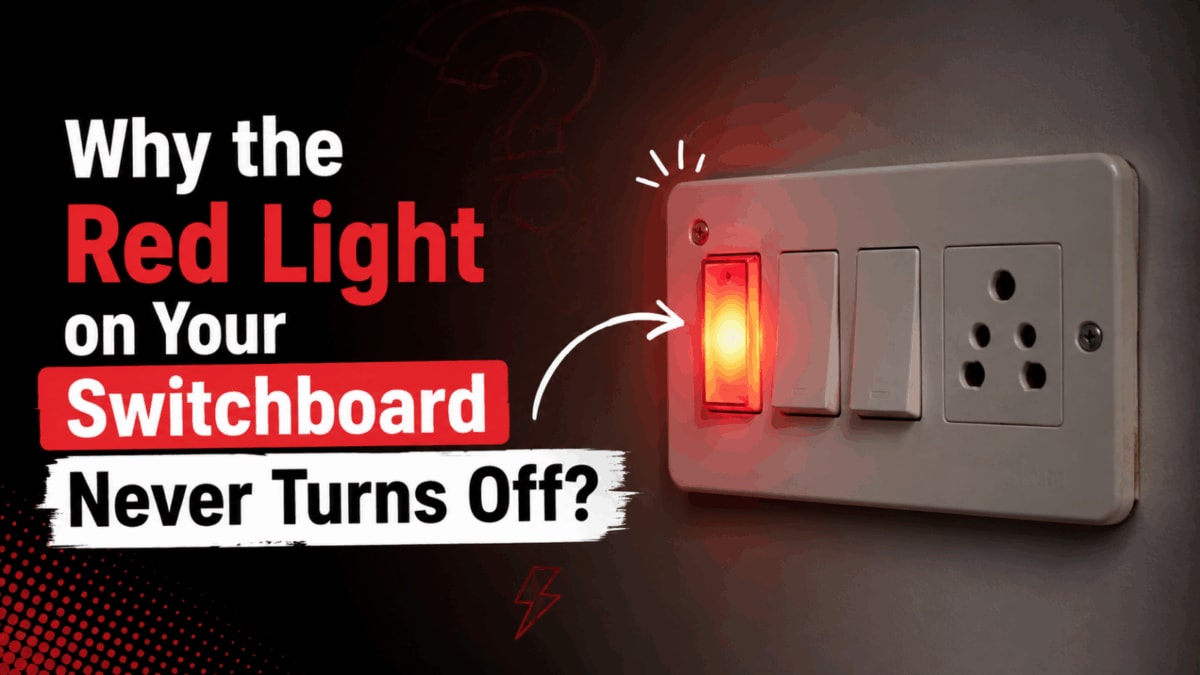
The red or orange light on your home's switchboard is called an indicator light.
It stays on to show that electricity is flowing through the main circuit, even if individual switches are off.
This light is usually a neon lamp or LED and uses very little power, so it doesn't affect your electricity bill much.
It's especially important for high-power appliances and can help spot electrical problems.
If the light behaves unusually, it might mean there's a fault that needs fixing by an electrician.

The indicator light on switchboards monitors the home's electrical supply and ensures safety.
It stays on as long as the main electrical circuit is live, regardless of individual appliance switches.
Modern switchboards use LED indicators, while older ones use neon lamps, both consuming minimal power.
The light helps identify potential electrical faults, such as faulty switches or wiring issues.
It is crucial for 16-amp switchboards used for high-power appliances like refrigerators and air conditioners.
- Who
- Homeowners and electricians.
- What
- The purpose and function of the indicator light on home switchboards.
- When
- The light is always on when the main electrical circuit is live.
- Where
- On home switchboards.
- Why
- To monitor the electrical supply and improve safety.
Energy Consumption Concerns
Minimal Impact on Bills
Electricity Usage
Energy Consumption Concerns
Some people believe the indicator light significantly increases electricity bills.
Minimal Impact on Bills
Experts confirm the light consumes only 0.2 to 0.5 watts, having negligible impact on bills.
- Function
- Monitors home's electrical supply and improves safety.
- Power Consumption
- 0.2 to 0.5 watts.
- Annual Usage
- 1 to 2 units of electricity.
- Types of Lights
- Neon lamps in older switchboards, LEDs in modern ones.
- High-Power Appliances
- Important for 16-amp switchboards used for refrigerators, geysers, and air conditioners.
- Fault Indication
- Can help identify faulty switches, stuck contacts, or wiring issues.