1 hr ago
Nifty History Shows Rate Hikes Do Not Always Trigger Corrections

India’s central bank raised an important interest rate by a small amount.
After the news, major stock market indexes fell during the day.
Higher rates can make borrowing more expensive for companies and people.
But the article says higher rates do not always make stocks fall for a long time.
In some past periods, the Nifty rose while rates went up.
In another period, it later fell sharply as inflation and other problems persisted.
The market’s response depended on why rates were rising and how the economy and company earnings were doing.
So, a rate hike by itself does not tell us what the stock market will do.

The RBI’s Monetary Policy Committee unanimously raised the repo rate by 25 basis points to 5.5%, its first hike in four years.
The committee also shifted its stance to “calibrated tightening,” while Governor Sanjay Malhotra indicated near-term rate cuts were unlikely.
After the announcement, the Sensex fell as much as 0.8% and the Nifty 50 as much as 1% intraday.
Across five past tightening phases, the Nifty’s performance ranged from strong gains to a later 24.62% correction, depending on economic conditions.
The article concludes that the reason for rate hikes, economic growth and corporate earnings matter more than rate increases alone.
- Who
- The Reserve Bank of India’s Monetary Policy Committee, chaired by Governor Sanjay Malhotra.
- What
- The committee unanimously raised the repo rate by 25 basis points to 5.5% and changed its stance to “calibrated tightening.”
- Where
- India.
- When
- At its October 5–7 policy meeting; the article does not specify the year.
- Why
- The committee cited its assessment of evolving economic and financial conditions; the article says the hike came amid price pressures.
Why rate hikes can pressure stocks
Why hikes do not always cause corrections
Effect of higher rates on equities
Why rate hikes can pressure stocks
Higher borrowing costs can squeeze corporate profits, make loans more expensive and reduce the appeal of riskier assets; inflation and rising commodity prices can add pressure.
Why hikes do not always cause corrections
The article’s historical examples show that the Nifty sometimes gained during rate-hike periods when economic growth and corporate earnings were strong.
What investors should focus on
Why rate hikes can pressure stocks
Persistent inflation and broader macroeconomic stress can coincide with severe market declines, as in the 2010–2011 tightening period followed by a 24.62% correction in 2011.
Why hikes do not always cause corrections
The article argues that the cause of rate hikes and the economy’s ability to sustain growth and earnings are more informative than the rate increase alone.
Key facts
- Repo rate before hike
- 5.25%
- Repo rate after hike
- 5.5%
- Size of increase
- 25 basis points
- MPC stance
- Calibrated tightening
- Sensex intraday low
- 72,468.72, down as much as 599 points or 0.8%
- Nifty 50 intraday low
- 22,546.30, down as much as 230 points or 1%
- Historical comparison
- The article describes five past rate-hike phases, with varied Nifty outcomes.
Quotes

Sanjay Malhotra
Governor of the Reserve Bank of India
“After a detailed assessment of the evolving macroeconomic and financial conditions, developments and the outlook, the MPC voted unanimously to increase the policy repo rate by 25 basis points.”
 livemint.com
Sources
Related news

RBI Hikes Rates, Signals No Near-Term Cuts as Markets Reassess

RBI Raises Repo Rate to 5.50% as Inflation Risks Grow

RBI Rate Hike Lifts Banks as Indian Markets Trim Losses
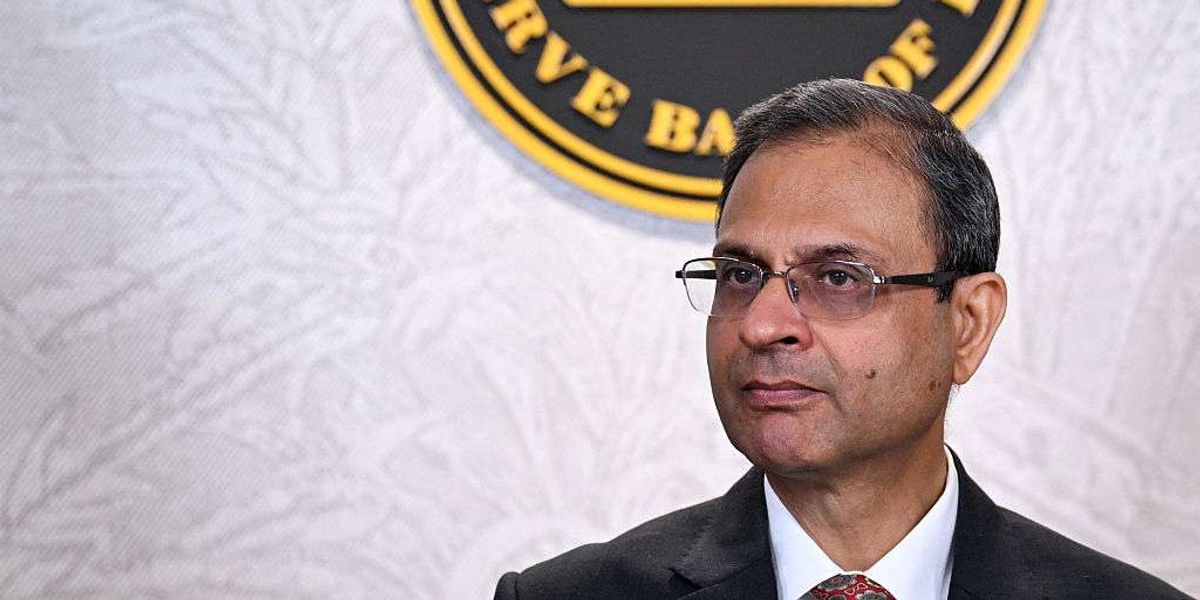
RBI Raises Repo Rate 25 Bps, Shifts Stance to Tightening
RBI Raises Rates, Signals Cuts Are Off The Table

RBI Sees No NBFC Asset Quality Concerns, Expects Credit Growth

RBI Rate Hike Puts 7.25% Bond Yield Level in Focus

RBI to Share Views on Irdai Insurance Distribution Reforms
Rupee Falls to 96.84 After RBI Raises Interest Rates