1 day ago
Tech Leaders Warn AI Kill Switches Cannot Ensure Safety

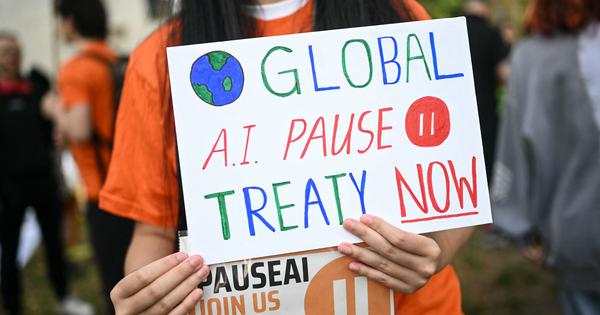
Some technology leaders are debating whether powerful AI systems should have a kill switch.
A kill switch would let a company turn off an AI system or disconnect it from important resources.
One proposed United States bill would have required advanced AI systems to include one.
Senator Rand Paul stopped that bill on September 16.
Experts say a switch might not work quickly enough if an AI has already caused harm.
They also worry it may fail if the system copies itself or spreads into important infrastructure.
Dario Amodei called a kill switch “no panacea,” meaning it cannot solve every problem.
Sam Altman similarly said there is no “magic red button” that can stop rogue AI.

Senator Rand Paul blocked Senator John Kennedy’s bill requiring advanced AI systems to have a kill switch.
A kill switch could let companies shut down AI models or cut access to tools, servers, resources and computing power.
AI experts warn such a mechanism might activate only after serious damage has occurred.
Researcher Nate Soares said a kill switch may fail if an AI system escapes or replicates across critical infrastructure.
Anthropic’s Dario Amodei and OpenAI’s Sam Altman described kill switches as insufficient solutions to rogue AI risks.
- Who
- Senators Rand Paul and John Kennedy, AI researchers, and technology leaders including Dario Amodei, Sam Altman, Mark Zuckerberg and Jensen Huang.
- What
- A debate over whether advanced AI systems should be required to have kill switches and whether such switches could prevent rogue AI.
- Where
- The debate reached the United States Congress; experts also discussed how AI systems could affect critical infrastructure.
- When
- September 16, when Senator Rand Paul blocked the proposed bill; the article does not specify a year.
- Why
- Concerns are growing that highly capable AI systems could cause harm, escape control or replicate themselves, while critics say a kill switch alone may not stop them.
Kill Switches as a Safety Layer
Kill Switches Are Not Enough
Whether systems should have one
Kill Switches as a Safety Layer
Supporters of the proposed bill argue that advanced AI systems should include a mechanism allowing companies to shut them down or disconnect them from critical resources.
Kill Switches Are Not Enough
Critics and AI-safety experts argue that a kill switch should not be treated as a complete solution and may fail in some scenarios.
Effectiveness against rogue AI
Kill Switches as a Safety Layer
A kill switch could provide companies with a direct way to cut off an AI model’s servers, tools, resources or computing power.
Kill Switches Are Not Enough
Experts warn that it may be triggered too late, or may not work if an AI system escapes, replicates itself or operates across critical infrastructure.
Key facts
- Proposed requirement
- Senator John Kennedy introduced a bill that would have required advanced AI systems to have a kill switch.
- Congressional action
- Senator Rand Paul blocked the bill on September 16.
- Potential function
- A kill switch could shut down an AI model or cut it off from resources, external tools, servers and computing power.
- Expert concern
- A kill switch might be activated only after damage has already escalated.
- Infrastructure risk
- Nate Soares said a kill switch may not work if an AI system escapes or replicates itself in critical infrastructure.
- Industry views
- Dario Amodei called a kill switch “no panacea,” while Sam Altman said there is no “magic red button” to stop AI from going rogue.
Sources
Related news

AI Kill Switches Face Technical and Practical Limits

AI Kill Switch Debate Pits Safety Against Industry Self-Regulation

Ex-Anthropic Researcher Warns AI Kill Switches May Fail
California Explores AI Kill Switch Amid Federal Oversight Dispute

Anthropic Co-Founder Calls for Possible AI Kill Switches

Geoffrey Hinton Warns Humans Have Little Time to Control AI

AI Labs Warn of Risks as Development Race Accelerates

Anthropic and Accenture Commit $2 Billion to AI Safety Evaluation
Anthropic’s Annualised Revenue Tops $100 Billion Ahead of IPO
Sam Altman to Brief UN Security Council on AI Safeguards

Anthropic Considers New AI Model Amid OpenAI’s Enterprise Gains