

Archive · 30 Nov 2025
Gen Z in UPSC: Shifting Values in Civil Services
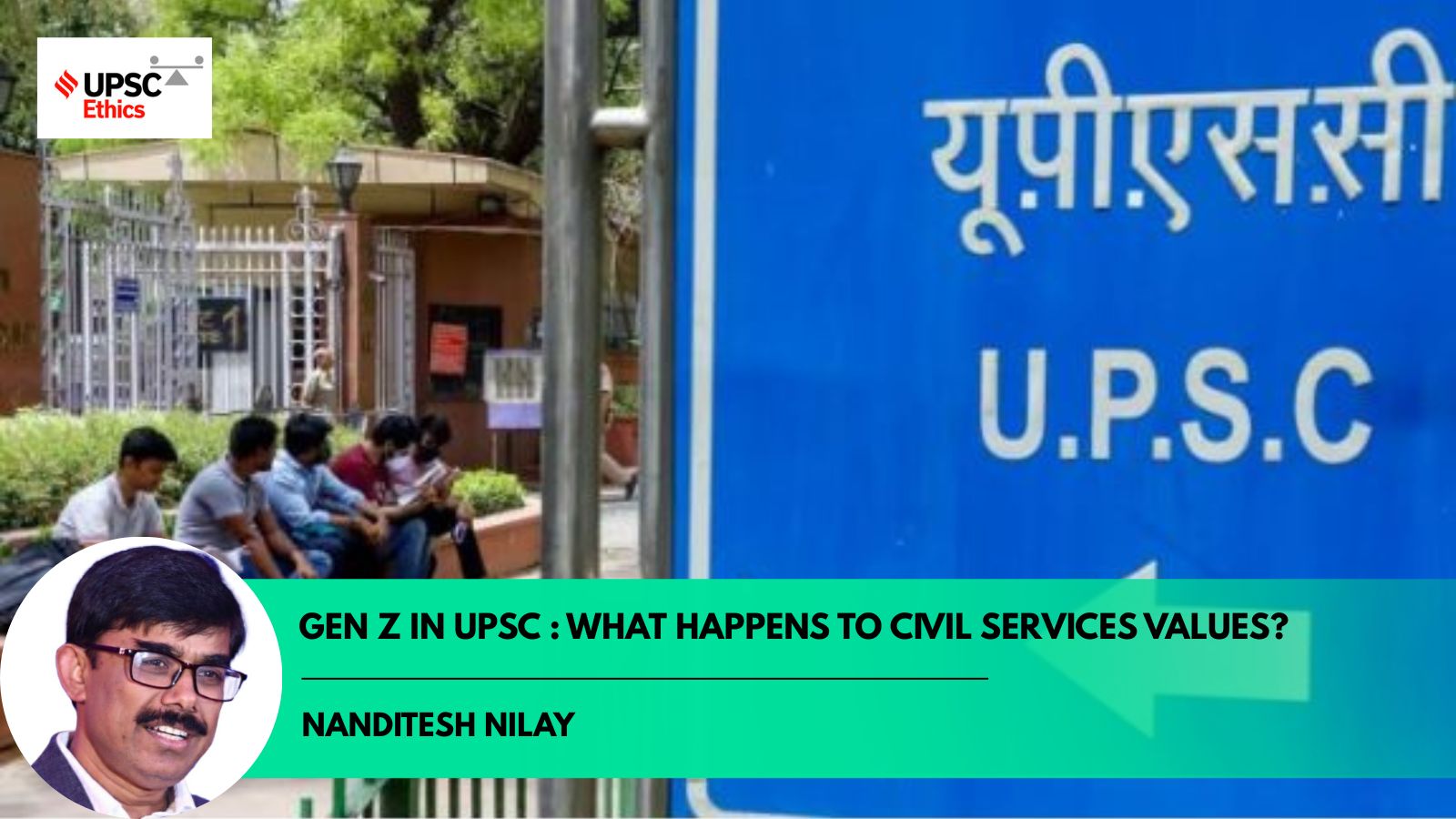
There are more young people from Generation Z (born between 1997 and 2012) trying to join the civil services in India.
These young people communicate differently than older generations, using more informal and fast methods like emojis and abbreviations.
They also have different values and concerns, such as inequality and social pressure.
The question is whether these new values will change the traditional values of the civil services, like trust and respect.
The article suggests that while Gen Z brings new strengths like speed and creativity, they need to balance these with traditional ethical values.
It also talks about the importance of ethical leadership and how different generations can work together to make the civil services more responsive and people-centric.

Gen Z is increasingly becoming a significant portion of UPSC aspirants and entrants in the civil services.
Gen Z's communication style is informal, fast, and emotionally honest, differing from the cautious and polite style of Millennials.
The core values of the civil services, such as trust and respect, are being questioned in the context of Gen Z's digital culture.
Ethical leadership is crucial to prevent potential issues like over-reliance on AI and damage to teamwork.
Gen Z's strengths, such as speed and creativity, should be channeled towards innovation and good governance.
- Who
- Gen Z aspirants and entrants in the civil services
- What
- Shift in communication styles and value systems in the civil services
- When
- Present and future
- Where
- India, specifically in the context of the UPSC and civil services
- Why
- To understand the impact of generational differences on ethical governance and public service
- Generations
- Gen X (1965–1980), Millennials (1981–1996), Gen Z (1997–2012)
- Communication Styles
- Millennials: cautious, polite; Gen Z: informal, fast, emotionally honest
- Core Values
- Trust, humility, respect, compassion
- Ethical Framework
- Respect for autonomy, beneficence, non-maleficence, justice
- Leadership Principles
- Non-violence, truth, self-restraint, responsibility
- Governance Challenge
- Balancing digital-age behavior with traditional ethical values