

Archive · 6 Sep 2025
Ovarian Cancer: Symptoms, Detection Challenges, and New Treatments
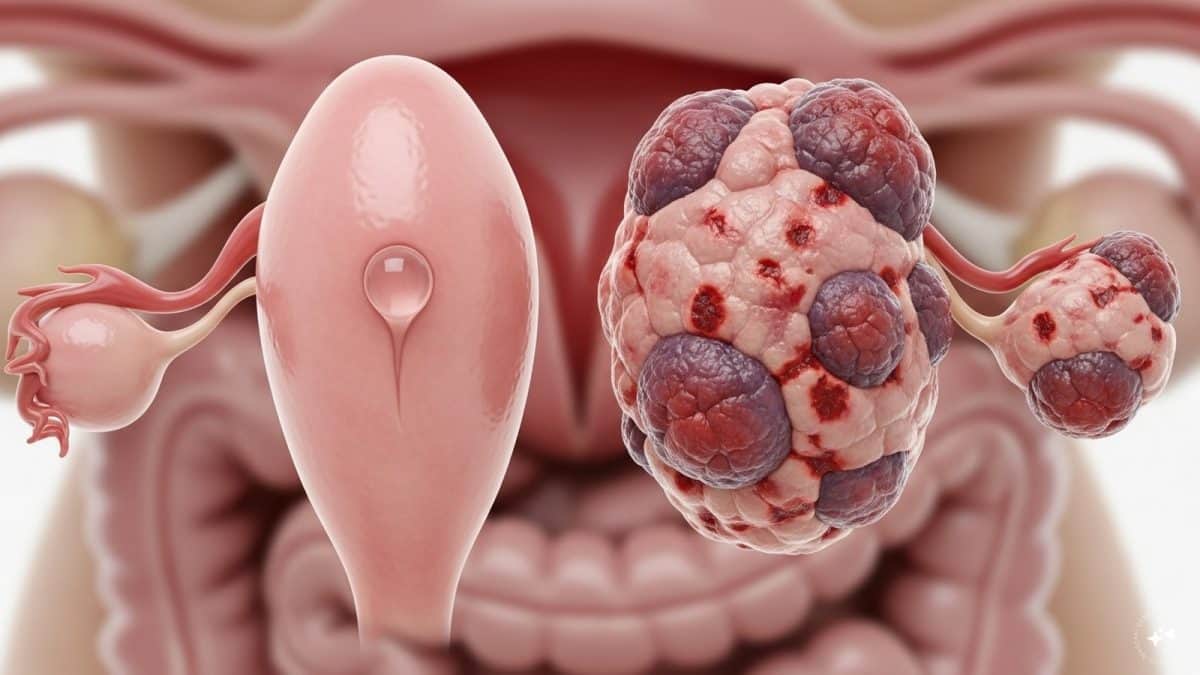
Ovarian cancer is often hard to spot because its signs can seem like other, less serious problems.
Unlike some cancers, there isn't a simple test to find it early.
Symptoms include feeling bloated or tired.
If a family member had it, your risk might be higher.
Doctors treat it with surgery, drugs, and new medicines.
Regular check-ups and knowing your body are important.
Current tests aren't perfect, but doctors may use a blood test and ultrasound.
Scientists are working on better ways to find ovarian cancer early so people can get treatment faster.

Ovarian cancer is often called the 'silent killer' because its symptoms are vague and easily mistaken for other issues.
Unlike cervical cancer, ovarian cancer lacks effective early screening tools, and is detected late in most cases.
Family history and BRCA1/2 mutations significantly increase ovarian cancer risk.
Treatment options include surgery, chemotherapy, and targeted therapies like PARP inhibitors.
In India, challenges include delayed diagnosis due to lack of awareness and effective screening tools.
- Who
- Dr. Himani Sharma, Clinical Head & Senior Consultant – Obstetrics & Gynecology at Cocoon Hospital (Jaipur)
- What
- Ovarian cancer and related issues like symptoms, detection, and treatment.
- When
- Not specified in the article.
- Where
- India
- Why
- To inform and raise awareness about ovarian cancer and its challenges.
- Symptoms
- Bloating, pelvic pain, early satiety, frequent urination, unexplained weight loss, fatigue
- Detection Tool
- No effective population-wide screening exists
- Risk Factor
- Family history; BRCA1/2 mutations
- Treatment Options
- Surgery, chemotherapy, targeted therapies (PARP inhibitors)
- Detection Methods
- CA-125 blood tests, transvaginal ultrasound (for high-risk women)
- Preventative Measures
- Risk-reducing salpingo-oophorectomy, oral contraceptives