1 week ago
Clashes, Blast and Political Attack Mark August 24, 1986
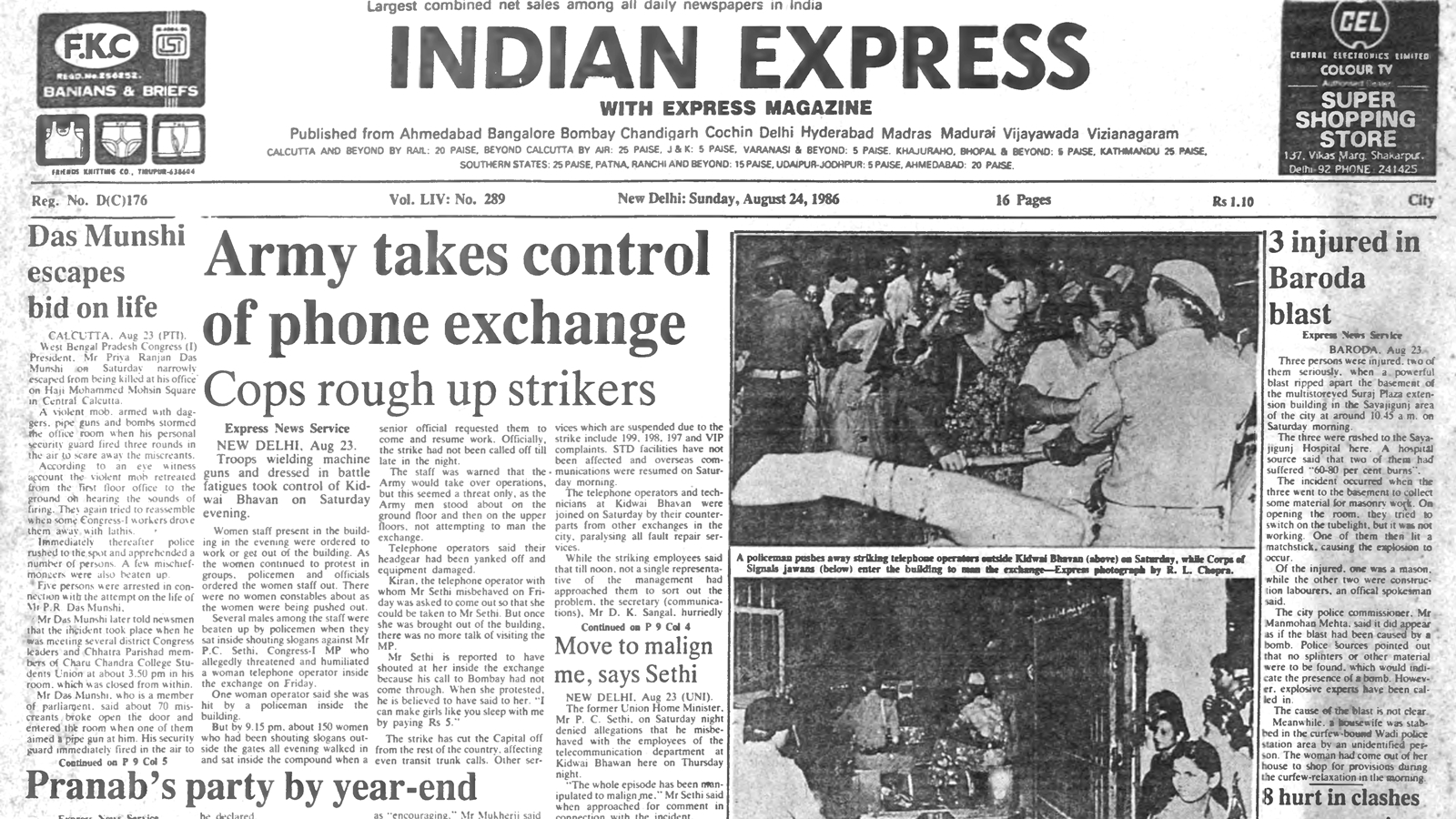
On August 24, 1986, several serious incidents were reported in India.
At a telephone exchange called Kidwai Bhavan, troops and police removed protesting workers.
The workers were angry about an alleged threat and humiliation involving P. C. Sethi.
Some workers said police hit them.
Prime Minister Rajiv Gandhi also spoke about the money the government was losing through public-sector organizations.
He said the issue needed national discussion but workers should not lose their pay.
A blast in Baroda injured three people, including two who were badly burned.
In Calcutta, a mob attacked a political leader’s office.
His security guard fired shots into the air, and the leader escaped.

Troops and police took control of Kidwai Bhavan during a dispute involving women telephone operators.
Staff protested alleged threats and humiliation by Congress-I MP P. C. Sethi; several men and one woman operator were reportedly beaten or hit.
Prime Minister Rajiv Gandhi called public-sector losses a matter for national debate while saying workers should not lose wages.
A blast at Suraj Plaza extension in Baroda injured three people, two of whom suffered serious burns.
West Bengal Congress-I president Priya Ranjan Das Munshi escaped unharmed when a mob stormed his Calcutta office.
- Who
- Telephone-exchange workers, troops, police, P. C. Sethi, Rajiv Gandhi, Priya Ranjan Das Munshi, and unidentified attackers were involved or mentioned.
- What
- The reports covered a confrontation at Kidwai Bhavan, a debate over public-sector losses, a building blast, and an attempted attack on a political leader.
- Where
- Kidwai Bhavan; Nainital; the Suraj Plaza extension building in Sayajigunj, Baroda; and Haji Mohammed Mohsin Square in Central Calcutta.
- When
- August 24, 1986.
- Why
- The telephone-exchange dispute followed an alleged threat and humiliation of a woman operator; Rajiv Gandhi raised public-sector losses as a national issue. The cause of the Baroda blast and the motive for the Calcutta attack were not stated.
Workers and Political Supporters
Authorities and Government
Kidwai Bhavan confrontation
Workers and Political Supporters
Women staff continued protesting in groups, while male staff shouted slogans against P. C. Sethi; one woman said a policeman hit her.
Authorities and Government
Troops, police, and officials took control of the building and ordered the women staff to leave after directing them to work or get out.
Public-sector losses and wages
Workers and Political Supporters
Workers’ interests were represented by the concern that employees should not lose their wages.
Authorities and Government
Rajiv Gandhi emphasized that the government’s losses from public-sector organizations were large enough to require a national debate.
Attack on Priya Ranjan Das Munshi
Workers and Political Supporters
A violent mob stormed the Congress-I leader’s office, according to the report.
Authorities and Government
The leader’s personal security guard fired three rounds into the air, after which Das Munshi narrowly escaped being killed.
Key facts
- Telephone exchange
- Kidwai Bhavan was taken over by troops carrying machine guns and wearing battle fatigues.
- Staff dispute
- Women employees were ordered to work or leave, and police and officials later pushed them out.
- Political figure named
- P. C. Sethi, a Congress-I MP, was accused of threatening and humiliating a woman telephone operator.
- Public-sector losses
- Rajiv Gandhi said government spending on public-sector losses merited a national debate.
- Baroda blast
- The explosion occurred at about 10:45 a.m. in the basement of the Suraj Plaza extension building.
- Injuries
- Three people were injured in the blast; two reportedly suffered 60–80 percent burns.
- Calcutta attack
- Priya Ranjan Das Munshi escaped after his security guard fired three rounds in the air.
Quotes

Rajiv Gandhi
Prime Minister of India speaking about public-sector losses and government expenditure
“This is a very large issue”
 indianexpress.com
Sources
Related news
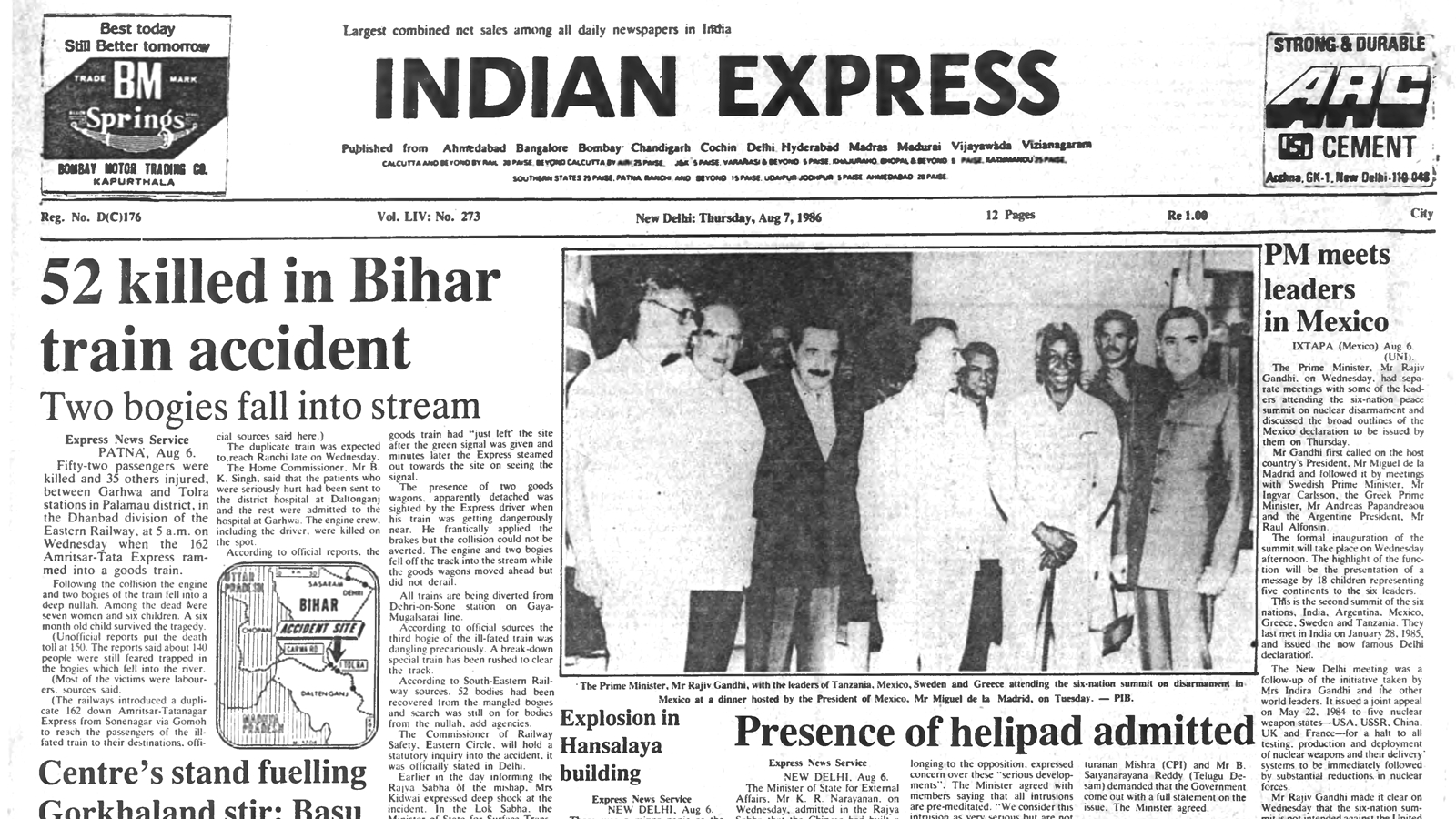
August 7, 1986: Bihar Train Accident, Mexico Summit, Delhi Blast
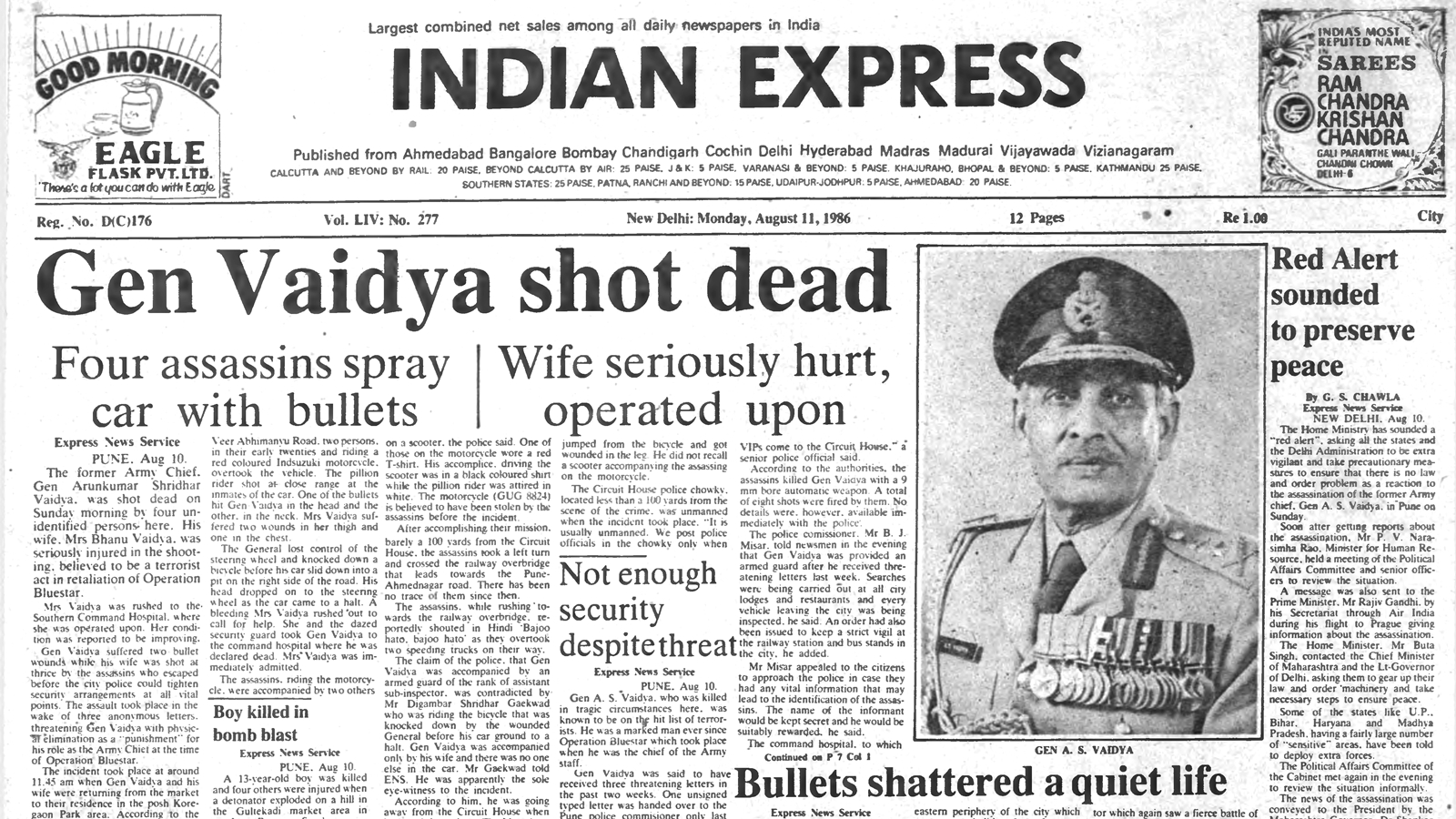
Former Army chief Gen Vaidya shot dead in Pune, 1986
Rajasthan hospital roof collapse injures woman; Congress blames BJP

Rijiju Counters NEET Protest Criticism With Congress-Era Firing Claims
Khalistani Terror Attacks Pushed Punjab Police Toward Brutal Retaliation
Rahul Gandhi, Kiren Rijiju Clash Over NEET Protest Police Action
Madhya Pradesh Cabinet Splits RGPV, Drops Rajiv Gandhi Name

Madhya Pradesh Splits RGPV Into Three, Drops Rajiv Gandhi Name
South Africa Fund, India-Pakistan Talks, Tripura Inquiry, Cricket Changes

Penguin India Denies External Pressure Over Sonia Gandhi Memoir
Satheesan Slams Publisher Over Sonia Gandhi Memoir Censorship Row