

Archive · 6 Sep 2025
Mandrills: The Blue-Hued Monkeys of the Jungle
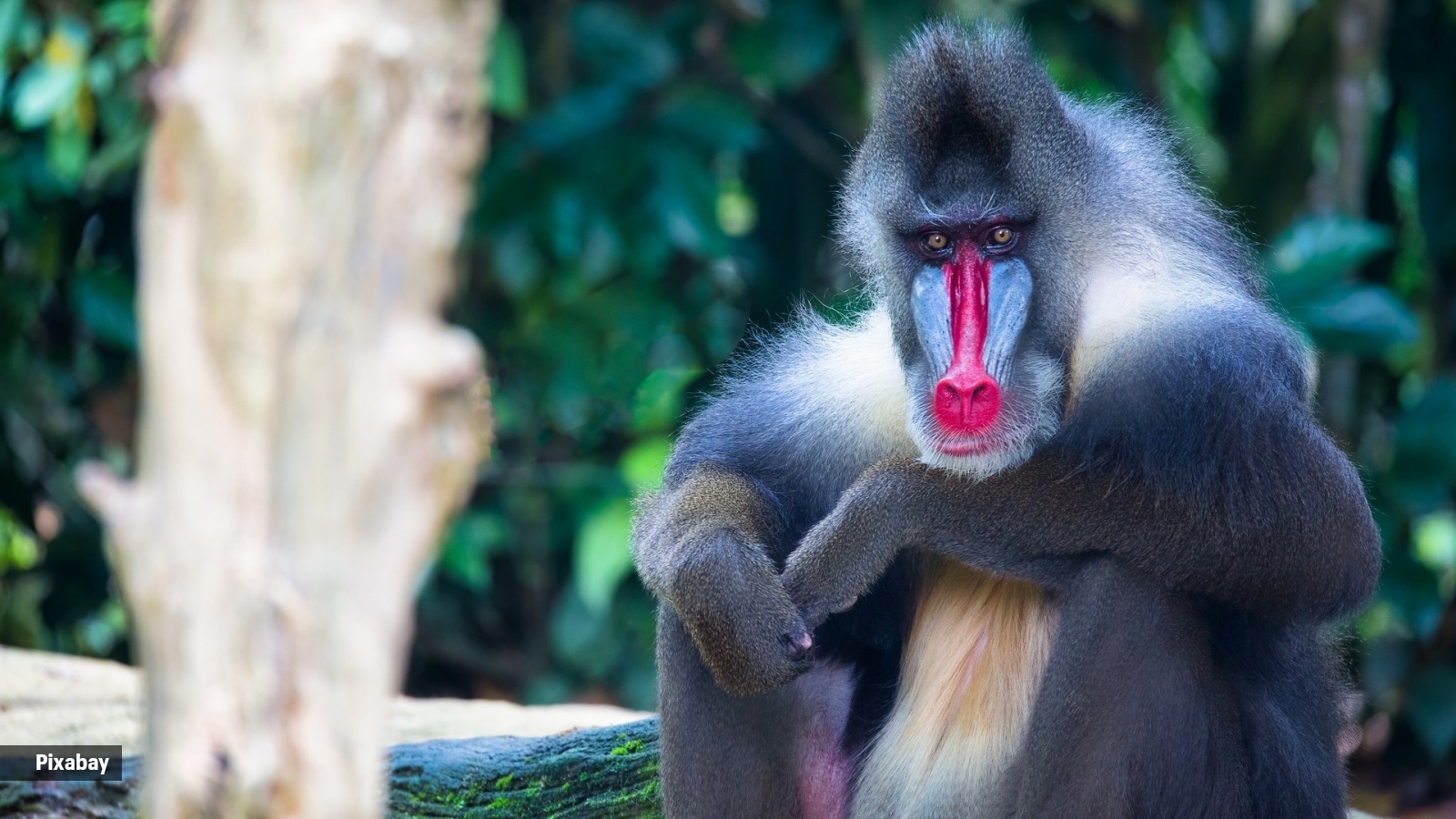
Imagine a monkey that can change its color!
Mandrills are known for their striking appearance, especially their ability to turn blue.
Unlike us, who turn red when angry, mandrills use microscopic structures in their skin to create a bright blue effect when they are feeling strong emotions.
The bluer they are, the more dominant they appear to others, especially males, and their color is linked to their testosterone.
They use this color to show off, especially to potential mates.
Although they are majestic and vibrant, their numbers are declining due to habitat loss and hunting.

Mandrills are visually striking primates with unique traits.
They turn blue when emotionally aroused, particularly when angry.
The blueness is due to the scattering of light by microscopic skin structures.
Color intensity in males relates to testosterone levels and dominance.
They are listed as Vulnerable on the IUCN Red List.
- Who
- Mandrills, a type of primate.
- What
- Mandrills turn blue when emotionally aroused, particularly when angry, and this trait is related to their social hierarchy and mating.
- When
- Not specified in the article.
- Where
- Found in forests.
- Why
- To assert dominance, attract mates, and potentially ward off danger.
- Distinguishing Feature
- Turn blue when emotionally aroused, especially when angry.
- Coloration Mechanism
- Microscopic skin structures scatter light.
- Male Color Intensity
- Directly related to testosterone levels.
- Social Role
- Used to assert dominance and attract mates.
- Social Group Size
- Can be as large as 800 individuals.
- Conservation Status
- Vulnerable on the IUCN Red List.