

Archive · 15 Aug 2025
GN Devy Examines Vedic Indo-Aryan Language in the Rig Veda
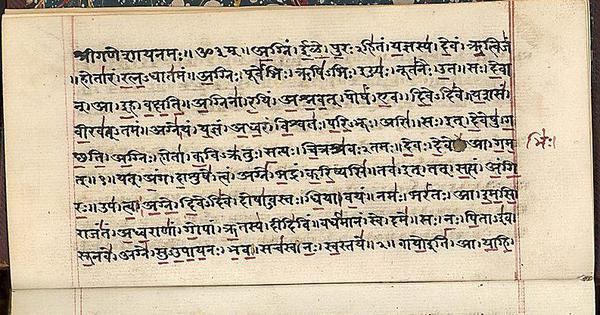
Imagine a very old collection of poems and songs called the Rig Veda.
People back then didn't write things down; they memorized everything.
They had specific ways to organize the words, like using different rhythms and syllable counts.
These methods made it easier for people to remember the poems.
The society was well organized, they had rules for guests and how to build alliances, like weddings and rituals.
These traditions were passed down orally for a long time, just like a secret family recipe.

The Rig Veda, a collection of Vedic Indo-Aryan language texts, was transmitted orally for generations.
Vedic society had well-developed social conventions including contracts, alliances, and ritual offerings.
The Rig Veda uses specific meters and syllabic arrangements designed for memorization.
The verses are organized into a hierarchical structure including 'rik', 'sukta', 'anuvak', and 'mandala'.
The Vedic tradition has been recited for 33 centuries in a disciplined manner.
- Who
- GN Devy and the composers of the Rig Veda.
- What
- Exploration of the Vedic Indo-Aryan language and its literary record, the Rig Veda.
- When
- The Vedas were composed over a century or a little longer, and the texts have been recited for 33 centuries.
- Where
- South Asia.
- Why
- To explore the unique oral tradition and the ingenious method of memorization used to preserve it.
- Language
- Vedic Indo-Aryan
- Text
- The Rig Veda
- Oral Tradition
- For generations
- Verses
- Organized in ascending order: rik, sukta, anuvak, mandala
- Total mantras
- 10,552
- Recitation period
- 33 centuries