

Archive · 14 Sep 2026
India’s Engineers Shift Toward Deep Tech for Viksit Bharat 2047
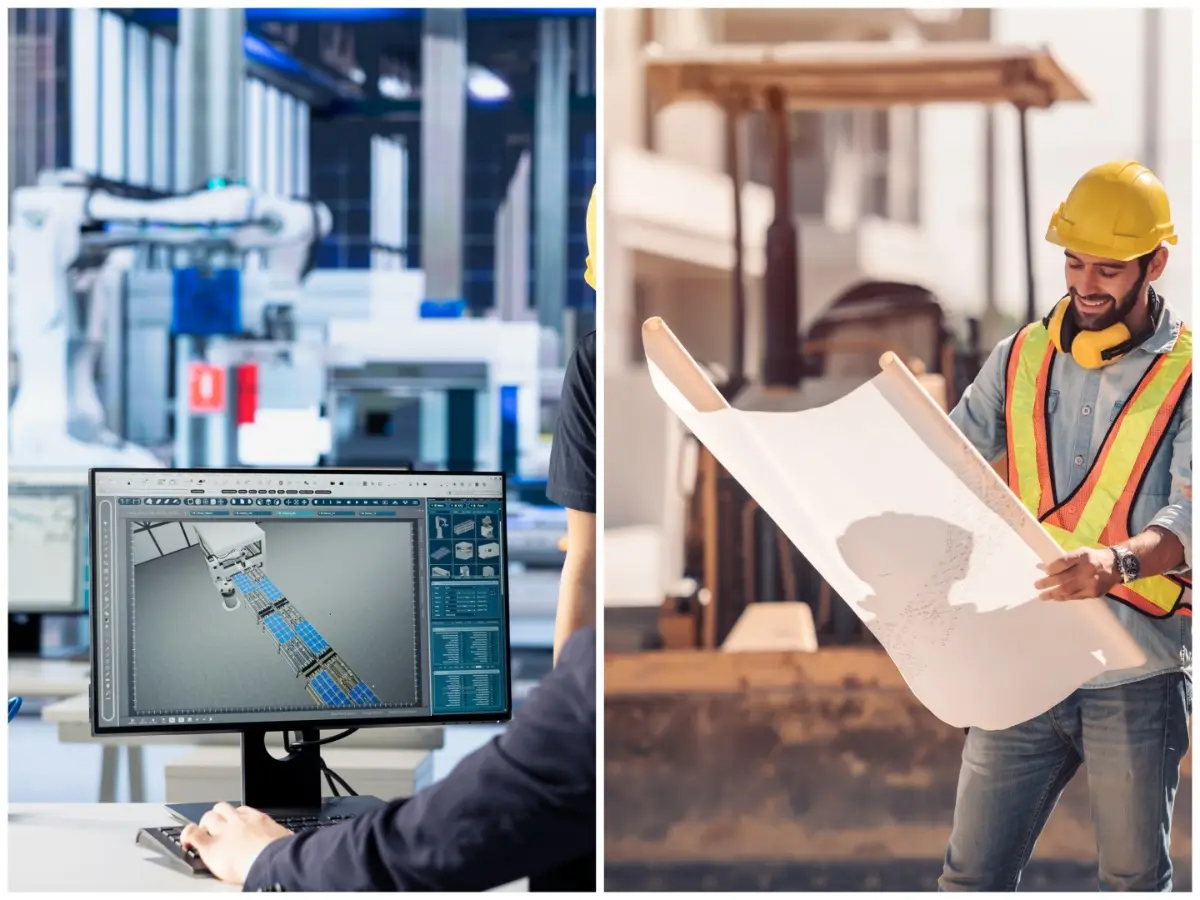
India wants to become a fully developed country by 2047, its 100th year of independence.
Engineers will be important in building that future.
They are working on advanced technologies such as artificial intelligence, semiconductors, quantum research and renewable energy.
New tools like drones, LiDAR and 3D models are helping build infrastructure faster.
Engineers are also expected to understand how whole systems work, not just solve one technical problem.
Artificial intelligence can handle some repetitive tasks, so human judgment and expertise remain important.
Energy engineers must connect more clean power to the grid and use batteries to store electricity.
ISRO is allowing private companies to handle some routine manufacturing so it can focus on human spaceflight and deep-space research.

India is moving from software services and IT outsourcing toward deep tech, semiconductor manufacturing and artificial intelligence.
Engineers are increasingly expected to understand complete systems, collaborate with business teams and deliver measurable outcomes.
Construction and infrastructure projects are using LiDAR, drones, BIM and 3D terrain modelling to accelerate delivery.
Renewable energy engineering now focuses on grid integration, storage, smart-grid technology and reliable power systems.
ISRO is shifting routine rocket and satellite manufacturing to private companies while concentrating on advanced research and space exploration.
- Who
- Indian engineers, technology companies, industry leaders and the Indian Space Research Organisation are driving the changes.
- What
- India’s engineering sector is shifting toward deep technology, artificial intelligence, semiconductor manufacturing, advanced infrastructure, renewable energy and space research.
- When
- The transformation is being discussed in connection with National Engineering Day 2026 and India’s goal for 2047.
- Where
- Across India, with engineering teams also developing products and solutions for global markets.
- Why
- The shift is intended to support India’s ambition to become a developed nation, strengthen technological capabilities and reduce dependence on external supply chains.
- National milestone
- India aims to become a fully developed nation by 2047, its 100th year of independence.
- Technology shift
- Engineering is expanding from software services and IT outsourcing into deep tech, semiconductors and artificial intelligence.
- Infrastructure tools
- LiDAR, drone surveys, Building Information Modelling and 3D terrain modelling are being used in civil and structural engineering.
- Energy priorities
- Engineers are working on renewable energy, grid connectivity, smart grids, substations and battery energy storage systems.
- Workforce changes
- Education and training are moving toward outcome-based learning, automation, robotics and artificial intelligence.
- Space sector
- The Indian Space Research Organisation is shifting routine rocket and satellite manufacturing to private companies.
- Engineering expectations
- Engineers are increasingly expected to manage end-to-end systems, validate AI-assisted work and focus on business and customer outcomes.