

Archive · 7 Oct 2026
JNU Professor’s Research Linked to Nobel-Winning Optogenetics Discovery
A tiny green organism called Chlamydomonas can sense light and move toward it.
Scientists wanted to understand how it did this.
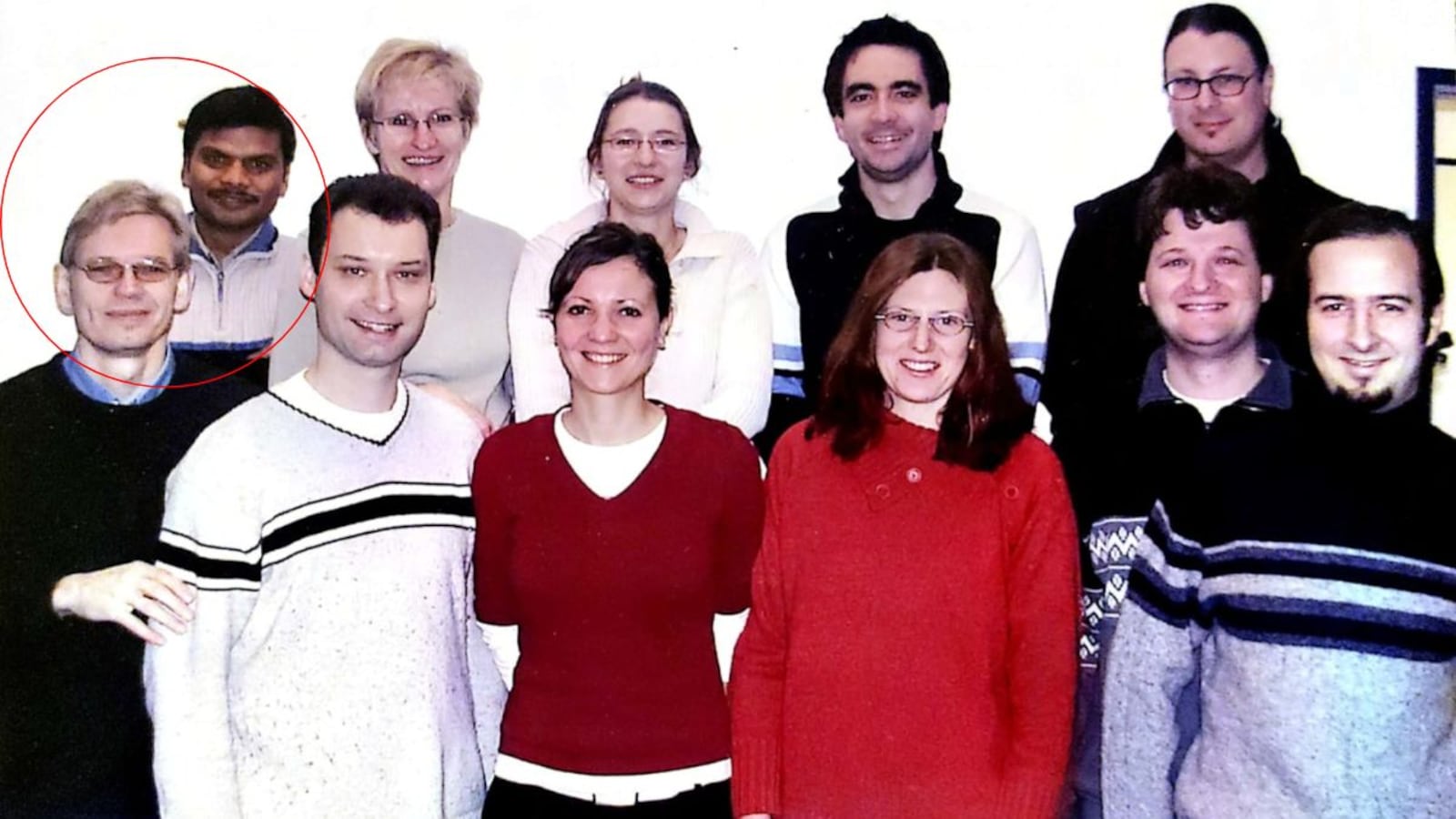
Suneel Kateriya studied the organism while earning his PhD with Peter Hegemann in Germany.
He identified two genes that make proteins able to sense light.
Other researchers showed that these proteins could act like tiny gates in cells.
Karl Deisseroth later used one of them to control brain cells with flashes of light.
This approach is called optogenetics and helps scientists study how the brain works.
The article says the work was recognized by the 2026 Nobel Prize in Physiology or Medicine.
Kateriya now leads a laboratory at JNU and continues researching light-sensitive proteins.

The article says the 2026 Nobel Prize in Physiology or Medicine went jointly to Karl Deisseroth, Peter Hegemann and Georg Nagel for discoveries underlying optogenetics.
JNU professor Suneel Kateriya was Hegemann’s PhD student in Germany from 2000 to 2004.
During his doctoral research, Kateriya identified two genes in the green alga Chlamydomonas that encoded light-sensitive proteins.
The proteins, known as channelrhodopsins, helped researchers develop methods to control cell activity with light.
Kateriya continues research at JNU and says fundamental science, collaboration and mentorship are important to scientific discovery.
- Who
- Suneel Kateriya, Peter Hegemann, Georg Nagel and Karl Deisseroth are central to the article’s account.
- What
- The article connects Kateriya’s research on light-sensitive proteins to the discoveries behind optogenetics and the 2026 Nobel Prize in Physiology or Medicine.
- When
- Kateriya was Hegemann’s PhD student from 2000 to 2004; the article reports the Nobel announcement in 2026.
- Where
- Kateriya conducted his doctoral research in Germany and now leads a laboratory at Jawaharlal Nehru University in New Delhi.
- Why
- The research investigated how a green alga senses light, and the resulting light-sensitive proteins later enabled scientists to control cell activity with light.
- Nobel Prize
- The article says the 2026 Nobel Prize in Physiology or Medicine was awarded jointly to Karl Deisseroth, Peter Hegemann and Georg Nagel.
- Kateriya’s doctoral period
- He studied with Peter Hegemann in Germany from 2000 to 2004.
- Research organism
- Chlamydomonas, a microscopic green alga.
- Key finding
- Kateriya identified two DNA sequences encoding light-sensitive proteins.
- Foundational publications
- The article says landmark papers associated with the work appeared in 2002 and 2003.
- Current institution
- Jawaharlal Nehru University, where Kateriya leads a laboratory.
- Current research
- His lab works on optogenetics, light-sensitive proteins, ciliopathies and optobiotechnology approaches using algae.