

Archive · 25 Jun 2025
Scientists Explore Salamander Limb Regeneration for Humans
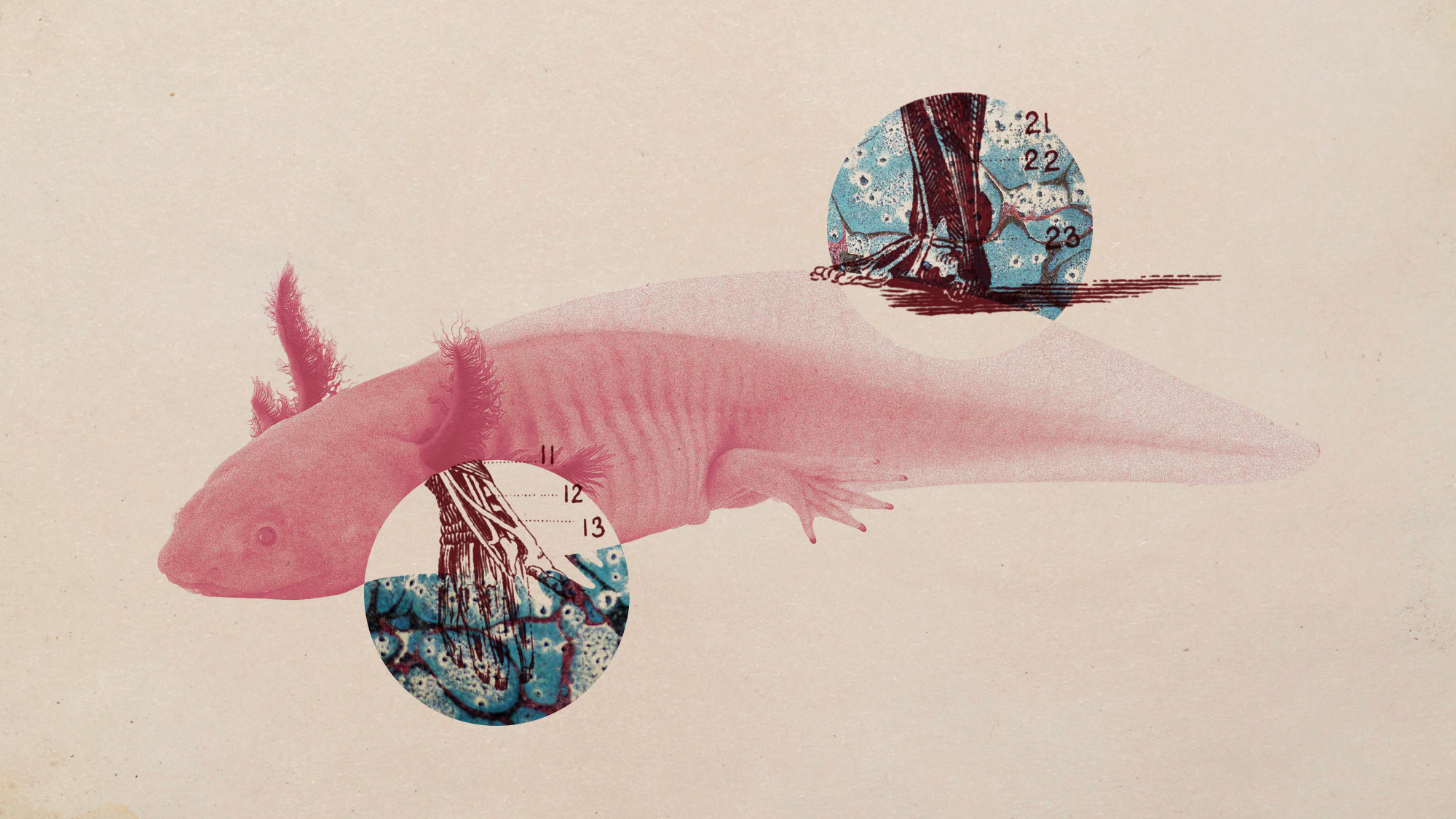
Scientists are looking at how salamanders regrow limbs to see if humans can too.
Axolotls, a type of salamander, can grow back lost limbs, and even parts of their hearts and brains!
A substance called retinoic acid helps tell the cells how to grow.
It acts like a signal, telling cells to build a shoulder or a foot.
The amount of retinoic acid is important – too much, and the limb grows wrong.
This acid is also used in human embryos to help them grow, but we lose this ability after we're born.
Scientists hope to understand how to use these mechanisms to help humans regrow limbs in the future.

Scientists are studying salamanders to understand limb regeneration.
Axolotls, a type of aquatic salamander, can regrow limbs, heart, lungs, and even brain tissue.
Retinoic acid, a derivative of vitamin A, is crucial for limb regeneration in axolotls.
The concentration of retinoic acid determines where cells grow on a limb, affecting length and formation.
Retinoic acid is important in human embryo development but its regenerative cues are lost after birth.
- Who
- Scientists are studying axolotls, such as James Monaghan, to understand the mechanisms of limb regeneration.
- What
- Scientists are studying salamanders' limb regeneration capabilities.
- When
- Information presented reflects current scientific studies.
- Where
- The research is conducted and published in scientific journals.
- Why
- To potentially understand and unlock human limb regeneration capabilities.
- Animal Studied
- Axolotl salamander
- Key Substance
- Retinoic acid
- Retinoic Acid Function
- Signals limb cell growth
- Issue with Humans
- Most human cells lose regenerative abilities after birth