

Archive · 19 Jul 2026
1949 Debate on Indian Citizenship Provisions
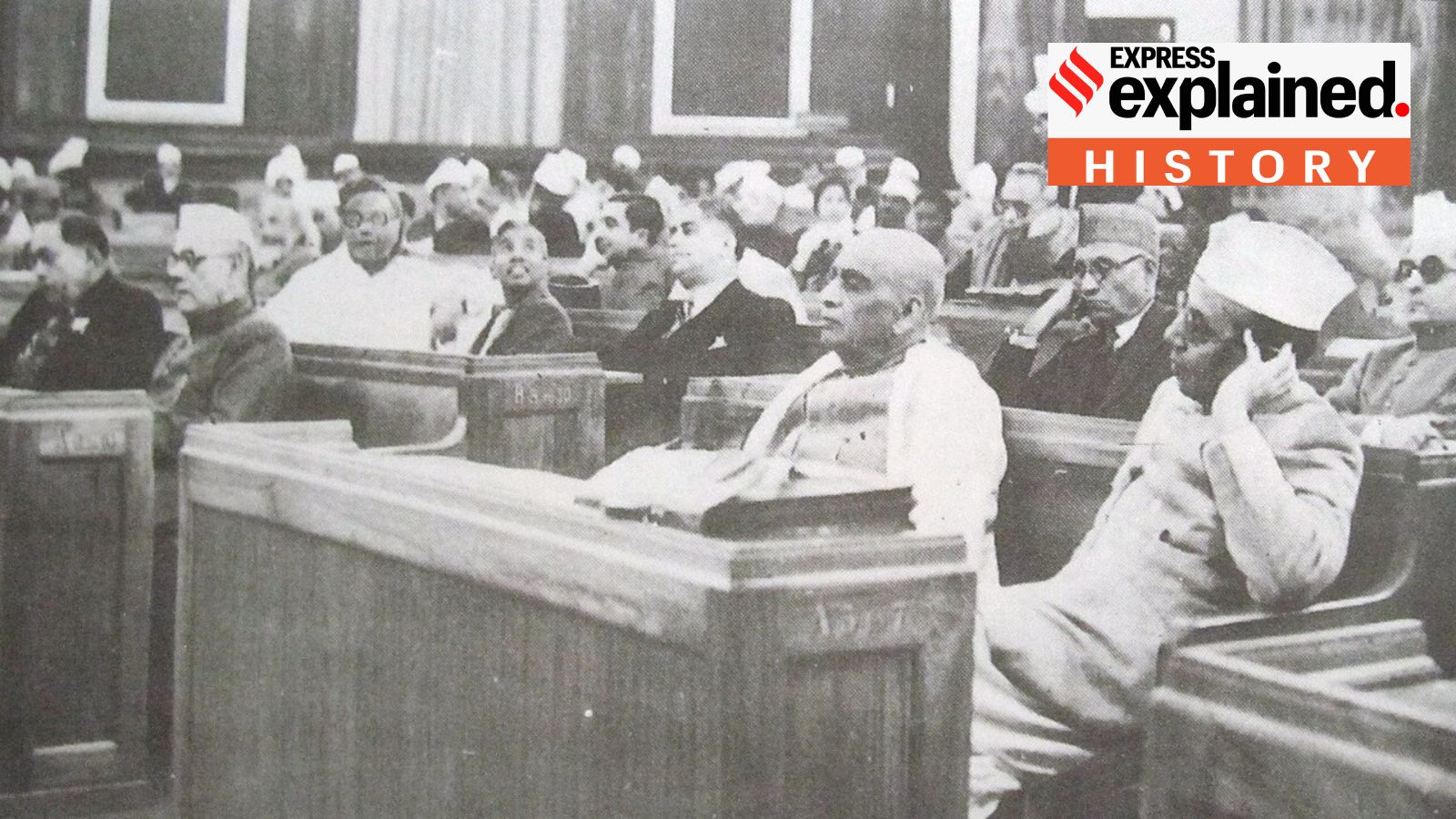
In 1949, the Constituent Assembly of India had a big debate about who should be considered Indian citizens.
Some members wanted citizenship to be based on religion or parentage, while others wanted it to be based on where someone was born.
There was also a discussion about how to protect people who had to leave their homes because of Partition.
In the end, the Assembly decided on a secular and territorial conception of citizenship, meaning that citizenship is based on the land and not on religion.
This decision left the Parliament free to make more detailed citizenship laws later.

The Constituent Assembly debated citizenship provisions in August 1949, with nearly 140 amendments moved.
Some members wanted citizenship tied to religion or parentage, while others argued for birthplace-based citizenship.
Partition refugees' protection was a contentious issue, with some advocating for automatic citizenship and others for registration and proof of residence.
The Assembly ultimately adopted a secular and territorial conception of citizenship, leaving Parliament to frame a permanent citizenship law.
The debate revealed sharply different ideas about what Indian citizenship ought to mean, with various members proposing different criteria and protections.
- Who
- Members of the Constituent Assembly, including B R Ambedkar, Panjabrao Shamrao Deskhmukh, Naziruddin Ahmad, Jaspat Roy Kapoor, Bhupinder Singh Mann, Jawaharlal Nehru, and Alladi Krishnaswami Iyer
- What
- A debate on the citizenship provisions of the draft Constitution of India
- When
- August 1949
- Where
- Constituent Assembly of India
- Why
- To determine the criteria for Indian citizenship and address the complexities arising from Partition and the position of Indians living abroad
Restrictive Citizenship
Inclusive Citizenship
Citizenship Criteria
Restrictive Citizenship
Citizenship should be restricted to those born to Indian parents or naturalized under the law, and should not be granted based solely on birthplace.
Inclusive Citizenship
Citizenship should be granted to those born on Indian soil, regardless of parentage, and should be more inclusive of refugees and those displaced by Partition.
Protection for Partition Refugees
Restrictive Citizenship
Citizenship should not be automatically granted to Partition refugees; they should have to register and prove residence.
Inclusive Citizenship
Partition refugees should receive automatic citizenship without having to register or prove residence, as they fled communal riots and deserve protection.
Religious Considerations
Restrictive Citizenship
Citizenship should be extended to Hindus and Sikhs who are not citizens of another state, as they have no other country to look to for citizenship.
Inclusive Citizenship
Citizenship should be secular and not based on religious grounds, ensuring justice and equity for all individuals and groups.
- Date of Debate
- August 1949
- Drafting Committee Head
- B R Ambedkar
- Assembly President
- Rajendra Prasad
- Number of Amendments Moved
- Nearly 140
- Cutoff Date for Partition Refugees
- July 19, 1948
- Constitution Commencement Date
- January 26, 1950