

4 hrs ago
RBI Rate Hike and Global Pressures Weigh on Indian Markets

India’s main stock markets fell early Thursday.
The day before, the Reserve Bank of India raised its key interest rate to 5.50%.
It also signalled that borrowing conditions may become tighter, rather than easier, in the near term.
Oil prices were high, and foreign investors sold many Indian shares.
These developments made investors more cautious.
Some large companies, including ITC and Adani Ports, lost value.
Several technology companies, including TCS and Infosys, gained.
Markets in parts of Asia and the United States were also weaker.
Analysts said these pressures could continue to affect investment decisions.

Sensex fell 264.97 points to 72,408.15 and Nifty declined 87.50 points to 22,507.65 in early Thursday trading.
The RBI raised its repo rate by 25 basis points to 5.50% on Wednesday and shifted its policy stance from neutral to “calibrated tightening.”
Brent crude rose 2.02% to $102.2 per barrel, while foreign investors sold equities worth Rs 6,121.37 crore on Wednesday.
ITC, Adani Ports and Bajaj Finance were among the major Sensex laggards; TCS, HCL Tech, Tech Mahindra and Infosys gained.
Asian markets and US markets also ended or traded lower, while analysts said prolonged tighter monetary conditions could weigh on risk appetite and foreign flows.
- Who
- Indian benchmark indices Sensex and Nifty, affected by the RBI rate decision and investor activity.
- What
- Markets fell in early trade as the RBI raised its repo rate and signalled calibrated tightening.
- Where
- Indian stock markets; the article also reports weaker Asian and US markets.
- When
- Thursday early trade; the RBI announced its rate increase on Wednesday.
- Why
- Tighter monetary policy, high crude oil prices, foreign equity outflows and weaker global market conditions weighed on sentiment.
Reasons for caution
Countervailing market signals
Interest rates and risk appetite
Reasons for caution
The RBI’s rate increase and shift to calibrated tightening, alongside indications of possible further hikes, could keep financial conditions tight and make investors defensive.
Countervailing market signals
The article reports gains in TCS, HCL Tech, Tech Mahindra and Infosys despite the broader market decline.
Market outlook
Reasons for caution
Analysts cited high crude prices, foreign outflows and global monetary pressures as risks that could weigh on equities and risk appetite.
Countervailing market signals
The declines were not uniform: some Sensex companies and technology shares gained during early trade.
Key facts
- RBI repo rate
- Raised 25 basis points to 5.50% on Wednesday.
- Policy stance
- Changed from “neutral” to “calibrated tightening”; the RBI signalled further hikes could follow.
- Sensex
- Down 264.97 points to 72,408.15 in early trade.
- Nifty
- Down 87.50 points to 22,507.65 in early trade.
- Brent crude
- Up 2.02% to $102.2 per barrel.
- Foreign investor flows
- FIIs sold equities worth Rs 6,121.37 crore on Wednesday.
- Market movers
- ITC, Adani Ports and Bajaj Finance were among laggards; TCS, HCL Tech, Tech Mahindra and Infosys were among gainers.
Quotes
Hariselvan Radhakrishnan
Founder and CEO of HST Wealth, a research analyst firm
“The key overhang is no longer the RBI's rate increase alone, but the growing prospect of tighter domestic and global monetary conditions persisting for longer, potentially keeping pressure on risk appetite and foreign flows. The RBI's shift to calibrated tightening, followed by Federal Reserve minutes indicating another US rate increase may be required this year, could limit risk appetite.”
 rediff.com
“Tighter domestic financial conditions and a fragile global risk backdrop could keep investors defensive.”
rediff.com
Sources
Related news

Sensex, Nifty Fall as Rate Hike, Crude and Selling Weigh
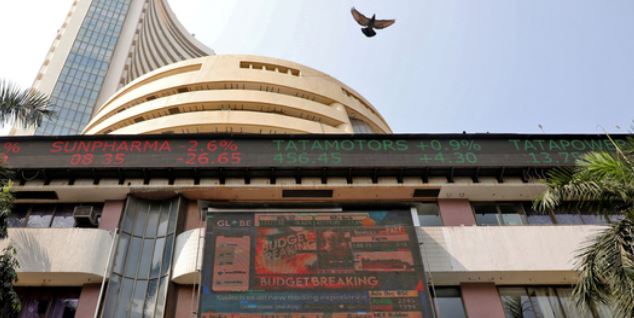
Sensex and Nifty Fall as Investors Await RBI Policy Decision
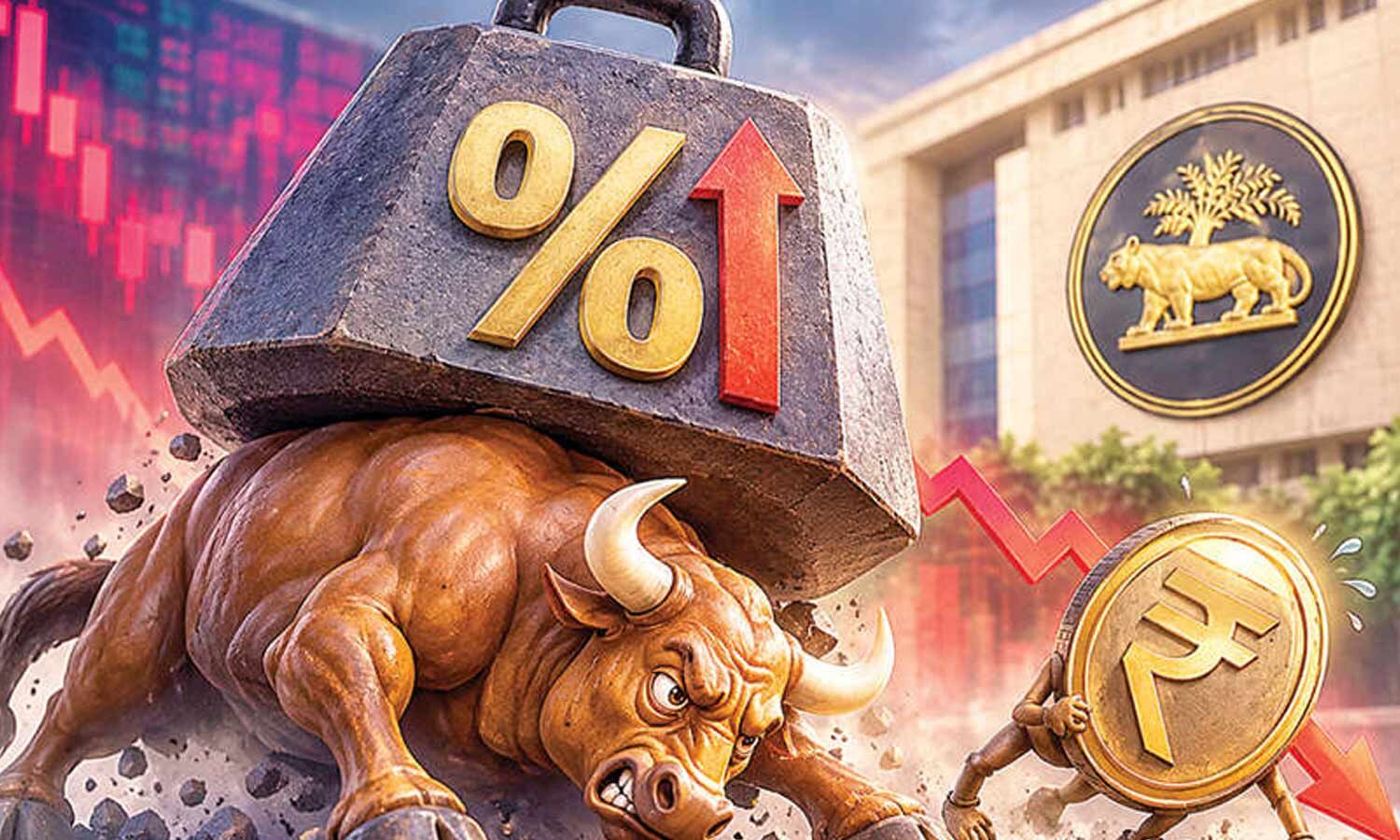
RBI Rate Hike and Hawkish Shift Send Sensex Lower

Indian Stocks Fall for Second Day as Oil Pressures Markets
Indian Stocks Sink as Crude Surges Amid West Asia Tensions

Sensex Plunges 1,124 Points as Crude Prices Surge

Adani Power Shares Fall as Analysts Flag Key Support Levels

Senco Gold Shares Jump After Strong Second-Quarter Business Update
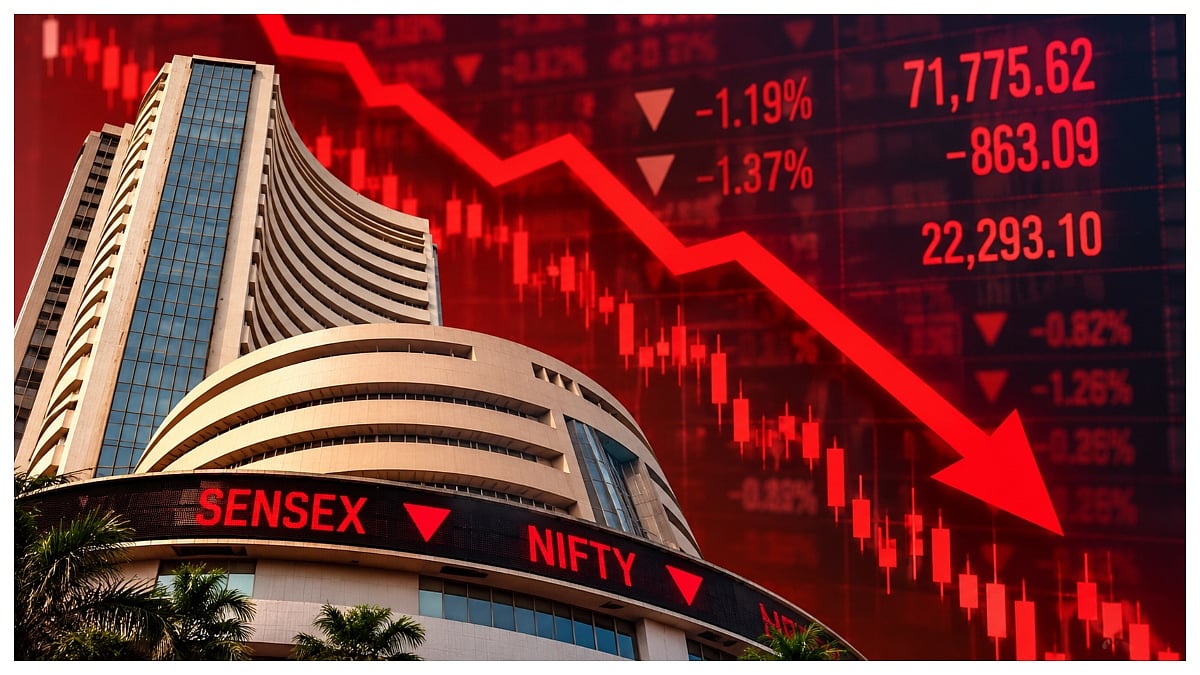
Sensex Falls 863 Points as Crude and Global Weakness Pressure Markets

Five Earnings Triggers Could Shape TCS Share Price
