

Archive · 5 Aug 2025
Bacteria Identified in Devastating Sea Star Die-Off
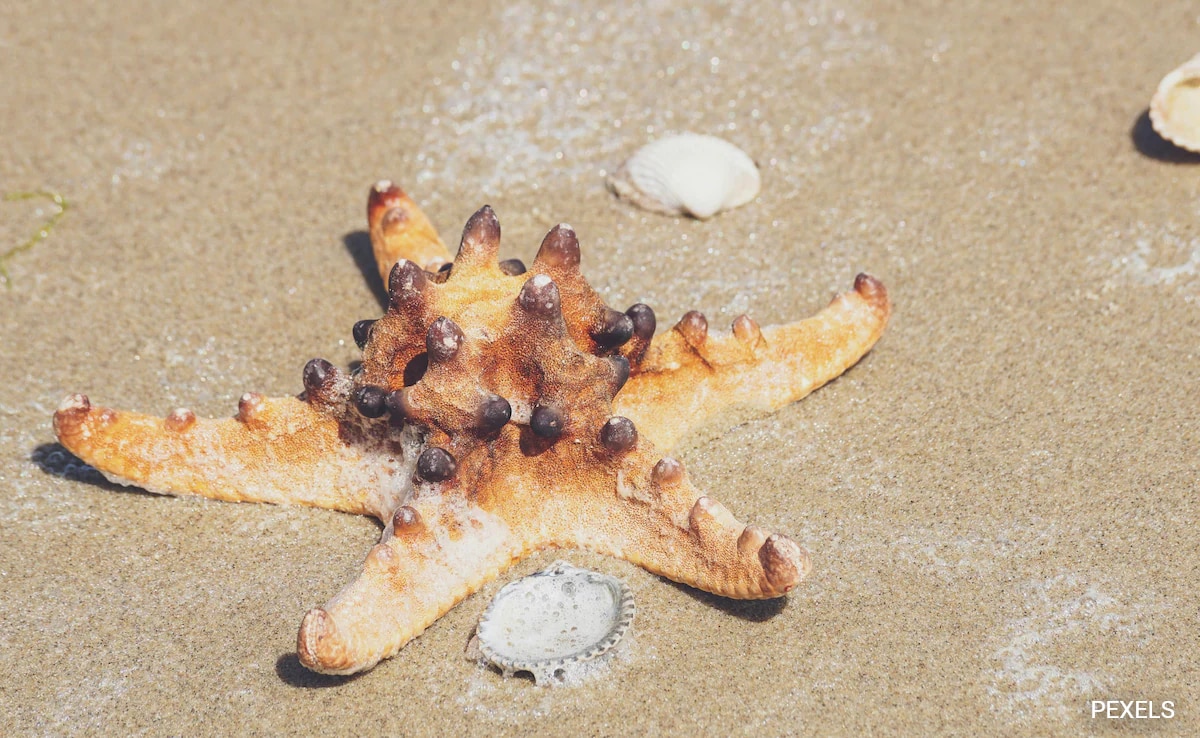
Scientists have figured out what was killing sea stars, also known as starfish, in the ocean.
It's a bacteria called *Vibrio pectenicida*.
The disease caused the sea stars' arms to fall off, starting in 2013.
The outbreak was a big problem, especially for sunflower sea stars, which almost disappeared.
These stars eat sea urchins.
When the stars died, the urchins ate up the kelp forests where many ocean animals live.
Now that scientists know what caused the disease, they can try to help the sea stars and bring the kelp forests back.

Scientists identified bacteria, *Vibrio pectenicida*, as the cause of sea star wasting disease.
The disease caused a mass die-off of sea stars along the Pacific coast of North America.
The outbreak began in 2013 and has affected over 20 sea star species.
Sunflower sea stars were severely impacted, with a 90% population loss.
Researchers aim to use the findings to help sea star populations recover and restore kelp forests.
- Who
- Scientists identified the bacteria responsible for sea star wasting disease.
- What
- Sea star wasting disease caused by *Vibrio pectenicida* bacteria.
- When
- The outbreak started in 2013.
- Where
- Pacific coast of North America, from Mexico to Alaska.
- Why
- To understand the cause of the sea star die-off and find ways to restore sea star populations and the ecosystems they support.
- Disease Name
- Sea Star Wasting Disease
- Causative Agent
- *Vibrio pectenicida* bacteria
- Start Year
- 2013
- Affected Area
- Pacific Coast of North America
- Impacted Species
- Over 20 species
- Worst Hit Species
- Sunflower sea star