

Archive · 26 Jul 2026
Sundarbans Mangroves Face Critical Threats on World Mangrove Day
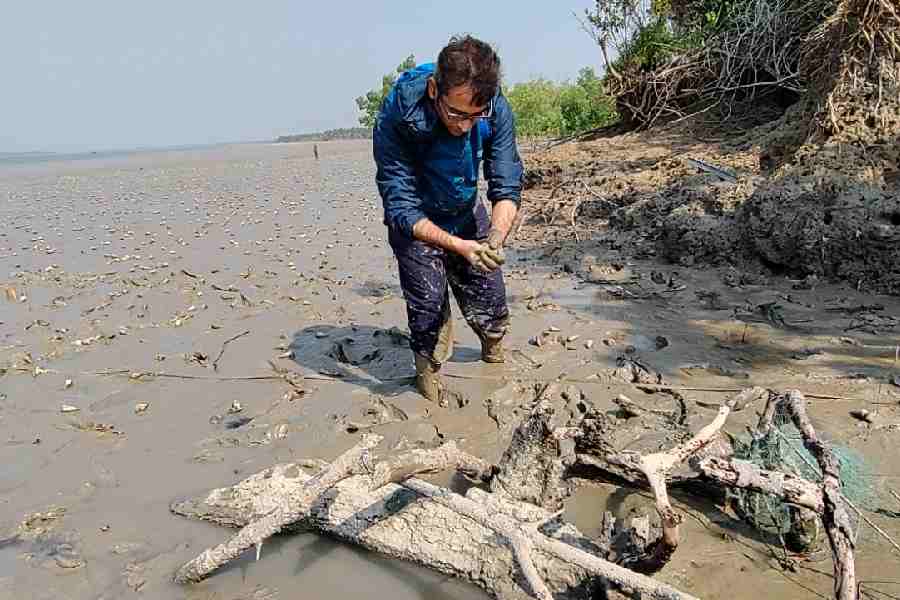
The Sundarbans, the world's largest mangrove forest, is in big trouble.
The trees are drying up, the water is too salty, and the forest is disappearing because of erosion, rising sea levels, and human activities.
The government has promised some help, but researchers and local people say it's not enough.
The mangroves are important because they protect the coast from storms and store a lot of carbon, which helps fight climate change.
To save the Sundarbans, experts say we need better ways to protect and regrow the mangroves naturally, and involve local communities in the effort.

The Sundarbans mangroves are disappearing due to erosion, rising sea levels, and human activities.
Researchers warn of high salinity levels and the loss of biodiversity in the mangroves.
The Bengal government has allocated Rs 50 crore for mangrove afforestation, but experts say more needs to be done.
Mangroves act as natural barriers against storms and store significant amounts of blue carbon.
Local communities and researchers advocate for natural regeneration and involving stakeholders in conservation efforts.
- Who
- Researchers at Jadavpur University, local communities, Bengal government
- What
- The Sundarbans mangroves are facing severe threats from erosion, salinity, and human activities.
- When
- The issues have been ongoing, with recent budget measures and research findings highlighting the critical state.
- Where
- Sundarbans, West Bengal, India
- Why
- The mangroves are essential for biodiversity, carbon storage, and protecting coastal communities from storms and extreme weather.
Government and Researchers
Local Communities
Efforts to Save Mangroves
Government and Researchers
The Bengal government has allocated Rs 50 crore for mangrove afforestation and other measures to address the issues.
Local Communities
Local communities feel the measures are insufficient and more needs to be done to protect the mangroves and their livelihoods.
Approach to Mangrove Restoration
Government and Researchers
Researchers advocate for a hands-off approach, allowing natural regeneration without disturbance.
Local Communities
Local stakeholders believe they should be involved and compensated for protecting the forest and the carbon credits it generates.
- Location
- Sundarbans, West Bengal, India
- Size
- World's largest contiguous mangrove forest
- Threats
- Erosion, rising sea levels, cyclones, salinity, human activities
- Budget Allocation
- Rs 50 crore for mangrove afforestation
- Carbon Storage
- 26.62 million metric tonnes of blue carbon
- Success Rate of Restoration
- 48.7% over the past 40 years