

Archive · 6 Jan 2026
Polar Bears Adapt via Jumping Genes
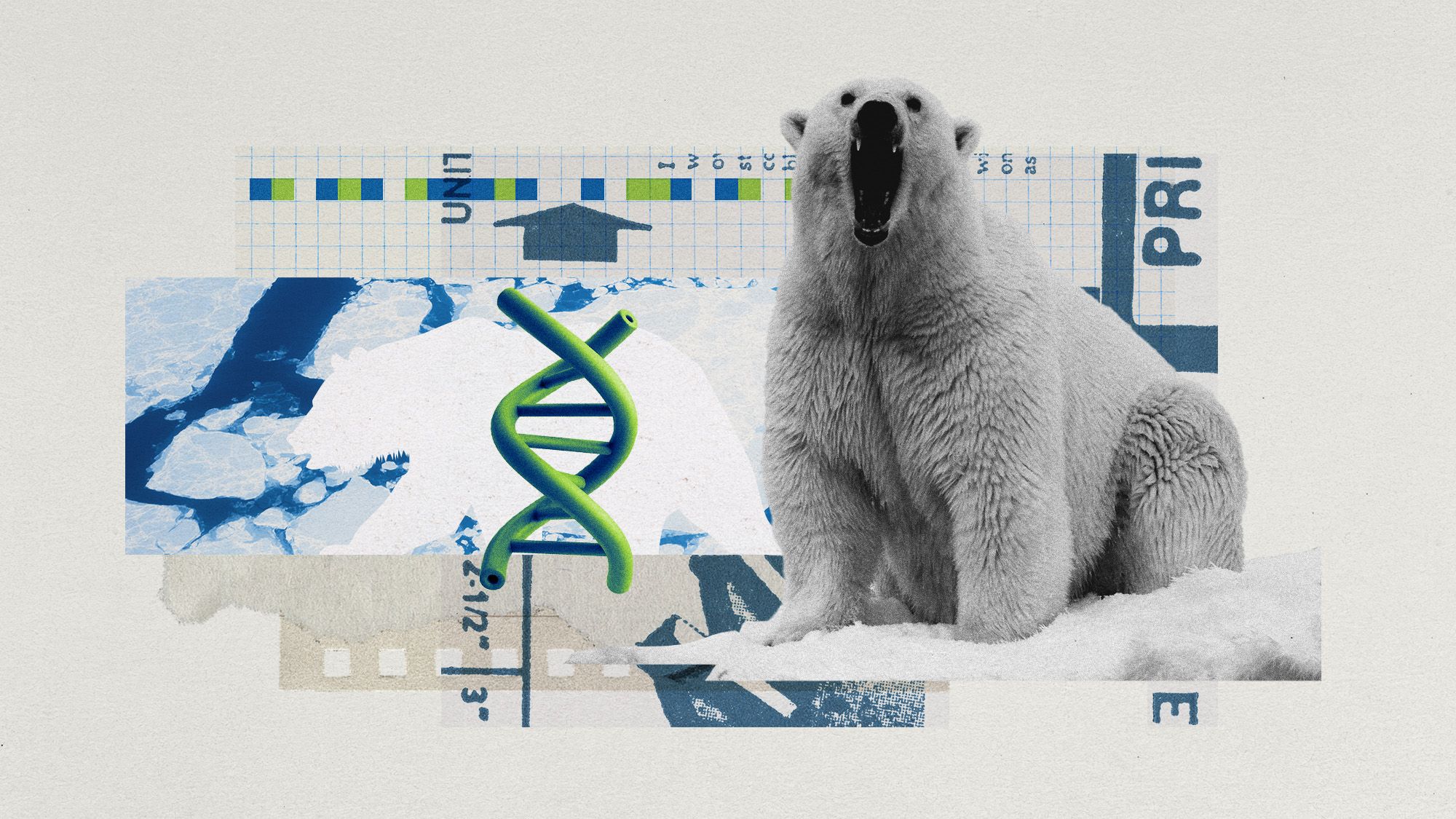
Polar bears in southeast Greenland are adapting to warmer climates by changing their DNA.
These bears have special pieces of genes called 'jumping genes' that can move around and help them adapt to new environments.
The southern bears have genes that work differently for handling heat, aging, and metabolism compared to northern bears.
This adaptation might help them survive as their habitat changes due to climate change.
However, scientists say that even with these changes, polar bears are still at risk of extinction and need our help to reduce carbon emissions.
Humans also have similar jumping genes, and our DNA can change too, but environmental stress can speed up this process.

Polar bears in southeast Greenland are adapting to warmer climates through genetic changes.
These bears have 'jumping genes' that help them adapt to new environments.
Genes related to heat-stress, aging, and metabolism are behaving differently in southern bears.
This adaptation is driven by rising temperatures and could help them survive with reduced sea ice.
Despite these changes, polar bears are still at risk of extinction by 2100.
- Who
- Polar bears in southeast Greenland
- What
- Adapting to warmer climates via genetic changes
- When
- Present and future due to climate change
- Where
- Southeast Greenland
- Why
- To survive in warmer environments with reduced sea ice
- Species
- Polar bears
- Location
- Southeast Greenland
- Genetic Difference
- Heat-stress, aging, and metabolism genes
- Adaptation Mechanism
- Jumping genes (transposons)
- Extinction Prediction
- More than two-thirds by 2050, total by 2100
- Human Comparison
- 45% transposons in human genome
- Polar Bear Genome
- 38.1% jumping genes