Archive · 28 Jan 2026
Bangladesh Youth Disillusioned After Hasina's Ouster

A lot of young people in Bangladesh helped to remove their former leader, Sheikh Hasina, because they wanted a better and more democratic country.
They hoped for big changes, but now they are feeling disappointed.
The upcoming election doesn't seem to offer much that's new.
The main parties running are the old ones, and some are even teaming up with groups that many young people don't like.
Even though they are unhappy, most young people still plan to vote because they believe it's important for the country's future.
Some are trying to create new political options, but it's a slow process.
Meanwhile, there are concerns about media freedom and organized mob violence, with critics blaming the interim government for not doing enough to protect journalists and prevent attacks on media outlets.

Young Bangladeshis, frustrated by economic conditions and political repression, toppled former Prime Minister Sheikh Hasina in 2024.
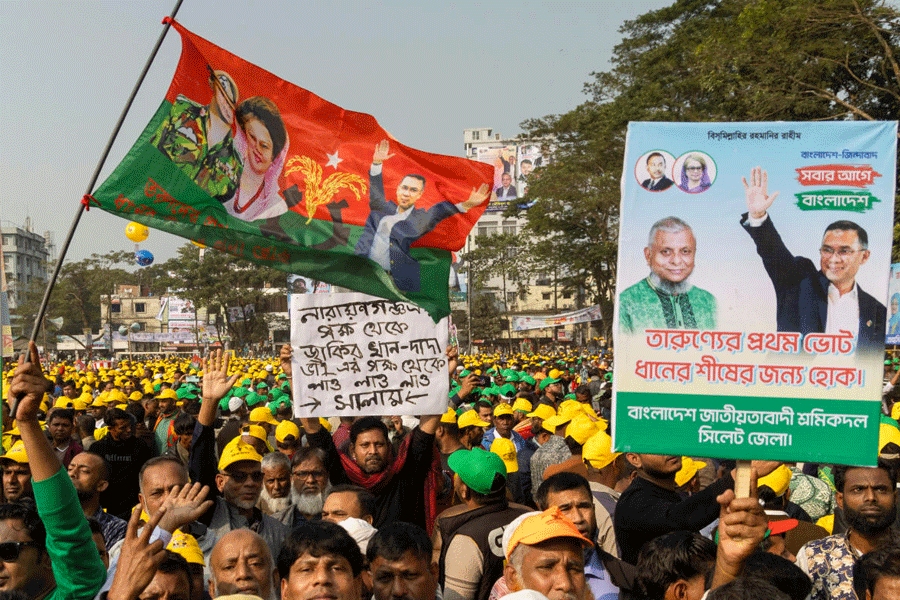
The upcoming February 12 election lacks new viable political alternatives, with the main contenders being the BNP and Jamaat-e-Islami.
Many Gen-Z voters are disappointed with the lack of reform and the alliance between the new National Citizens Party (NCP) and the hardline Jamaat-e-Islami.
The interim government led by Muhammad Yunus has failed to address mob violence and economic concerns, further disillusioning young voters.
Despite their misgivings, most young Bangladeshis plan to vote, with a 97% willingness to participate in the election.
- Who
- Young Bangladeshis, particularly Gen-Z, who drove the uprising against Sheikh Hasina
- What
- Disillusionment with the political process and lack of new viable alternatives post-Hasina, along with concerns over media freedom and organized mob violence
- When
- Ahead of the February 12 parliamentary election
- Where
- Primarily in Dhaka, Bangladesh
- Why
- Frustration with economic conditions, political violence, lack of new political vision, and concerns over media freedom and government patronage of organized mobs
Critics of Interim Government
Interim Government Supporters
Media Freedom
Critics of Interim Government
Critics argue that the interim government has restricted media freedom, allowed attacks on media outlets, and failed to prevent violence against journalists.
Interim Government Supporters
The interim government denies that the attacks on media houses were organized and refuses to label them as mob attacks.
Election Process
Critics of Interim Government
Critics claim the upcoming election is not a genuine democratic process but rather a referendum campaign conducted by the government.
Interim Government Supporters
The interim government likely views the election as a necessary step towards political transition.
Media Regulations
Critics of Interim Government
Experts warn that the proposed Broadcast Commission Ordinance and Media Commission Ordinance may create regulatory conflicts and are hastily implemented without proper planning.
Interim Government Supporters
The interim government likely sees these ordinances as necessary for media reform and regulation.
- Former Prime Minister
- Sheikh Hasina
- Current Interim Government Leader
- Muhammad Yunus
- Major Political Parties
- BNP, Jamaat-e-Islami, NCP
- Election Date
- February 12
- Voter Turnout Expectation
- 97% among 18-35 age group
- Key Issues
- Economic concerns, political violence, lack of new vision
- Gen-Z Voter Percentage
- More than a quarter of 128 million voters
- Media Attacks
- Offices of The Daily Star and Prothom Alo were attacked in December 2024
- Media Freedom Concerns
- Journalists face insecurity, financial difficulties, and political pressure
- Proposed Media Ordinances
- Broadcast Commission Ordinance and Media Commission Ordinance
Sources
After toppling Hasina, young Bangladeshis turn back to old guard
‘Spirit of July revolution lost’: Young Bangladeshis confront old guard vs Islamist choice - Telegraph India

Yunus-led interim govt’s patronage fuels organised mobs in Bangladesh: Experts