

Archive · 27 Nov 2025
India Launches New Weather Radars, Solar System, and Museum
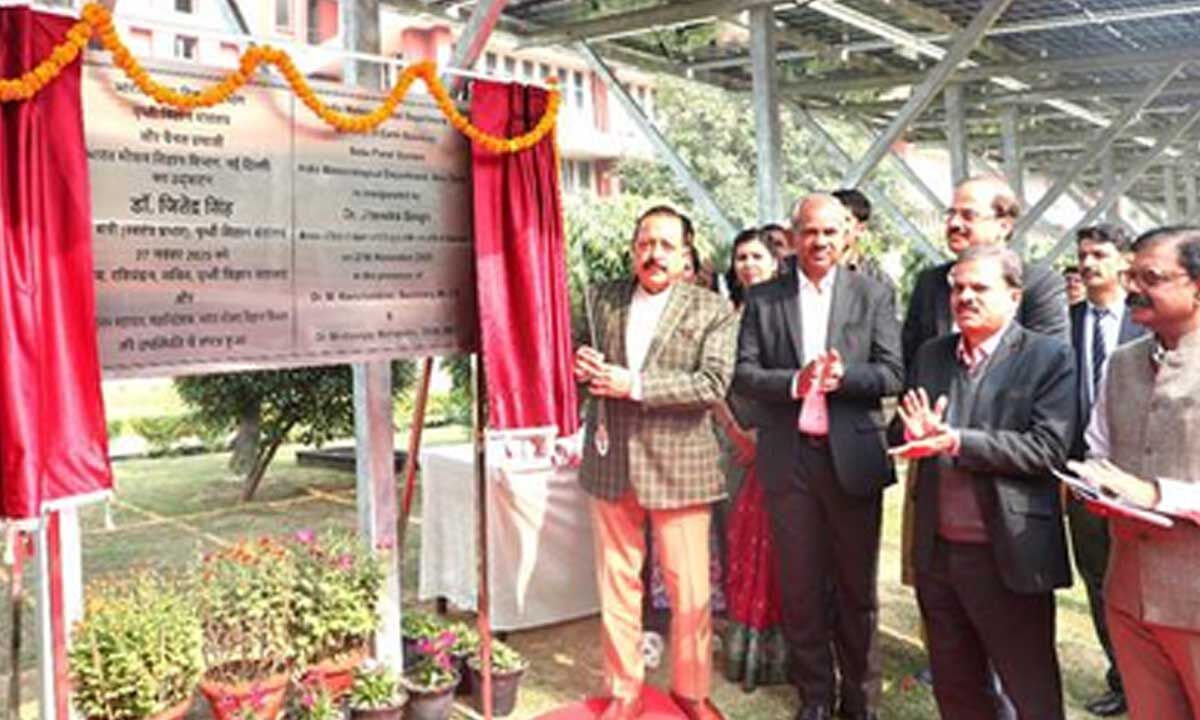
The Indian government has started three new projects to help with weather predictions and clean energy.
They set up two new weather radars in Raipur and Mangaluru, which can detect storms, heavy rain, and other weather events.
These radars cover a large area and will help improve weather forecasts.
Additionally, they opened a museum in New Delhi to show the history of weather science in India.
The museum has old weather tools and interactive displays for learning.
They also installed solar panels on their building to use clean energy, supporting India's goal of using more renewable energy.
The government plans to add more radars in the future, including in big cities and the Himalayan region.

India launched two new C-band Doppler weather radars in Raipur and Mangaluru, enhancing weather monitoring capabilities.
The radars can detect various severe weather systems, including cyclones, thunderstorms, and heavy rainfall, with a 250 km coverage.
A meteorological museum was inaugurated in New Delhi, showcasing IMD's 150-year journey with historic instruments and interactive learning facilities.
A 771 kWp solar power system was installed at Mausam Bhawan, aligning with India's clean energy mission and net-zero commitments.
IMD has achieved over 50% radar coverage and plans to add more radars, including urban radars in major cities and advanced radars in Himalayan states.
- Who
- Union Government, India Meteorological Department (IMD)
- What
- Launch of two new C-band Doppler weather radars, a solar power system, and a meteorological museum
- When
- Thursday (specific date not mentioned)
- Where
- New Delhi, Raipur (Chhattisgarh), Mangaluru (Karnataka)
- Why
- To enhance weather prediction capabilities, support clean energy mission, and showcase IMD's history
- Initiatives Launched
- Two C-band Doppler weather radars, a solar power system, and a meteorological museum
- Radar Locations
- Raipur, Chhattisgarh and Mangaluru, Karnataka
- Radar Coverage
- 250 km radial coverage for each radar
- Solar Power System
- 771 kWp system with 1,315 solar panels
- Museum Features
- Historic weather instruments, interactive learning facilities
- Radar Expansion Target
- 126 radars achieved, aiming for 141 by 2027
- Future Plans
- Urban radars in major cities and advanced radars in Himalayan states