

Archive · 31 Jul 2026
Scientists Use AI to Shrink Proteins, Expanding Gene Therapy
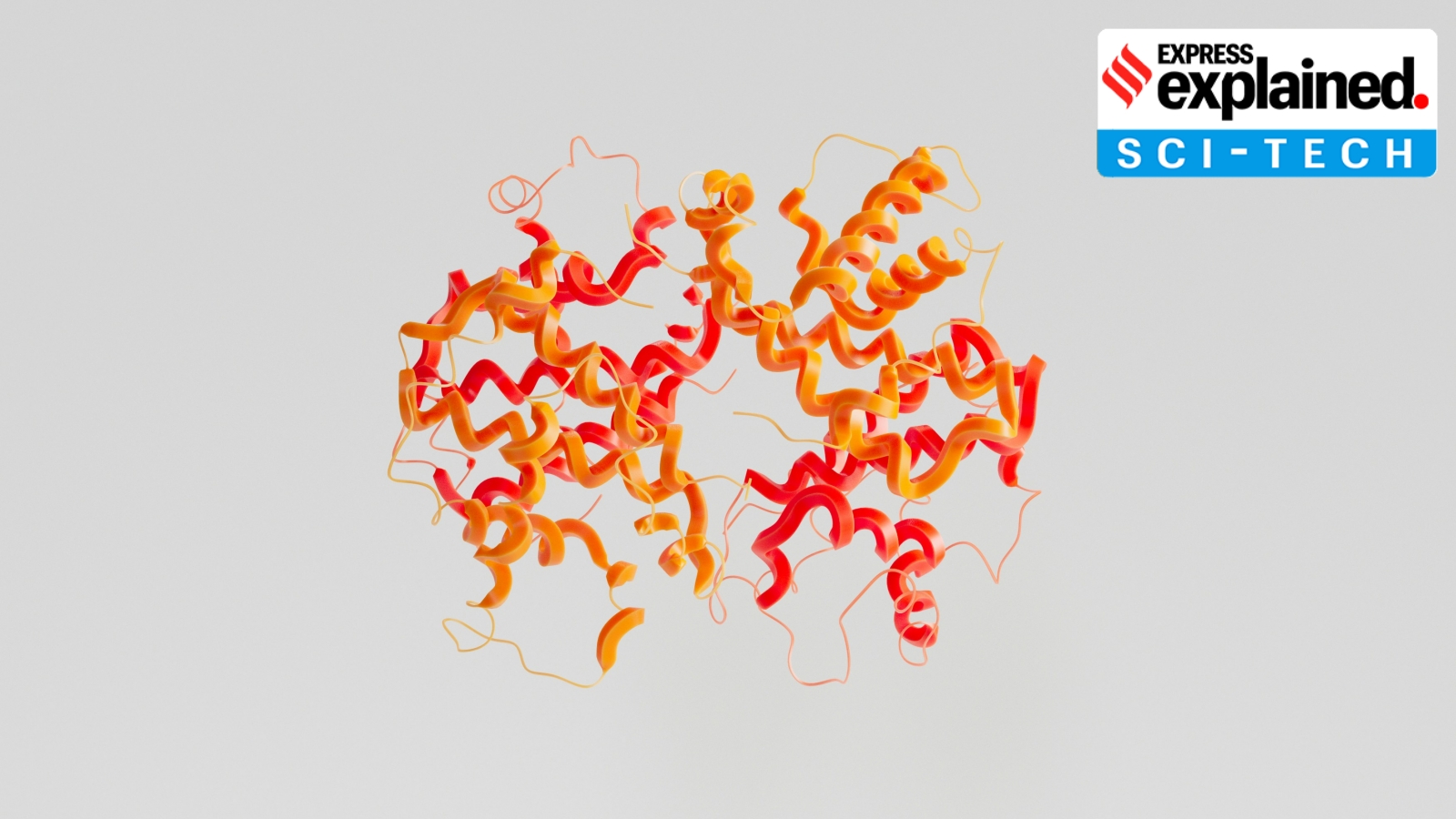
Scientists at Duke University made a computer program called Raygun that can make proteins smaller or bigger.
It learns from millions of protein sequences, like a language model learns from books.
Raygun can quickly create new protein versions in about a third of a second.
The team tested it on proteins from 147 to 2,549 building blocks, and it could shrink the biggest ones by more than 500 blocks while keeping their shape.
They also made tiny glowing proteins that work in human cells, some as small as 199 blocks.
The new proteins are a bit dimmer than the best lab ones, and scientists are still figuring out which changes stay good after the AI edits.
This could help make gene therapies cheaper and more effective by fitting bigger genes into smaller delivery vehicles.
The researchers also said they follow Responsible AI for Biodesign principles to keep the technology safe.
They are working on making the glowing proteins brighter and understanding how the AI changes affect protein function.

Duke University researchers developed Raygun, an AI system that can shrink, enlarge, and rewrite proteins.
Raygun uses protein language models to summarize sequences and generate new variants in seconds.
The tool was tested on proteins ranging from 147 to 2,549 amino acids, successfully shortening large proteins while preserving structure.
Raygun produced functional fluorescent proteins (eGFP and mCherry) with sizes as small as 199 amino acids, glowing in human cells.
Limitations include reduced brightness compared to lab standards and uncertainty about which engineered properties survive AI edits.
- Who
- Duke University scientists, including Dr. Kapil Devkota and Rohit Singh
- What
- An AI system called Raygun that can shrink, enlarge, and rewrite proteins
- When
- Published July 29, 2023
- Where
- Duke University, North Carolina, United States
- Why
- To enable delivery of therapeutic proteins and improve research tools like fluorescent proteins
- Research institution
- Duke University
- AI system
- Raygun
- Publication date
- July 29, 2023
- Protein size range tested
- 147–2,549 amino acids
- Smallest functional fluorescent protein
- 199 amino acids
- Speed of generation
- 0.3 seconds per sample
- Field
- Protein engineering